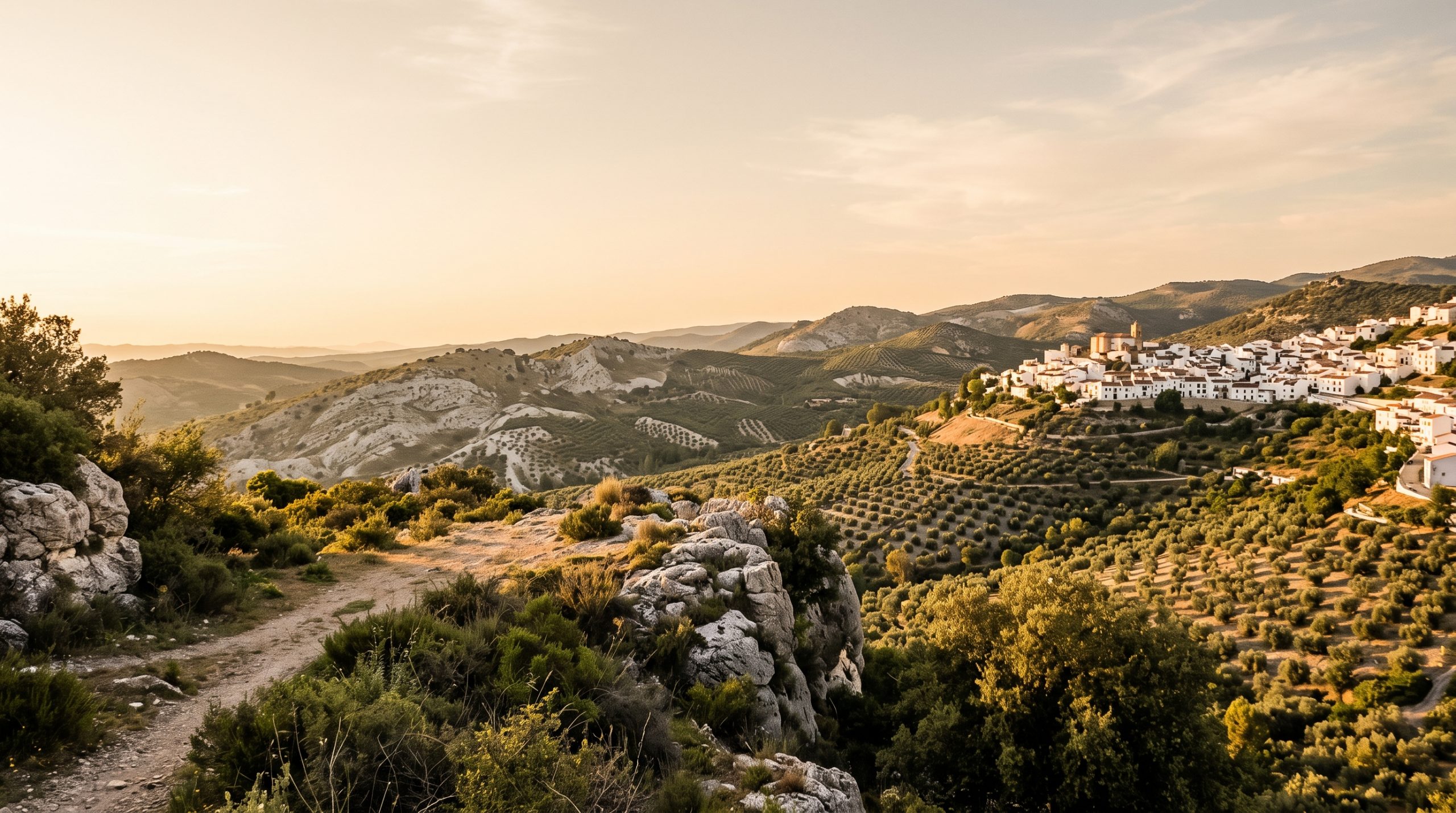
The first thing worth knowing about a symbolic ceremony in Andalusia is everything you do not need. No notice period. No file opened at a registry office, no witnesses signing anything, no translated documents in a folder. You can stand on a volcanic cove in Cabo de Gata at seven in the morning on a Tuesday, say what you came to say, and none of it depends on an office being open.
What does need arranging is permission for the ground you stand on and for the cameras that record it. In Andalusia that runs through a short list of very specific offices: a town hall for a plaza in a white village, the Junta de Andalucía for professional photography and filming inside Cabo de Gata-Níjar or the Sierra Nevada protected space, and the Patronato de la Alhambra y Generalife for anything inside the monument walls in Granada.
So this page covers both halves. What the legal side genuinely asks of an American couple, and then what the permissions cost, which office issues them, and how far ahead each one has to go in. The lead times below are the ones we work to, not the ones that look tidy on paper.
What a symbolic ceremony is in Spanish law
A symbolic ceremony has no legal effect in Spain, so it asks nothing of the state: no notice, no registry file, no minimum age on a witness, no documents. Your marriage is made legal at home, before or after the trip. In Andalusia you choose the place, the hour, the officiant and every word.
Easy ceremony, closed registry: the honest rating
The ceremony itself is the least complicated thing on this page. It is the legal marriage in Spain that is closed to most visiting couples, and it helps to know exactly why. The U.S. Embassy in Spain is direct about it: applications must be made to the Civil Registry or the District Court where at least one of the applicants resides. A couple flying in for ten days has no office with jurisdiction over them, and approval of a marriage application in Spain can take up to 45 days once it has been accepted. U.S. diplomats and consular officers cannot perform marriages either.
Notaries have been able to celebrate civil marriages in Spain since the Jurisdicción Voluntaria reform, and since 30 April 2021 they can also process the marriage file itself. That widens who can marry you. It does not change the residence test that decides where the file may be opened in the first place.
Which leads somewhere better than it sounds. The route almost every couple who writes to us takes is to complete the legal marriage at home and hold the ceremony in Andalusia, and that route hands you the calendar. No registrar’s diary, no office hours, no Monday-to-Friday, no ceremony timed around when a public building happens to be staffed.
Use this as practical wedding-planning guidance for Andalusia. For a binding answer on your documents, ask the authority or consulate handling your file.
The license at home, the ceremony in Andalusia
What changes when the legal marriage happens at home is smaller than couples expect. The signing moves to a county office in the week before or the week after your trip, on your own timetable, under your own county’s licensing rules. A marriage that is valid where it is performed is valid in the United States, so the paperwork you carry home from Georgia or Colorado is the paperwork that counts.
What does not change is everything you came to Andalusia for. Anyone you like can officiate, in English, because nothing is being registered: a friend who knows you both, a professional celebrant, one of your fathers. You write the words. You choose the hour, which is the part that matters most on a ridge in the Sierra Nevada or a cove in Almería. Nobody checks a document at the door because there is no door and no document.
Spain has recognized same-sex marriage since July 2005, and a symbolic ceremony is open to every couple regardless of who is standing at either side of it. If you are still deciding the order of things, our guide to the fundamentals of planning an elopement covers how couples usually sequence the legal step and the trip.
The permission chain, in the order it has to happen
Nothing below is about your marriage. It is all about the ground and the cameras, and it runs in a fixed order, because each answer depends on the one above it.
- Fix the ceremony ground first. Private land, municipal ground, a protected natural space, the coastline or a monument. Each one means a different office, a different fee and a different lead time, so this decision comes before anything else in the plan.
- Private land needs one written agreement. A finca outside Ronda, a cortijo in the Alpujarras, a hotel garden above the sea. No public authority is involved, the owner’s contract is the permission, and the cost is whatever the owner charges for the hours you want.
- Municipal ground goes through the ayuntamiento. Spanish town halls charge for occupying public space under their own local ordinances, which means the form, the fee and the speed of the answer genuinely differ from one white village to the next. Two towns forty minutes apart can run this completely differently.
- Protected natural spaces need authorization from the Junta de Andalucía. Photography and filming carried out professionally inside the Sierra Nevada protected space require an authorization for activities in the Espacio Natural, assessed by the park’s own management team and lodged through the Consejería’s registries. In Almería province the territorial delegation approves dozens of filming and photographic applications a year, and Cabo de Gata-Níjar is the most requested location among them, so this is routine ground rather than a special favor.
- The coastline is state land. Occupying the maritime-terrestrial public domain requires authorization under the Ley de Costas of 1988 and the coastal regulation of 2014, and any occupation held under a concession or authorization carries a canon payable to the state. In practice, town halls apply for authorizations covering wedding events on named beaches for years at a time, and those applications include a public information period of twenty working days. The workable move is a beach your town hall already holds an authorization for.
- The Alhambra needs prior authorization from the Patronato. Wedding photography is permitted in the monument and in the Andalusí monuments in Granada under the same management, but only with prior authorization, and inside the walls only in named spaces: the Patio de los Arrayanes, the Patio de los Leones, Lindaraja, the Partal, and the lower gardens by the Generalife amphitheatre. Requests go to the Servicio de Visita Pública y Comercialización well in advance, and the reservation of your date is not effective until the public price in force has been paid.
- Aerials need a registered operator and the site’s own yes. Spain’s drone framework, Royal Decree 517/2024, has applied since 25 June 2024 alongside the European rules: the operator is registered with AESA, the aircraft carries an identification plate, pilots hold the relevant competency, and flight stays within 120 meters of the ground. Inside a protected space, the aerial plan goes into the same authorization request as the rest of the film work, months ahead of the morning.
One honest note on the Alhambra, because published guidance varies. Older material circulating online describes a free evening window in certain gardens, drawn from a resolution from 2007. The instrument in force is the Order of 29 May 2023, which places professional and wedding photography inside visiting hours, fitting around the normal flow of visitors, with the permitted locations and the amount set by the public price list in force at the time. Before non-refundable travel depends on the Andalusia process, reconfirm the latest fee and timing with the office responsible for it.
Start with the ceremony hour, then add only the permissions that location needs
Two timelines exist for every one of these days: the bare minimum that is technically possible, and the one that leaves room for a park office to answer slowly or a town hall to close for a local holiday. We work to the right-hand column.
| Piece of the plan | Bare minimum | What we work to |
|---|---|---|
| Team and ceremony hour held | Weeks, if the date is still open | Nine to eighteen months out, and we are booking 2027, 2028 and 2029 |
| Legal marriage at home | Your county’s own license timetable | Done before you fly, so the trip carries no deadlines at all |
| Alhambra authorization | As early as the Patronato will accept the request | Requested the week the date is fixed, and not treated as held until the price is paid |
| Sierra Nevada or Cabo de Gata-Níjar authorization | The territorial delegation’s own processing time | Lodged a full season ahead of the date |
| Beach or municipal ground | The town hall’s answer, plus twenty working days of public information where a coastal authorization is needed | A beach or plaza the town hall already covers |
If your date is closer than that, say so in your first message rather than assuming it rules you out. Some of the strongest days we plan are built on ground that needs one landowner’s signature and nothing else, and we will tell you plainly which locations are realistic for the time you have and which month would serve the same idea better.
What catches couples out: monuments, beaches and expiry dates
None of this is difficult once you know it. All of it is expensive to discover late.
The Alhambra authorizes photography, not a ceremony hour
What the Patronato grants is authorization for wedding photography in named spaces, during visiting hours, fitted around everyone else’s visit. That is a portrait window, not a place to stand quietly for twenty minutes and exchange vows. So we treat Granada as two locations in one day: the ceremony somewhere we can hold the space and the silence, then the authorized window inside the walls for the pictures that made you think of the Alhambra in the first place. Couples who plan it the other way around end up whispering vows in the Patio de los Leones between tour groups.
The coastline is state land, and the town hall usually holds the key
The beach in the photograph you saved is almost certainly maritime-terrestrial public domain, which means the authorization sits with the coastal administration rather than with the hotel behind it. Because councils apply for multi-year authorizations covering wedding events on specific beaches, the difference between a straightforward yes and a long paper trail is often just which cove you pick. That is a question we can ask on your behalf before you fall in love with the wrong one.
If one of you does live in Spain, watch the expiry dates
Some couples writing to us have a Spanish address, which opens the civil route, and then the timetable is set by documents rather than by locations. Registries ask for a full literal birth certificate, not a short extract. The padrón certificate proving where you live must be issued immediately before the file is opened and stops being valid three months later. A U.S. divorce decree has to be authenticated with the Hague Apostille to have effect in Spain. And because the United States issues no equivalent of the Spanish freedom-to-marry certificate, the U.S. Embassy publishes a statement to that effect for you to present to the registry instead.
Six in the evening in July is still the afternoon
Andalusia’s summer days are long at both ends, and a ceremony set for six because that felt like evening at home will land in flat white light on limestone. Inland in July we build the ceremony for the first hour after sunrise and keep the portraits for the last of the light, and in the mountains we plan on shade and altitude rather than on the hour a calendar suggests. Our destination guides go further into how the seasons behave across southern Spain.
What we can coordinate in Andalusia, and what remains your responsibility
We design the destination and the specific locations, build the timeline around light and real travel time, research the permits that apply to your ground and guide the logistics, then hold weather alternatives ready. Coordinating the ceremony hour with an authorized window is the part that takes experience: a monument’s permitted hours, a park’s conditions and the sun all have to agree on one moment, and that moment is the reason the day works.
Photography and film sit inside one team here, which matters on a permitted window more than anywhere else. The photographer and the filmmaker plan the same hour together, in advance, so the twenty minutes you are authorized for is used once rather than negotiated on the spot between two people who met that morning. There are eight of us, so there is always a second camera on the ground and a colleague in reserve. You can see how Andalusian light behaves in finished work in our galleries and films, which is a more useful guide than any description we could write.
What stays with you: the legal marriage itself, government, venue and landowner permit fees, the celebrant, accommodation, vendors and activities, and unusual transport such as helicopters, private boats, 4×4 charters or mountain guides. Applications that need a name on them go in yours, and we build the plan around them. Highlights reach you five days after the day itself, and the full gallery or film within three weeks.
One full day with a dedicated photographer and filmmaker working together starts at $7,900, with team travel to Andalusia included, and the rest of the coverage detail sits on our pricing page.
Tell us the month, the kind of ground you picture standing on and whether sunrise appeals more than sunset, and we will come back with the shape of a day and the permissions it needs. Tell Us Your Story.
Common questions
Do we need any documents for a symbolic ceremony in Spain?
None. A symbolic ceremony has no legal effect, so there is no file to open, no notice period to serve, no witness requirement and nothing to translate. The documents in play are the ones for the ground and the cameras, and those are ours to research and the landowner’s or the authority’s to grant.
Can we legally get married in Andalusia as Americans on a two-week trip?
Realistically, no. Applications go to the Civil Registry or District Court where at least one of you resides, so a visiting couple has no competent office, and approval of an application can take up to 45 days. U.S. consular officers cannot perform marriages in Spain either. Marry at home and hold the ceremony here.
Is our marriage still real if the ceremony in Spain is symbolic?
Yes. The legal marriage is the one performed at home, and a marriage valid where it is performed is valid in the United States. The ceremony in Andalusia is the one you will remember; the license is simply signed in a county office at home.
Do we need a permit for a symbolic ceremony on an Andalusian beach?
Assume yes. Beaches are maritime-terrestrial public domain, occupation requires authorization under the Ley de Costas, and occupation held under an authorization carries a canon payable to the state. Town halls commonly hold multi-year authorizations for wedding events on named beaches, so the ayuntamiento is the first door to knock on.
Can we get married at the Alhambra?
What the Patronato de la Alhambra y Generalife authorizes is wedding photography, with prior permission, in named spaces such as the Patio de los Arrayanes, the Patio de los Leones, Lindaraja and the Partal, during visiting hours. Your date is not held until the public price is paid. We plan the ceremony elsewhere in Granada and the pictures inside the walls.
Who can officiate a symbolic ceremony, and can it be in English?
Anyone you choose, entirely in English if you want. A friend, a sibling, a professional celebrant who works across Andalusia. Since nothing is being registered, no qualification is required, and the running order is yours to write. We build the timeline around your words rather than the reverse.
Do we need permission to fly a drone at a ceremony in Sierra Nevada or Cabo de Gata?
Two permissions, and both go in ahead of the date. Professional filming inside these protected spaces needs authorization from the Junta de Andalucía, and the flight itself runs under Royal Decree 517/2024 with an operator registered with AESA, an identification plate on the aircraft and a ceiling of 120 meters above the ground.
Can same-sex couples have a symbolic ceremony in Andalusia?
Yes, and Spain has recognized same-sex marriage since July 2005, so you are in a country where this is settled law rather than a local concession. The practical planning is identical: the ground, the hour, the light and the permissions.
Start with the hour, not the paperwork
Pick the month and the kind of place, and the permissions follow in a fixed order that we already know how to walk. Everything between us happens in writing, on your time zone: you send the form, we reply within 24 hours with an initial brochure, then a tailored proposal follows, and planning begins once the contract is signed and the 30% retainer is paid. Send us the date you are circling and the ground you keep coming back to. Check Your Date.