On the longest day of the year the sun comes up over Raasay at 4:26am, and the light along the Trotternish ridge is most of the reason couples choose Skye. It is also cold at that hour, in June, in a way that surprises almost everyone who has only looked at the forecast high.
Skye asks two things of your clothes at once. They have to hold a line in wind coming off the Atlantic, and they have to survive ground that holds water for days after rain. Peat does not drain the way soil does. A floor-length hem that met wet peat at 5am is still damp at noon, which is completely fine if you planned for it and a nuisance if you did not.
What follows is what we tell couples to bring, based on the paths we walk on this island and the hours we actually work. The wider planning sequence sits in our guide to how an elopement day gets built. This page is only about what goes on your body and what goes in the pack.
Wool, boots, and a second pair of everything
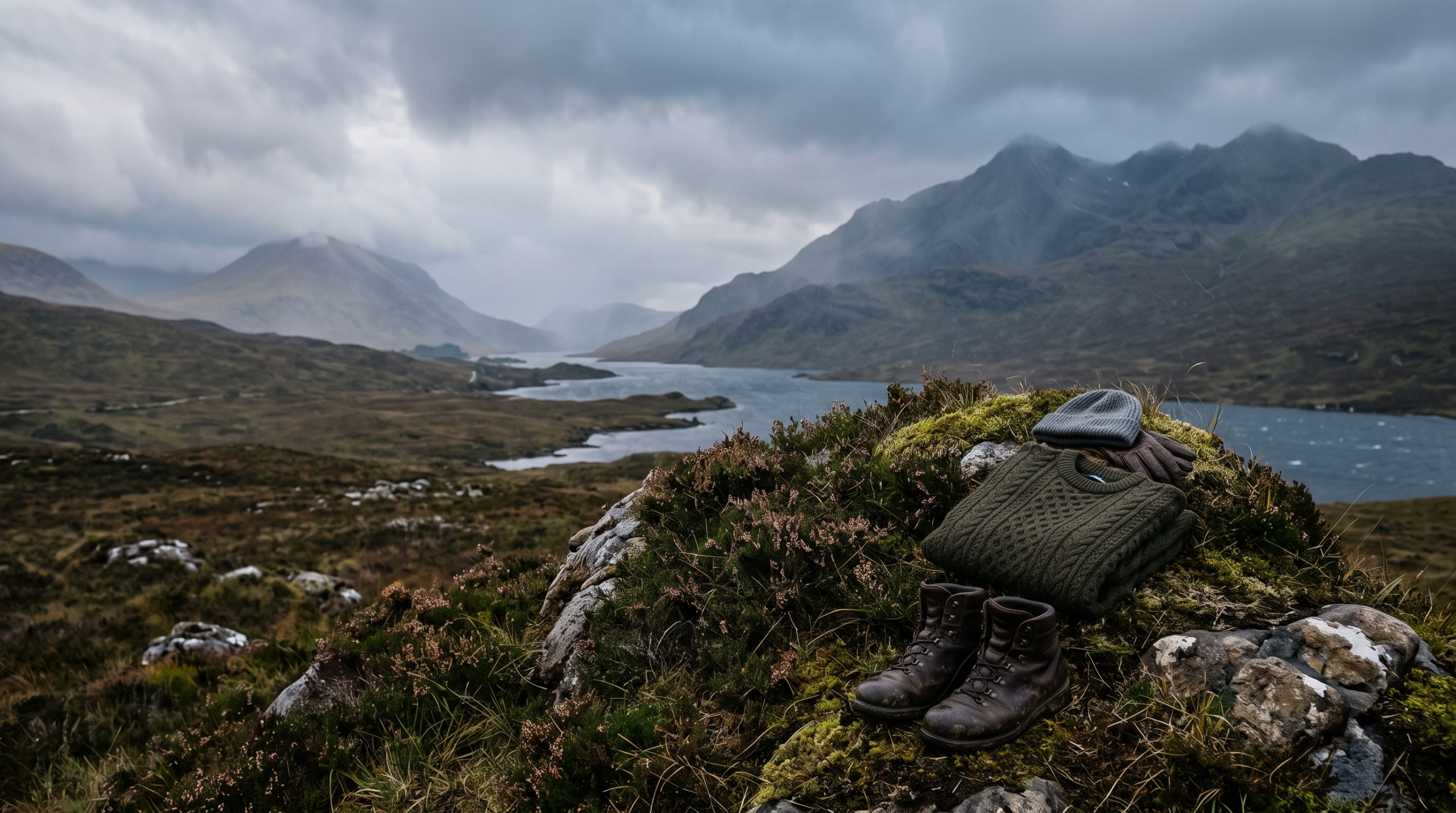
Dress for wind and wet ground rather than for the temperature. Heavier fabrics hold their line, a thin merino layer under a bodice adds warmth without bulk, and waterproof boots handle the walk in while your good shoes travel in our pack. Add a wool wrap for the ceremony hour and dry socks for the car.
What the ground is really like underfoot
Three of the island’s most photographed walks have three completely different surfaces, and one pair of shoes only works on one of them.
The Fairy Pools sit at the end of a purpose-built gravel path in Glen Brittle. The return walk to the first main waterfall is 2.4 km and takes most people between forty minutes and an hour and a half, and since two steel and timber footbridges went in during 2022 the route no longer depends on stepping stones. This is the one path on our Skye list where a smooth sole is survivable.
The Old Man of Storr is a climb rather than a walk. From the pay and display car park seven miles north of Portree on the A855, it is roughly 1.7 km of steady uphill on laid gravel to the base of the pinnacles. There are toilets at that car park, which matters more than it sounds, because most locations here have none.
The Quiraing is the one that eats footwear. Its car park sits at the highest point of the single-track road between Staffin and Uig, 2.5 miles from the first and 5.5 miles from the second, about thirty minutes from Portree. The path is uneven, boggy in long stretches, and crosses loose scree near the upper ridge, and the full circuit takes two to three hours at an unhurried pace. There is nothing at that car park at all: no cafe, no toilets, no shelter. The nearest shop and seasonal tearoom are down in Staffin. The island’s own walking guide is direct about the ridge route not suiting a windy or low-visibility morning, and we agree with it, so we put the vows on lower ground and save the high line for wide frames on a calm hour.
Fabrics that hold their line in a south-westerly
The prevailing wind here arrives from the south west, and the Trotternish and Waternish coasts take it with very little shelter in the way. Wind decides whether a dress reads as a decision or as something you spent an hour fighting.
Weight is most of the answer. Mikado, satin-back crepe, heavier silk crepe and structured blends keep their shape in moving air. Chiffon, tulle and light georgette do something entirely different, and it can be glorious for a few frames, because a skirt going horizontal on a headland like Neist Point is a real photograph. It is not a fabric you can stand still in for twenty minutes of vows without holding it down. If you want both, bring both, and we will put the light layer in the coastal hour and the heavier one in the ceremony.
A single unlined layer goes translucent in rain, so check the lining before you fall for the silhouette. Strapless bodices need constant adjusting once wind gets under them, while sleeves and straps solve that and add warmth in the same move. If the hem is floor length, expect it to carry peat water home, and either make peace with that or have a hem loop sewn in.
For suits, wool and tweed beat linen on this island in every month of the year. Linen creases inside a pack, holds water, and gives you nothing back when the temperature drops at dusk. An unstructured wool jacket, a knit tie and a proper overcoat photograph as intent. Highland dress works well here for an unromantic reason: a traditional wool kilt is heavy enough to hang when a lighter garment lifts. Wear ghillie brogues for the ceremony and boots for the walk in, because thin leather soles and wet hill grass make a poor pairing.
Fifteen degrees in Portree, colder on the ridge
Met Office long-term averages for Skye put the average daily maximum near 17°C (63°F) in July and around 15°C (59°F) in September, with a yearly average maximum of roughly 12°C (54°F) and a yearly average minimum close to 6°C (43°F). Those are the numbers to argue with, not the ones on a weather app the week before.
Here is where the forecast misleads. A daily maximum is recorded at a sheltered inland station in the afternoon. Your ceremony is most likely at sunrise or in the last hour of light, on an exposed shoulder of hill with air moving across it, which is the coldest arrangement the island offers. For a 5am start, dress for the overnight minimum rather than the daytime high. On the annual averages those two figures sit about six degrees apart, and on a clear night the gap widens.
Wet beats cold as the thing that ends a morning early. A cotton layer that soaks through stops insulating and gets steadily colder. Merino keeps working while damp, which is why we ask for a thin merino long-sleeve or vest under a bodice for anything in spring and autumn, and dry socks left in the car for the drive back.
May to October, month by month
Times below are for Portree, mid-month, and shift by a few minutes elsewhere on the island. Temperatures are Met Office long-term averages for the Skye station at Prabost. Read the row for the month you are considering, then look at the hour you want to be standing outside in.
| Month | Average daily high | Sunrise and sunset | Midges | What we add to the outfit |
|---|---|---|---|---|
| May | 14°C (57°F) | 5:05am, 9:40pm | First ones late in the month | Merino under the bodice, wool wrap |
| June | 16°C (61°F) | 4:26am, 10:26pm | Building | Warm layer for a 3:30am start, thin gloves |
| July | 17°C (63°F) | 4:50am, 10:10pm | Peak | Repellent, covered arms for the walk in |
| August | 17°C (63°F) | 5:50am, 9:10pm | Peak | Repellent, lighter dress fabric works best now |
| September | 15°C (59°F) | 6:55am, 7:45pm | Fading | Overcoat for the walk down, hand warmers |
| October | 12°C (54°F) | 7:45am, 6:35pm | Gone | Full wool coat, hat between locations |
Midge season on the west coast runs from late May to early September and peaks through July and August. They are worst in still, humid, overcast air, which is precisely the weather a breeze cures, so the wind you were dreading in June is doing you a favour in August. If you are still choosing between months, our destination guides go into how each season reads on camera.
Twenty minutes with the coat off
Everything above is about the walk in. The ceremony is a separate problem, because for fifteen to twenty-five minutes you are standing still with the outer layers off, usually in the most exposed place of the whole day.
We site the vows in the lee wherever the location gives us the choice: below a ridge line rather than on it, behind a rock band, in a hollow, on the sheltered side of a headland. It costs nothing visually and it transforms the audio, which matters on the Expedition, where a dedicated filmmaker records vows with professional audio when conditions allow. Wind noise is the one thing that flattens a vow recording, so a sheltered ceremony spot is a craft decision before it is a comfort one.
Small things that carry the hour: hair pinned rather than loose if you want it to stay where it started, because nothing outlasts a Trotternish gust; a wool wrap or cape that lives in our pack until the second the coat comes off; hand warmers in a pocket, since cold hands show in ring frames; and a short veil rather than a long one if you want it present for the whole ceremony rather than for two frames. A cathedral veil in Skye wind is either the strongest image of the day or completely unmanageable, and we are glad to build it in as a deliberate two-minute moment.
Late-season dates need one more thought. Mid-September sunset in Portree falls around 7:45pm, so vows at 7pm finish as the light and the temperature drop together, and whatever you put back on is what you walk down the hill in.
What we carry so you do not have to
Our packs hold the unglamorous half of this: dry bags, a microfibre towel, a groundsheet to lay a dress on, spare socks, cloths for the constant mist on the front element. You carry almost nothing.
Two of us on the ground changes the logistics more than it changes the frames. On the Expedition a photographer and filmmaker work the same day, and on a long Trotternish route that usually means two vehicles, so one of us can go ahead to read the wind and the coach traffic at the next stop while the other stays with you and your bags. On the Adventure, one photographer or one filmmaker covers the day and we build a tighter route, because nothing should hang on a scout who is also your only camera. Either way there is a second set of gear on the island, since a thirty-minute drive back toward Portree for a spare battery is not a plan.
Photography, film and planning come from one team, and team travel to Skye is included, with the coverage options set out on our pricing page. Highlights reach you five days after the day and the full gallery or film within three weeks. The films and galleries we have published show what heavy fabric and low sun do together on this coast, and what a wet morning looks like when it has been planned for rather than endured.
If you have a month in mind, or a dress already hanging in a wardrobe and no idea whether it suits this ground, Send Us a Message and tell us what you have.
Common questions
Can I wear a long dress for the Quiraing walk?
Yes, with boots underneath and a plan for the hem. The path is boggy in long stretches and the full circuit runs two to three hours, so we walk in with the skirt gathered or clipped, then release it at the spot. In wide frames nobody sees the boots at all.
What shoes actually work on Skye?
Two pairs. Worn-in waterproof boots with wool socks for every walk in, and your ceremony shoes carried in our pack. Heels sink into peat and slide on wet grass. The 2.4 km gravel path at the Fairy Pools is the one exception where a flat smooth sole is fine.
What do we wear if it rains for the entire day?
Wool and merino, and a shell layer for the walking sections that comes off before we shoot. Rain here often moves through in bands rather than sitting all day, so we hold a sheltered alternative fifteen minutes from the main location and shift the running order to catch the clear window.
Do we need midge repellent for a July elopement on Skye?
Yes for July and August, and for late June. Midges gather in still, humid, overcast conditions and thin out in any real breeze, so the exposed ridge and coast hours are usually clear and the sheltered glen stops are where you want covered arms and repellent in a pocket.
Is a kilt practical in Skye wind?
It is one of the better choices here. A traditional wool kilt is heavy, so it hangs where lighter fabric lifts, and wool hose handles a cold sunrise. The weak point is footwear, since ghillie brogues have thin soles, so wear boots for the approach and change at the location.
Where do we get changed if the location has no facilities?
At your accommodation, in almost every case. The Old Man of Storr car park has toilets and the Quiraing has none, so we build the timeline to dress before we drive, base you close to the first location, and use the vehicle for adjustments and dry socks between stops.
Choosing your month, then your outfit
The order matters. Pick the month first, because it sets your light, your sunrise hour and whether midges are part of the day, and let the clothes follow from that. A 4:26am ceremony in June and a 7pm one in late September need different fabrics on the same island.
Tell us the month you are weighing up and what you already own, and we will tell you plainly what works on this ground, what will fight you all morning, and which weeks suit your idea of a good start to a day. Everything runs in writing from the first message: a reply and our initial brochure within 24 hours, then a proposal built for your dates. We are booking 2027, 2028 and 2029. Tell Us Your Story.