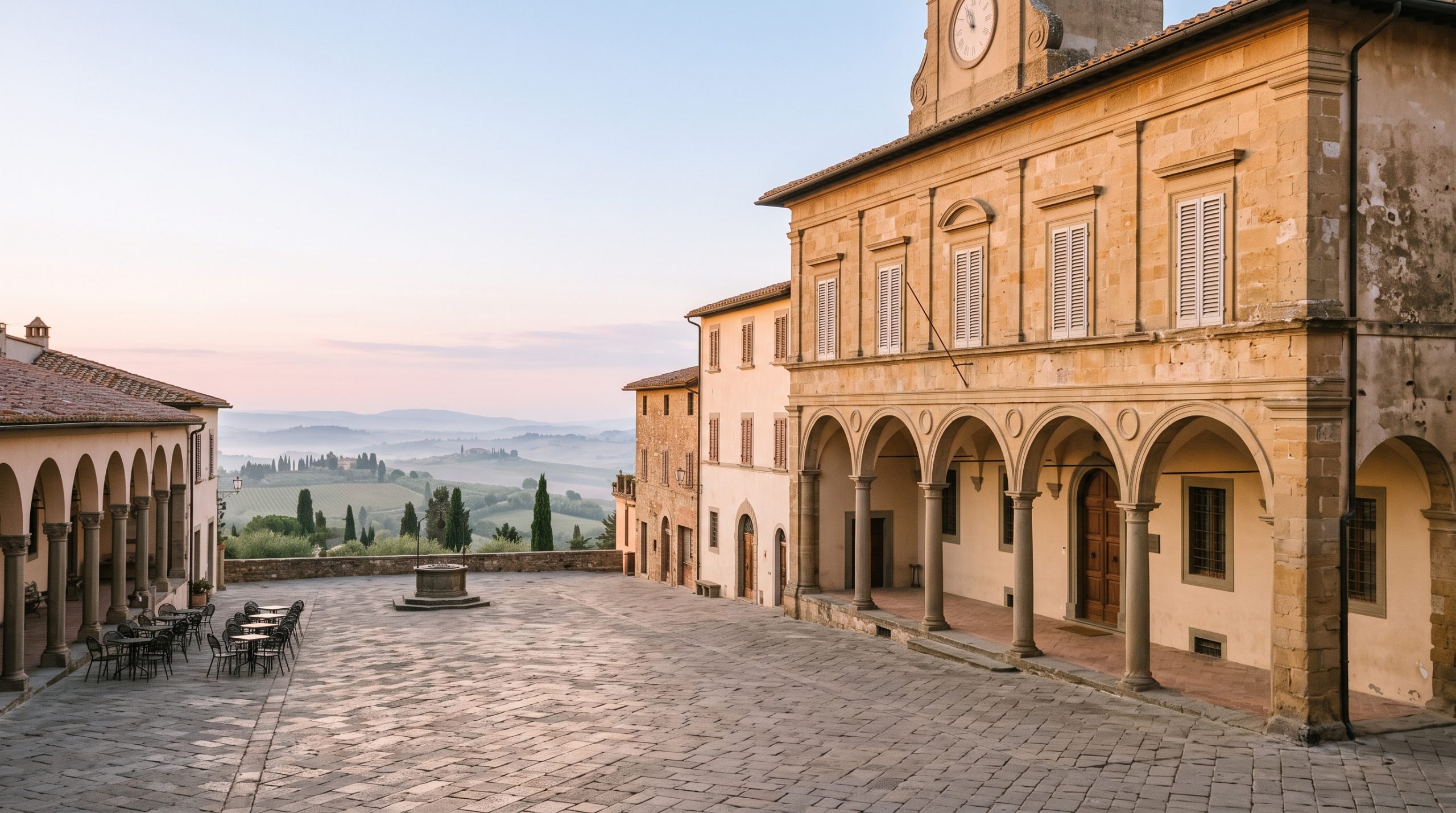
The single fact that reorders most Italian elopement plans is this: for US citizens, the nulla osta is not a document you collect at home and pack in a folder. It is sworn in front of an American consular officer inside Italy, and it then has to be legalized by an Italian Prefettura before any town hall will accept it. The paperwork is not a step you complete before the trip. It is the first two days of the trip.
So the first question we ask couples who want to be legally married in Italy is not which cliff or which lemon terrace above the sea. It is which consular city they are willing to stand in on a Tuesday morning. The US Embassy in Rome handles the sworn declaration from its consular section on Via Vittorio Veneto 121. The Consulate General in Milan covers the north, with consular agents in Venice and Genoa. Each one feeds a specific Prefettura, and the pairings are not interchangeable.
None of this is hard. It is sequential, and sequence is exactly the thing that goes wrong when a couple books a Friday ceremony and lands on Wednesday evening. Here is the chain in the order you actually have to walk it, which office governs each link, and the small decisions that either save you a day in Italy or cost you one.
What the nulla osta actually certifies
The nulla osta, issued to US citizens as a Dichiarazione Giurata, is a sworn statement that nothing in the law you live under bars you from marrying. You swear it before an American consular officer in Italy. An Italian Prefettura then legalizes it, and only after that does the comune accept it as part of your file.
Where the nulla osta process needs care
This is a sequencing problem, not a legal one. Four separate offices touch your file before a registrar reads your vows back to you, and each one only works once the previous one has finished. No lawyer is required at any point. What is required is a calendar that respects the Italian working week and a willingness to spend a morning in a consular waiting room rather than on a boat.
There is one decision that changes the shape of everything else, and you make it before you leave home. The Atto Notorio, the four-witness affidavit that sits alongside the nulla osta, can be sworn at the Italian consulate covering your state of residence. Do that in the US and you land in Italy with one fewer errand and one fewer office to find. Skip it, and you are looking for an authorized office in the town where you will marry, in a language you probably do not speak, in the same week you are getting married.
The guide explains the workflow from a planning perspective, not as legal counsel. Confirm the final requirements for your circumstances with the relevant registry office or consulate before travel is fixed.
The documents, in the order you collect them
This is the run for two US citizens marrying in Italy. Read it as a route rather than a checklist, because the order is the whole point.
- Proof of US citizenship. A passport, a naturalization certificate, or a birth certificate showing birth in the United States. This is what the consular officer needs to see before swearing anything on your behalf. Serving members of the US Armed Forces also submit consent to the marriage from their commanding officer.
- The Atto Notorio. An affidavit sworn by four witnesses declaring that there is no impediment to your marriage under US law. The witnesses must be over 18, must not be family, and must not be related to each other or to either of you. You can swear it at the Italian consulate competent for your state of residence before you fly, or in Italy before an authorized office: the local court in the town where the marriage will take place, the mayor, the local public registrar or a notary. If you obtain it in the US, you do not repeat it in Italy.
- The Dichiarazione Giurata, the nulla osta itself. Sworn by each US citizen before an American consular officer in Italy, stating that under the law you are subject to at home, nothing bars your marriage here. Rome issues it at the embassy consular section. In the north it comes from the Consulate General in Milan or from the consular agents in Venice and Genoa.
- Legalization at the Prefettura. The Dichiarazione Giurata is not usable until the competent Italian authority legalizes it. In Rome that is the legalization office of the Rome Prefettura. A declaration issued in Milan can be legalized at any Prefettura inside the Milan consular jurisdiction, but one issued in Venice or Genoa must go to the Prefettura in Venice or Genoa respectively.
- The Declaration of Intention to Marry. You appear in person, with two witnesses, before the Ufficiale dello Stato Civile of the town where you plan to marry, present the whole file, and formally state your intention to marry. This happens at the Marriage Office of that specific comune, not a regional one, and not the pretty village next door.
- The apostille on your Italian marriage certificate. This one comes after the ceremony rather than before it. It is what makes the Italian certificate travel home and function as a legal document in the United States.
Notice where the apostille sits. Couples arrive convinced they need US paperwork apostilled at home before departure, and the apostille in this sequence is the one applied to the Italian certificate at the end. The American declaration takes the Prefettura legalization route instead. Those are two different stamps from two different systems, and confusing them is the most common reason a folder gets built in the wrong order.
Work back from the ceremony to the consular steps
There is no way to compress this into a long weekend, and the couples who enjoy the process are the ones who treat the consular days as part of the trip rather than an obstacle in front of it. Two of those days are spent in a city with excellent coffee and a Prefettura, which is a reasonable trade.
| Step | Who handles it | When we build it in |
|---|---|---|
| Atto Notorio | Italian consulate for your state, or an authorized office in Italy | Before you fly, wherever your state consulate allows it |
| Dichiarazione Giurata | US Embassy Rome, Consulate General Milan, or the consular agents in Venice or Genoa | First working morning on the ground |
| Prefettura legalization | The Prefettura paired with the office that issued your declaration | Same trip, once the declaration is signed |
| Declaration of Intention to Marry | Marriage Office of the comune where you will marry, with two witnesses | After the file is complete, ahead of the ceremony date |
| Ceremony | Ufficiale dello Stato Civile of that comune | The hour we design the light around |
| Apostille | Applied to the Italian marriage certificate | After the ceremony, for use back home |
The real minimum is set by office availability rather than by a statutory countdown, and office availability is a working-week question. A Friday ceremony with a Wednesday evening arrival gives you one usable morning for a consular appointment, a Prefettura visit and a comune file. That is not a plan, it is a coin toss. The comfortable minimum, and the one we work to, is arriving at the start of a working week for a ceremony at the end of the following one, consular city first and the coast or the mountains after.
Two dates on the Italian calendar are worth steering around. Ferragosto on 15 August empties public offices for days on either side, and the last week of December does something similar. If your heart is set on August, we would rather build the legal file in July or plan the ceremony for early September, when the light on the Amalfi coast and around Lake Como is arguably better anyway.
The details that quietly reorder travel plans
These are the things that do not appear on a checklist and then rearrange a week.
The Prefettura is tied to the consular office, not to your wedding town
A declaration sworn in Milan can be legalized at any Prefettura within the Milan consular jurisdiction, which gives you room to move. A declaration sworn at the consular agency in Venice must be legalized by the Prefettura in Venice, and the same holds for Genoa. Couples who plan a Dolomites ceremony and swear their declaration in Venice sometimes assume they can finish the legalization in Belluno on the way north. Ask first, and build the route around the answer.
Four witnesses and two witnesses are different people, for different documents
The Atto Notorio needs four, over 18, none of them family and none of them related to each other. The Declaration of Intention to Marry at the comune needs two. Bringing both sets of parents does not solve the first one, because parents are family and, in each pair, related to each other. This catches out couples eloping without guests more than anyone, and it is the single strongest argument for swearing the Atto Notorio at your Italian consulate at home, where finding four unrelated adults over 18 is a solvable problem rather than a scavenger hunt in a town of nine hundred people.
The hall itself has a price, and the day of the week moves it
The rental fee for a comune’s marriage hall runs from around 25 euros at the low end to roughly 1,500 euros at the high end, depending on the season and the day of the week. Saturdays in July and August sit at the top of that range in the towns everyone wants. A Thursday in late September in the same hall can cost a fraction of it, and the light in the piazza afterwards is warmer. Fees and deadlines quoted here were correct at the time of writing and are worth re-checking with the office that issues them.
The ceremony hour belongs to the registrar
A civil ceremony runs when the comune says it runs. That is usually a mid-morning or midday slot, which is the flattest, hardest light of the day in a Mediterranean summer. This is not a reason to avoid a legal ceremony in Italy. It is a reason to design the rest of the day around it, with the ceremony as an appointment and the portrait hours pushed to the far ends of the light.
Sign at home first and keep Italy for the ceremony
A large share of the couples we work with in Italy sign the legal paperwork in their own county courthouse, quietly, weeks before they fly. Then they hold the actual ceremony on a terrace above Praiano or on a larch meadow under the Tre Cime, with a celebrant they chose and words they wrote. This is not a lesser version of the day. In practice it is often the better one.
What changes: no consular morning, no Prefettura, no four unrelated witnesses, no comune file, no ceremony slot dictated by an office diary. What does not change: absolutely nothing about the day itself. The vows are still the vows, and the walk up is still the walk up. Nobody watching the film afterwards can tell you which order the signatures happened in.
The practical gain is the hour. Freed from a registrar’s diary, the ceremony can sit forty minutes before sunset on the rock terrace, which is the difference between a record of an event and something you want on a wall. We plan both routes constantly, and the honest position is that the legal route is worth it when Italy is where you want the marriage registered, and the ceremony-only route is worth it when the hour and the location matter more than the filing address. Tell us which of those is true for you and we will build the week around it. Our guide to planning an elopement walks through how that decision cascades into everything else.
Send Us a Message with your date and the region you are drawn to, and we will tell you which of the two routes fits it better.
Where our planning meets the registrar’s file
We handle destination and location design, the planning, and a custom timeline built around light and real travel time. We research permits and give you the logistics guidance to move through them, and we hold weather alternatives for every outdoor hour. We hold your date against the comune’s availability rather than against a generic calendar, and we set the ceremony hour and the portrait hours so they do not fight each other. We are not lawyers, and we do not file your paperwork. That distinction keeps everyone honest.
When the registrar owns the hour, having a photographer and a filmmaker who arrived together matters more than it does on a free-form day. An 11am civil ceremony in a small hall gives you one pass at the ring and one pass at the signature. On the Expedition, one of us is on faces and the other is on the room and the audio for the vows, both working from the same timeline we wrote weeks earlier. We are eight people, so there is always a colleague in reserve and a second camera on the ground. You can see how Italian light and Italian rooms actually resolve in our published stories and films.
Team travel is included worldwide, flights and accommodation for the assigned team, with no surcharge for distance. Highlights land with you in 5 days and the full gallery or film in 3 weeks, which for most couples means the highlights arrive before they have finished the trip. Coverage comes as one full day or as several across one or more regions, and the shapes are set out on our pricing page.
Common questions
Can we get the nulla osta before we fly to Italy?
Not the Dichiarazione Giurata itself. It is sworn before an American consular officer in Italy, at the US Embassy in Rome, the Consulate General in Milan, or the consular agents in Venice and Genoa. The Atto Notorio is the piece you can complete at home, at the Italian consulate covering your state of residence.
What is the difference between the nulla osta and the Atto Notorio?
The nulla osta is your own sworn statement that nothing in US law prevents your marriage. The Atto Notorio is the same point made by four witnesses on your behalf. Italian comuni want both, from two different directions, and one does not replace the other.
How many witnesses do we actually need?
Four for the Atto Notorio, all over 18, none of them family and none related to each other or to you. Two for the Declaration of Intention to Marry in front of the Ufficiale dello Stato Civile. They do not have to be the same people, and for the Atto Notorio they cannot be your parents.
Do we need an apostille on our US documents?
The apostille that appears in this sequence is the one applied to your Italian marriage certificate after the ceremony, so the marriage is recognized at home. The American sworn declaration goes the other route, legalized by an Italian Prefettura rather than apostilled.
Does the wedding have to be in the same town where we file the paperwork?
The Declaration of Intention to Marry is made before the registrar of the town where you plan to marry, and if you swear the Atto Notorio in Italy it is done in that same town. Choose the comune first, then the view, rather than the other way around.
How much does the town hall itself charge?
Marriage hall rental in an Italian comune ranges from about 25 euros to about 1,500 euros, driven by the season and the day of the week. Peak summer Saturdays in the best-known towns sit at the top; a weekday in the shoulder season sits far below it.
Can we choose what time the civil ceremony happens?
Within the comune’s own slots, which are usually daytime. If sunset vows matter more to you than the filing address, the ceremony-only route gives you the hour back, and we will tell you honestly which one your date and region suit.
Which Italian regions do you cover for this?
All of them, and the travel is already in the coverage. The Dolomites, Lake Como, the Amalfi coast, Tuscany, Sicily and Sardinia all behave differently in terms of light and season, and our destination elopement guides go region by region.
Choosing the comune before you choose the cliff
The couples whose Italian weeks run smoothly did one thing early: they picked the town hall, confirmed the consular city that feeds it, and only then chose the ridge or the terrace. Everything else, including the hour the light is worth walking for, follows from those two decisions.
Our current booking window runs through 2027, 2028 and 2029. Everything on our side happens in writing, so you can read a proposal at your own pace instead of holding an hour open in your week. Send us your date, the region you keep coming back to, and whether you want Italy on the certificate or just in the frame.
Start Your Story and we will come back within 24 hours with a brochure and a first read on how your week should run.