There is a stretch of about forty minutes in the middle of a legal Sardinian elopement where the romance goes completely quiet. You are standing in a mainland Italian government office holding revenue stamps, waiting for a number to be called. The US Embassy in Italy lists those stamps by value in its own guidance for couples marrying here: two of €16 and one of €10.62 for the Atto Notorio, which is generally ready to collect four to 10 days later. Then it is signed, and you fly to Olbia or Cagliari, and nobody mentions stamps again.
That is the honest texture of marrying legally in Italy as an American. Four offices sign off in sequence, each one validating the paper the last one produced, and none of them speak to each other on your behalf. Get the order right and it is administration. Get the order wrong and you are rebooking an appointment from a hotel lobby in Alghero.
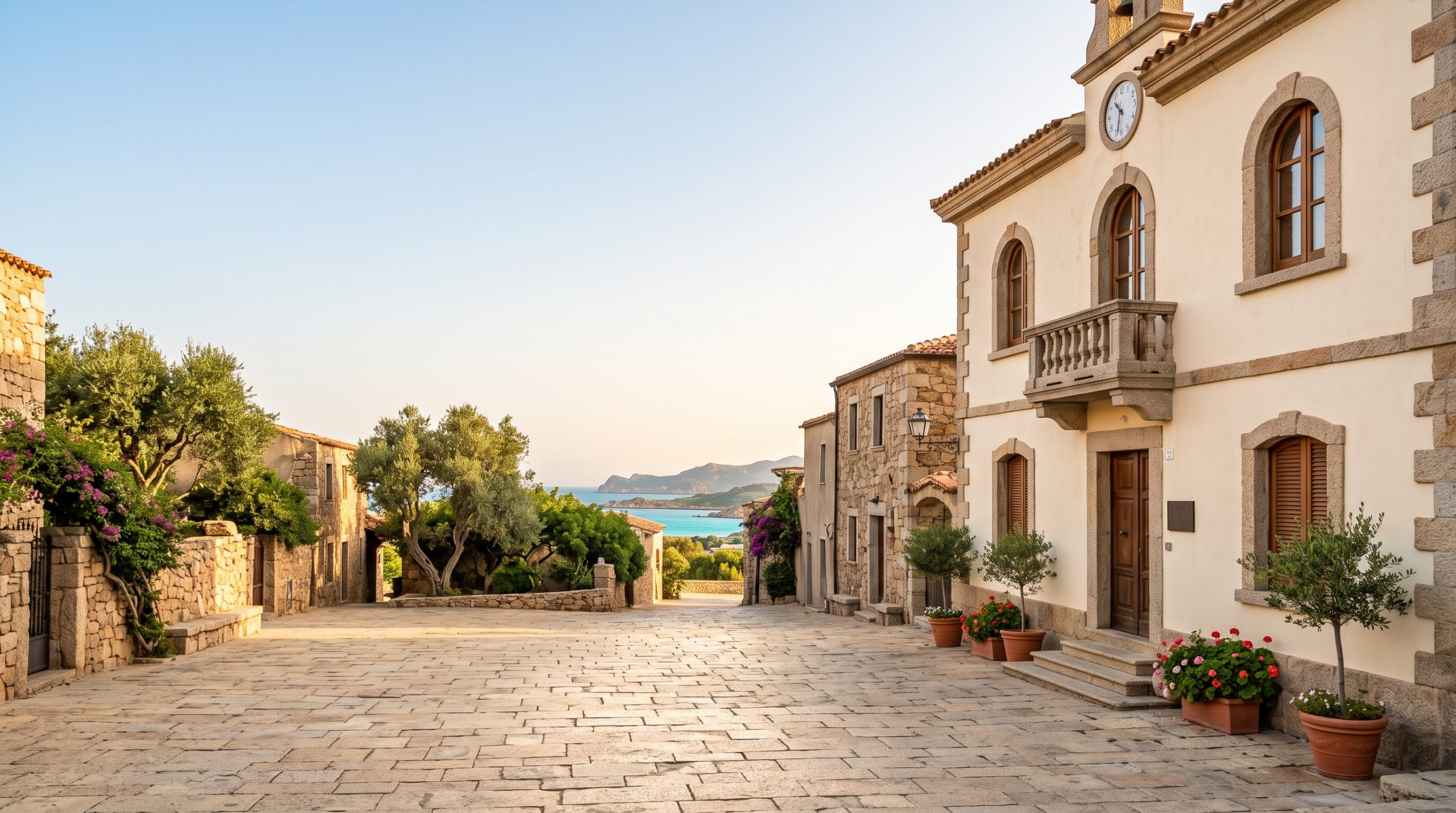
Sardinia then adds a geography problem on top of the paperwork. The authority that actually marries you is the comune, not the region and not the country, and Sardinia is divided into hundreds of comuni. The town hall that takes your declaration sits in one specific town, with its own calendar, and the cove you have been looking at photographs of for six months may be two hours of switchbacks away from its front door.
Four offices, one signature each
Yes, a US couple can marry legally in Sardinia. You collect an Atto Notorio, convert it into a Nulla Osta before US consular staff in Italy, have that legalized at a Prefettura, then make the Declaration of Intention to Marry at the comune performing the ceremony. Allow four to six months, and plan mainland days into the trip.
Where Sardinian paperwork needs the most patience
No single step here is difficult. What makes it feel harder than it is: two steps need you physically present in an Italian office, and neither of them can be done on the island. The embassy lists its notary service offices in Milan, Venice, Genoa, Florence, Rome, Naples and Palermo. There is no Sardinian entry on that list, and that is the single most useful line in this article. The Nulla Osta gets signed somewhere other than the place you are getting married.
So the trip becomes two trips. A mainland arrival with two or three working days in it, then the flight to Sardinia and the part you actually came for. Couples who like the idea of a few days in Rome before the coast find this easy. Couples who wanted to land at Olbia and never see a city will find it a chore, and for them the ceremony-only route further down this page is a better day, not a lesser one.
We can build the day around the paperwork, but we do not decide the law. Rules change and circumstances differ, so confirm the detail with the relevant registry office or your own consulate before you book flights. If you are still at the stage of working out what shape you want the day to take, our guide to planning an elopement covers the decisions that come before paperwork.
Build the Sardinian legal file in this order
Collect these in this order. Each one is the entry ticket for the next.
- The Atto Notorio. A sworn declaration that no legal impediment to the marriage exists, made under articles 95, 86, 89 and 97 of the Italian Civil Code. Italian consular guidance describes it as signed by the person marrying together with four witnesses, so it is not a form you complete alone at a kitchen table. You can obtain it at the Italian consulate covering your state of residence before you fly, or in Italy at any tribunal or local court. Published guidance on the witness count and the exact wording varies between consulates, so work from the instructions of the office you will actually use.
- The Nulla Osta. With the Atto Notorio in hand, you appear before US consular staff in Italy and swear the statement that becomes the Nulla Osta, the authorization granted under article 116 of the Italian Civil Code. It is booked as a notarial appointment, not a visa appointment, which matters when you are looking at the booking system and cannot find the right category.
- Legalization at a Prefettura. A US consular signature has to be legalized by Italian authorities before an Italian registrar can accept it. The embassy sends couples in Rome to the Prefettura’s Ufficio Legalizzazione on Via Stendhal, where the counter opens Monday, Tuesday, Thursday and Friday from 9am to noon, with service numbers handed out from 8:30am.
- The Declaration of Intention to Marry. Made at the Ufficio Matrimoni of the comune where the ceremony will take place, in front of the ufficiale di stato civile. Everything above crosses the counter here, in person, both of you.
- The apostille on your Italian marriage certificate. Obtained after the ceremony. This is the step that turns a Sardinian certificate into a document your own state will read without argument.
Two things sit alongside that list rather than inside it. The first is language: the comune works in Italian, and it decides which of your supporting documents it wants in Italian and who it will accept as the translator. We ask that question in writing, early, in the comune’s own inbox rather than a regional one. The second is shelf life. Every certificate in this chain expires, and they do not all last the same length of time, which is why we sequence the whole chain into the weeks close to the date instead of collecting the first piece a year out and letting it age in a drawer.
Turn the Sardinian ceremony date into a legal calendar
There are two timelines: the one that is technically possible and the one we would actually work to. They are not the same, and the gap between them is where a calm week comes from.
| Step | Real minimum | What we plan to |
|---|---|---|
| Comune chosen, registrar availability confirmed | Whenever that comune can fit you in | 9 to 12 months before the date |
| Atto Notorio at the Italian consulate covering your state | Four to 10 days to be ready once you are seen | 3 to 4 months before the date |
| Nulla Osta at a US notary service office in Italy | Any time before the comune appointment | The first working day of the trip |
| Prefettura legalization | One morning the counter is open | The morning after the Nulla Osta |
| Declaration of Intention to Marry at the comune | In person, before the ceremony | Two to three days ahead |
| Apostille on the marriage certificate | After the ceremony | Built into the days after |
We plan to the right-hand column. Six to nine months of lead time turns this into a sequence of quiet errands; eight weeks turns it into a sprint through appointment calendars you do not control. Our own diary is open for 2027, 2028 and 2029, which usually means the comune is the tighter constraint rather than us.
The details that trip couples up on this island
None of these are hard. All of them cost a day if you meet them for the first time on the morning they matter.
The Prefettura counter keeps its own week
Four mornings, not five. The Rome legalization office the embassy points couples toward runs Monday, Tuesday, Thursday and Friday from 9am to noon, and numbers go out from 8:30am. Wednesday is not on that list. If your flight lands Tuesday evening and your comune appointment is Thursday morning in Ogliastra, you have built yourself a puzzle. We read the office’s own opening pattern before we choose the arrival date, and we hold the flight until the office week and the ceremony hour line up.
Revenue stamps are not a card payment
The Atto Notorio is priced in marche da bollo, currently two at €16 and one at €10.62, and those are stamps you buy over a counter rather than a fee you settle by tapping a card at the desk. There is also a faster version: an urgent Atto Notorio issued on the spot carries a larger third stamp, currently €31.86 in place of the €10.62. Knowing that option exists is worth more than the money it costs, because it is the safety valve if the standard four to 10 day wait lands badly against your flights.
The comune is the authority, so pick it before you pick the cove
This is the Sardinian part. A registrar in Baunei and a registrar in Alghero are two different offices with two different calendars and two different lists of places they will officiate in. Couples usually arrive with a location in mind and work outward. It is faster the other way around: decide which comune is marrying you, find out what hours and what places it can actually give you, then design the day around that. Cagliari to Alghero is roughly 230 km and the best part of three hours on the SS131. Olbia down to the Ogliastra coast is two hours at best. Alghero to Bosa is only about 45 km, and the coast road takes an hour because it is one long series of bends above the water.
Names have to match, letter for letter
Middle names that appear on a birth certificate but not a passport, a hyphen in one document and a space in another, a maiden name recorded differently on a divorce decree. Italian registrars are careful people and they will notice. We flag this in the first planning exchange because it is the one problem that is genuinely easy to fix three months out and genuinely annoying to fix three days out.
The middle of August is the wrong week for an office day
Italian public offices thin out around Ferragosto, and the Sardinian coast is at its absolute fullest at the same time. We push paperwork days to either side of it. If August is the only month you have, we can still build a strong day, we just move the office business earlier and take the coastal hours very early in the morning instead of late afternoon.
The wind decides the west coast, not the forecast icon
The mistral comes in from the northwest, and Alghero, Bosa and the Sinis peninsula feel it first and hardest. It is not a reason to avoid the west coast. It is a reason to hold a second location on the sheltered eastern side and to keep the decision open until the evening before. Our destination guides go deeper into how the island’s regions behave season by season.
Registry and permit costs in Sardinia can change between seasons. Before you commit travel, confirm the current fee and processing window with the authority involved.
Legal at home, ceremony on the Golfo di Orosei
A large share of the couples we work with in Sardinia sign the legal paperwork at a courthouse or a registry office at home, weeks before they fly, and then hold their real ceremony on the island. This is not a downgrade and we would say so if it were.
What changes is entirely administrative. No consular notary appointment, no Prefettura morning, no Atto Notorio, no comune calendar deciding what hour you exchange vows. What that buys back is the thing that actually shapes the film: freedom over time and place. You can stand on the Golgo plateau above Baunei at 5.30am, walk the ninety minutes down to Cala Goloritzé, and say your vows with the pinnacle lit and the water still flat, because no registrar has to be there and no office has to be open. You can decide the location three days out based on the wind rather than six months out based on an availability email.
What does not change is everything that matters. The vows are the ones you wrote. Your witnesses are the two friends who flew out. The walk, the light, the swim afterwards, the film, the photographs, the delivery. Highlights reach you in five days and the full gallery or film in three weeks either way. If you want to see how this actually looks rather than take our word for it, our published stories and films are the clearest answer we can give.
Our side of the Sardinia plan, and your side of the legal file
We design the destination and the locations, build the timeline around real light and real travel time, research the permits and the access, and hold weather alternatives for every outdoor hour. On a legal Sardinian day, that also means shaping the itinerary around the office week: which city you land in, which morning the legalization counter is open, how many hours of driving sit between the comune and the coast, and what time the registrar can actually give you.
We do not file your paperwork and we do not appear at any counter on your behalf. Those signatures are yours, in person, and that is how Italian offices want it.
Photography and film sit in the same team here, and on a legal day that stops being a nice idea and becomes practical. A registrar may offer you 11am inside a municipal room while the light you want is at 7pm on a clifftop. One team covering both hours means nobody is renegotiating a second contract to make that work, and with eight of us there is always a second camera on the ground and a colleague in reserve. Coverage options and what sits inside each of them are set out on our pricing page.
If you have a date in mind, or two candidate comuni and no idea which is easier, write to us and we will tell you what we know about how each one works. Check Your Date and we will come back with a straight answer.
Common questions
How many days do we need in Italy before we can marry in Sardinia?
Enough to cover two in-person steps on the mainland before the comune appointment: the Nulla Osta at a US notary service office and the legalization at a Prefettura. We plan two to three working days for that, then the flight to Sardinia and two to three days on the island before the ceremony.
Can we get the Atto Notorio in the United States before we fly?
Yes, at the Italian consulate covering your state of residence, and it is the version we push couples toward. The alternative is obtaining it in Italy at a tribunal or local court, which adds another appointment to a week that already has several.
What is the difference between the Atto Notorio and the Nulla Osta?
The Atto Notorio is the sworn declaration that no legal impediment exists, made under articles 95, 86, 89 and 97 of the Italian Civil Code. The Nulla Osta is the authorization your own consular authorities in Italy then grant under article 116. You need the first to get the second.
How much do the documents cost?
The Atto Notorio is paid in revenue stamps, currently two at €16 and one at €10.62, or a €31.86 third stamp for the urgent same-day version. Consular and comune fees are set separately by each office, and the comune will quote its own figure for the ceremony room or an approved outdoor location.
Can the registrar come to a beach or a clifftop?
Each comune keeps its own list of places its registrar will officiate in, and its own calendar of when. That is why we settle the comune first and design the day’s light around the hour it can offer, rather than picking a cove and hoping. Some comuni are generous about outdoor locations and some are not.
Will a Sardinian marriage be recognized back home?
The apostille on your Italian marriage certificate is the final step in the chain and the one that makes the certificate readable to authorities at home. Get it before you fly back if you can, because chasing it by mail from another continent is slower than walking into the office while you are still in the country.
Is it faster to marry at home and hold the ceremony in Sardinia?
Considerably. It removes the Atto Notorio, the consular appointment, the Prefettura morning and the comune’s calendar in one move, and it hands you back control of the ceremony hour. For couples whose priority is the coast rather than the courthouse, it is usually the better shape of trip.
When should we start planning a legal wedding in Sardinia?
Nine to twelve months before the date is comfortable, because the comune’s availability is the piece nobody can rush. Six months is workable. Under three months, the ceremony-only route is the honest recommendation, and we will say so rather than let you race a stamp office.
Choosing your comune before you pick the cove
Tell us the week you are thinking about and the part of Sardinia you keep coming back to, and whether you would rather do the legal marriage here or at home. From there it is our job to work out which comune fits, which mainland city makes the office days shortest, and what hour of the day the light is worth building everything else around.
Everything on our side happens in writing. You send the inquiry form, we reply with a first brochure within 24 hours, and from there it moves to a tailored proposal, a contract and a 30% retainer, after which planning starts properly. Our calendar currently covers 2027, 2028 and 2029, and Sardinian dates tend to settle earliest for May, June and September. Tell Us Your Story and we will start with the calendar.