A peak-season adult day ticket at Plitvice Lakes costs 40 euros. Entry to Butrint, the UNESCO ruin field sitting on a lagoon south of Saranda, is currently around 1,000 lek, which lands somewhere between ten and twelve dollars depending on the day’s rate. That ratio then repeats itself across almost every line of the trip: nights, drivers, boat hours, the coffee you drink while the light comes up.
What it does not touch is our fee. The Adventure and the Expedition cost the same on the Albanian Riviera as they do in Dubrovnik, because team travel is included worldwide with no European or long-haul distinction. We have no commercial reason to push you toward either country, which makes this the easiest comparison we write.
So the trade-off is not money against quality of ground. Albania’s coast and its northern valleys hold their own against anything on the Adriatic. The trade-off is time: driving hours, a mountain season that opens later than most planners expect, and a legal route that behaves nothing like Croatia’s.
Albania if you have three days, Croatia if you have thirty-six hours
With three days or more, a rental car and no objection to a dawn start, Albania gives you more ground and quieter locations for a fraction of the daily cost. With a day and a half, or a legal ceremony that has to happen on this trip, Croatia’s short transfers and documented registry route earn their higher ground costs.
Line by line: what each country asks of you
This is the table we end up rebuilding in emails two or three times a month, so here it is once, properly.
| What you are comparing | Albania | Croatia |
|---|---|---|
| Our coverage | The Adventure from $4,900, the Expedition from $7,900 | Exactly the same figures, with team travel included and no long-haul distinction |
| Headline site entry | Butrint, currently around 1,000 lek a head | Plitvice Lakes, 40 euros for an adult day ticket from June to September |
| Money and borders | The lek, with cash still worth carrying for park kiosks. Outside Schengen. | The euro, and inside Schengen. |
| Legal route | Both of you appear at the Office of Civil Status in the municipality at least 11 days before the marriage, and two witnesses sign the record with you | Contact the district registry office at least three months ahead; birth certificate and certificate of no impediment apostilled and no older than three months |
| Arrival | Tirana is the working gateway, then a driving day to reach the south | Dubrovnik and Split airports both sit close to the coastal ground |
| High ground season | Theth and Valbona reliably reachable from late May into October | Plitvice runs year-round, at 10 euros an adult ticket from November to March |
| Crowd pressure | Concentrated on a handful of Riviera beaches in August; the inland valleys stay quiet | Dubrovnik holds cruise arrivals to two ships a day, which spaces the busiest hours rather than removing them |
| Genuinely better at | Scale, wild river ground, ruins before the Corfu day boats land | Boats, islands, stone towns, transfers measured in minutes |
Those two coverage figures are the same in every country we work in. What each experience carries, and what stays with you locally, is set out on the page for our three experiences.
Croatia’s advantage is measured in minutes
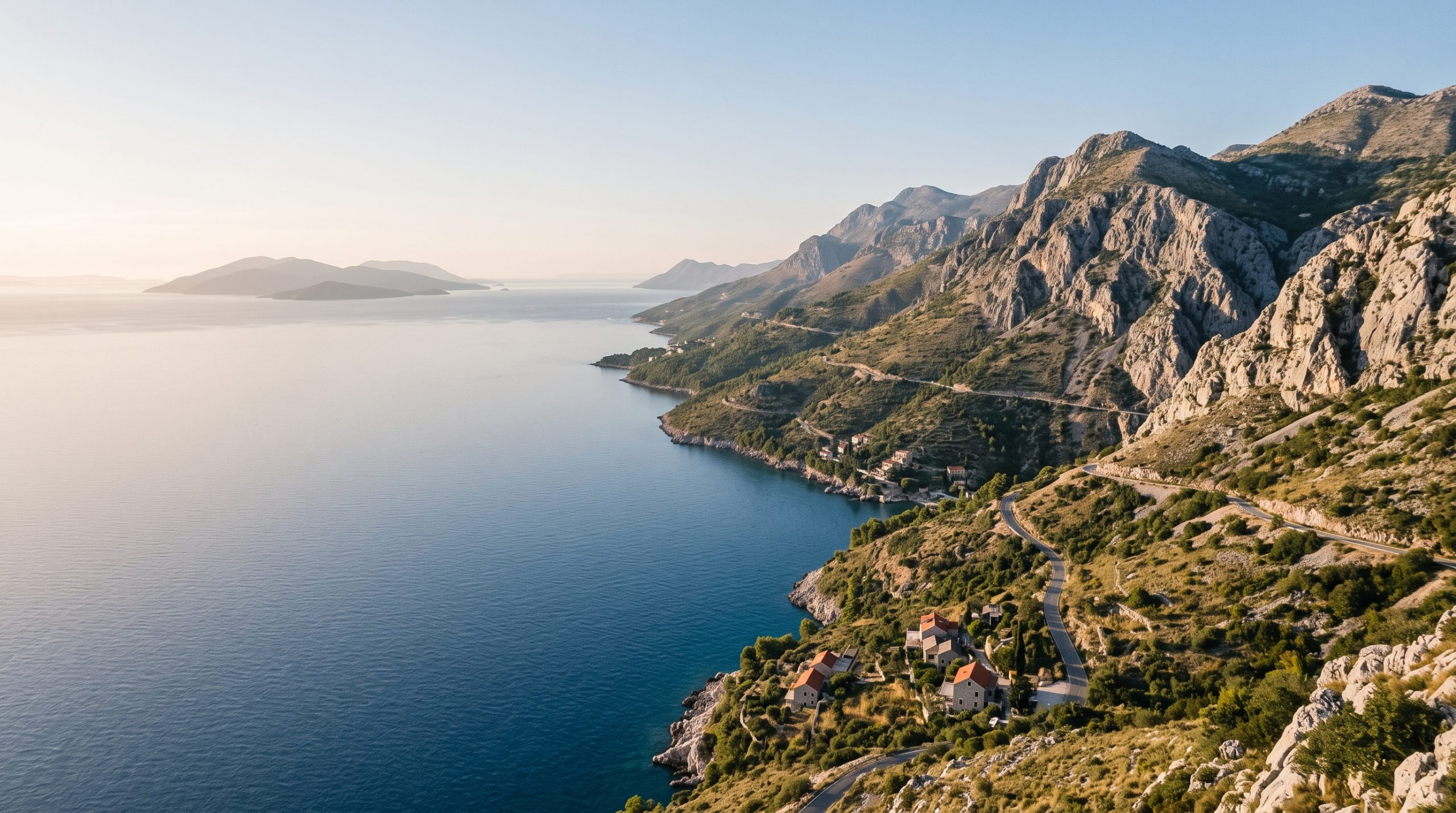
Croatia puts the airport next to the thing you came for. Land at Dubrovnik or Split and the water is close enough that a first-light start does not require a 4am departure from a hotel an hour inland. Boats change the arithmetic too. A skipper leaving a small harbour can put you on a stretch of coast in twenty minutes that would take half a day to reach any other way, and that is a genuine creative advantage, not just a convenience.
The legal route is the other thing Croatia does well, because it is written down. The country’s foreign ministry asks couples to contact the local registry office, the maticni ured, in the district where the marriage will take place at least three months before the date, and to bring a birth certificate and a certificate of no impediment, both apostilled and neither older than three months. Those two windows have to be threaded rather than simply obeyed. Order the documents too early and the ninety-day clock runs out before the registrar sees them. That sequencing is exactly the kind of thing we map onto your timeline before anything gets booked.
Now the part a brochure would leave out. At ten in the morning in July, the main lanes inside Dubrovnik’s walls are not a place where two people can say anything quietly to each other. The city holds cruise arrivals to two ships a day, which spaces the pressure without erasing it. We are not unimpressed by the old town, we are unimpressed by the hour everyone shoots it. So the walls get first light, the water gets the last hour, and the middle of the day goes somewhere with shade and a door that closes.
Albania’s case: the Vjosa, Butrint and a road that keeps going
The Vjosa became a national park in March 2023, the first wild river national park in Europe. The river runs free for roughly 270 kilometres from its headwaters in Greece to the Adriatic, which means gravel braids, side channels and pale water moving through a valley with almost no infrastructure in it. There is nothing comparable on the Croatian side of the Adriatic, and nothing comparable in most of Europe.
Then there is the shape of the country. Llogara drops from pine forest at altitude to the Ionian in a handful of switchbacks. Karaburun and Sazan sit offshore as a marine park. Butrint gives you a ruin field with a lagoon on three sides for around 1,000 lek a head, and it belongs to you if you are standing in it before the day boats from Corfu arrive. North of all that, Theth and Valbona are reliably reachable from late May into October, and the Koman ferry runs year-round on a thinner winter timetable.
Both countries are in our galleries and films, and the difference reads clearly once you see them side by side. Croatia comes back as stone, water and boats, tight and warm and textural. Albania comes back as scale, with the couple small in a frame that keeps going past them. Neither is better. They are different films, and it is worth knowing which one you actually want on your hard drive.
The honest caveat: the Riviera’s best-known beaches in August are busy, and the midday light on them is flat. That is not a reason to skip the coast. It is a reason to be on it at six in the morning and inland by noon, which is how we would build it anyway. Our destination guides go region by region on where that works best.
Three practical differences that change the answer
The paperwork clock runs the opposite way to expectations
Croatia, the EU member using the euro, asks for the longer runway: registry office contact at least three months out, with documents that expire in ninety days. Albania, outside the EU, works on eleven days. Both of you appear at the Office of Civil Status in the municipality where the marriage is registered, and two witnesses sign the record alongside you. Couples assume the non-EU country must be the harder one legally. On the calendar it is the more forgiving of the two. What Albania asks instead is presence: you have to be in that municipality, in person, on a specific day before the marriage. Croatia’s paperwork travels ahead of you, and Albania’s expects you to show up.
Where the driving day falls
In Croatia the inland parks are a morning’s drive from the coast and the coast is twenty minutes from the terminal. In Albania, Tirana is the practical international gateway and the south is a real drive from it, so a three-day trip spends a meaningful part of one day on the road. That day is not wasted. It is simply a day, and it has to be in the count. If you have five days, one of them on the road with the windows down is a good use of it. If you have three, we build the timeline backwards from your last transfer and keep you in one region.
What the microphone hears
Audio is the difference almost nobody predicts. On the Expedition we record vows properly wherever conditions allow, and conditions is the operative word. A harbour at ten in the morning is engines, wheeled suitcases and somebody’s tour headset. A valley above Theth at six is water and your own two voices. Croatia gives you the quiet version too, but it has to be engineered: early, high, or on a boat that has already left the marina. In Albania, outside August, quiet is closer to the default. If the recording of what you said to each other is something you expect to still be playing in ten years, that gap matters more than the ticket prices do. Tell us which of those two things you would protect first and we will build the day around it. Check Your Date.
Couple shapes we actually see
Not personality types. Actual constraints, because constraints are what a timeline is made of.
- Five days, a rental car and a 4:30am alarm that nobody resents: Albania. One Ionian dawn, one day on the Vjosa or above Llogara, one held in reserve for weather.
- Thirty-six hours on the ground and a flight home on Monday: Croatia. Airport, water, room, and no transfer longer than an hour.
- The legal marriage has to happen on the trip: Croatia if you can start with the registrar three months out, Albania if your timeline is tighter than that and you can both be at the municipal office 11 days ahead.
- Vows matter more to you than portraits: either country, on the Expedition, and we would put you inland or high up rather than on a working waterfront.
- Six people flying in to stand with you: Croatia’s short transfers keep a group together and on time. Guest numbers never change what we charge. They change access, permits and how long every move takes.
- You want two countries in one trip: that is the Odyssey, two to seven days, photography and film, quoted as a custom proposal.
Why Albania loses in generic comparisons and wins in real itineraries
The internet’s version of this comparison is that Albania is a cheaper Croatia. Three things are wrong with that.
First, the saving rarely stays a saving. The couples we plan for tend to put the difference straight back into the trip as an extra day, and the extra day is the single biggest upgrade available to an elopement. A third morning is a second chance at weather, a second location, an hour that is not being rushed. Money moved from nightly rates into days on the ground is money that shows up in the film.
Second, cheap is a season, not a country. From November to March a Plitvice adult ticket is 10 euros and the stone towns are close to empty, while Albania’s northern valleys are outside their road season and much of the Riviera has shut for winter. If February is your only free window, Croatia is both the quieter and the more workable of the two, and that inverts the entire premise of this article. Seasonality beats geography almost every time, which is the point we make first in our notes on how to plan an elopement.
Third, undiscovered is doing a lot of work in other people’s articles. Butrint receives day trips from Corfu. The Riviera in August is a busy regional holiday coast. What Albania genuinely offers is not emptiness everywhere, it is emptiness at scale in the places nobody has built a car park for: the river braids, the ridges above the pass, the valleys behind Theth. That is a real advantage, and it survives being described accurately.
Common questions
Is it legal for Americans to get married in Albania?
Yes. The marriage is registered through the Office of Civil Status in the municipality concerned, both of you appear there at least 11 days before the marriage, and two witnesses sign the record with you. There is no residency to serve first. We research the documents and the office; the fees themselves are paid locally by you.
Which country is actually cheaper once we are on the ground?
Albania, consistently. Site entry is the clearest single example: around 1,000 lek a head at Butrint against 40 euros for a peak-season adult ticket at Plitvice. Accommodation, drivers and boat hours follow the same direction. Our coverage fee is identical in both countries, so the gap sits entirely in what you pay locally.
How far ahead do we need to start the Croatian paperwork?
Croatia’s foreign ministry asks couples to contact the registry office in the relevant district at least three months before the date. Your birth certificate and certificate of no impediment need an apostille and must be no older than three months, so ordering them too early causes as much trouble as ordering them late.
Can we have drone footage in both Albania and Croatia?
Drone footage is included wherever it is legal, safe and appropriate, and the authorities are separate: the Civil Aviation Agency handles operator registration in Croatia under the EU framework, and the Civil Aviation Authority is the equivalent body in Albania. We confirm the permission and the flying window before any part of the film plan leans on aerials.
How many days do we need in Albania?
Three changes the trip: one coastal day, one inland day, one held back for weather. Two works if you stay on the Riviera. If you want the northern valleys as well as the Ionian, plan four or five, because the drive north is a day in its own right and Theth and Valbona are a late May to October proposition.
Is Croatia too busy in August for an elopement?
No, but August decides your hours rather than your locations. Cruise arrivals in Dubrovnik are held to two ships a day and the old town still fills by mid-morning, so the walls belong to first light and the water to the last hour. Plitvice runs timed entry, which means the inland day is planned around a booked arrival window.
Do you charge more for Albania because it is further off the usual routes?
No. Team travel is included worldwide, with no European or long-haul distinction, so the figures for one country are the figures for the other. Guest count does not move the figure either, since numbers affect access, permits and transport rather than the fee.
Can we do Albania and Croatia in the same trip?
Yes, and that is what the Odyssey exists for: two to seven days, photography and film, one or several destinations, quoted as a custom proposal. They are not neighbours, though. Montenegro sits between them and you are leaving Schengen on the way south, so plan for real hours at borders and keep the coverage days clear of them.
Tell us the constraint and we will build from it
The useful thing to send us is not a mood board. It is the fixed part: the week you can travel, how many days you have, whether the legal step has to happen out there, and how early you are genuinely willing to get up. From that we can say which of these two coasts fits, or which month would serve you better on either of them. Dates are currently open across 2027, 2028 and 2029.
We handle the planning in writing so nothing depends on matching time zones, start to finish. Your inquiry gets a reply and the first brochure inside 24 hours, then a tailored proposal, then a signed contract with a 30% retainer and planning begins. Highlights reach you 5 days after the day itself, and the full gallery or film within 3 weeks. Tell Us Your Story.