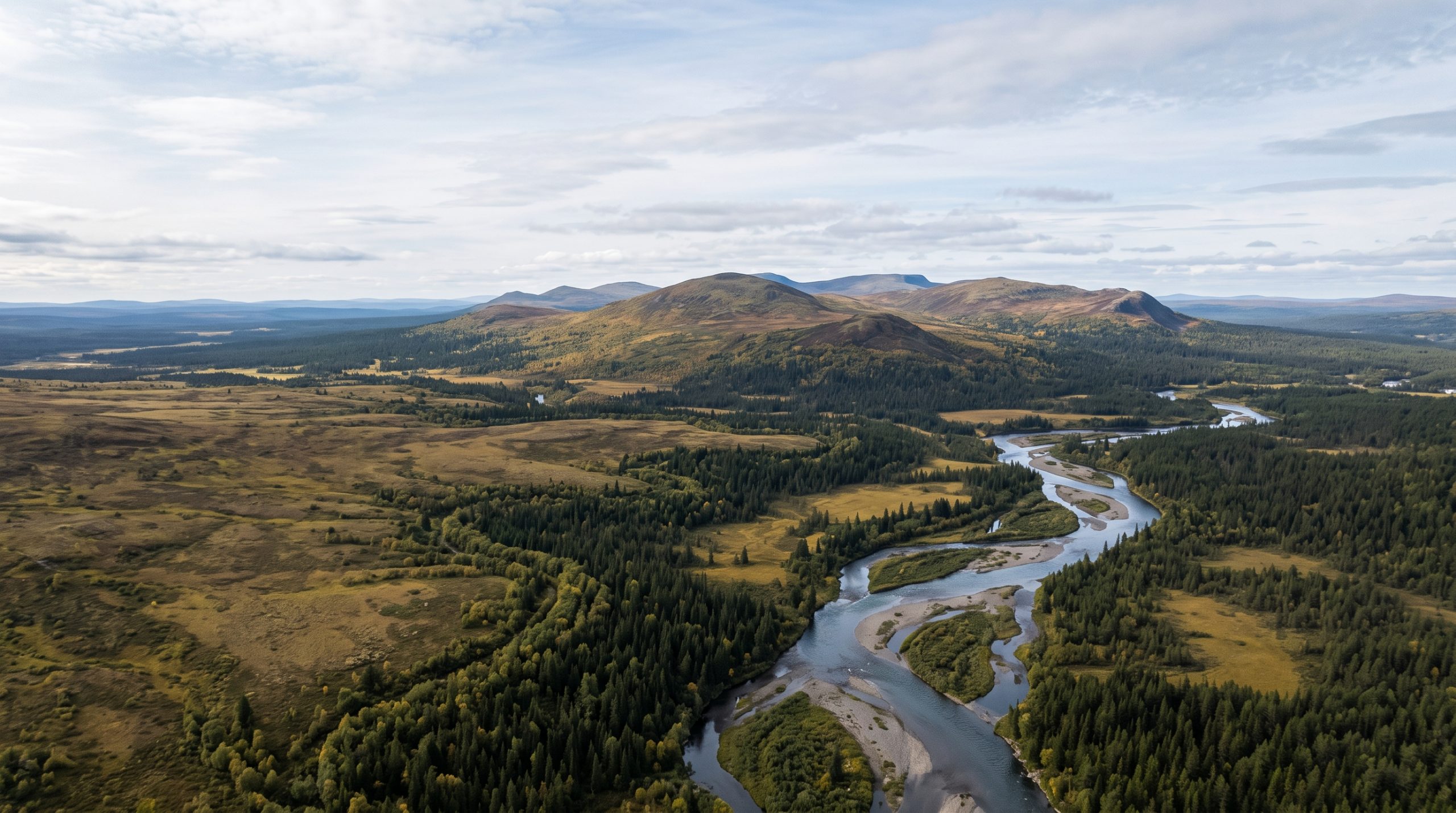
The boat up the Lemmenjoki leaves Njurgalahti once, in the early afternoon, and only on certain days of the week. That single line in a summer timetable decides more about a ceremony at Ravadasköngäs than any question of dress, style or month. Seventeen kilometers of river, one departure, one way back.
The other park in this article works the opposite way around. Urho Kekkonen has road ends, a gateway at Kiilopää and marked summer trails that start where the cars stop, so the constraint is not a printed timetable but your own legs and the hour you are willing to begin walking.
Between them these two cover a large piece of northern Finland. Lemmenjoki is the largest national park in the country at roughly 2,850 square kilometers, founded in 1956 and spread across the municipalities of Inari and Kittilä. Urho Kekkonen is second at around 2,550 square kilometers, running east from Saariselkä to the Russian border. Lemmenjoki recorded about 21,100 visits across the whole of 2024. Hold that number while you read the rest of this.
What state land allows, and who has to be standing there
Both parks are state land managed by Metsähallitus. Under everyone’s right you can walk in and stand where you like, so there is no venue to book and no site fee for a ceremony of two. Two things do need arranging in advance: Metsähallitus paperwork for filming, and an officiant physically present beside you.
Njurgalahti, the afternoon boat and the Ravadas gorge
Njurgalahti is where the road stops and the river starts doing the work. Scheduled river boats run up the Lemmenjoki through the summer, typically from the first week of June into the second half of September, on a handful of days each week rather than daily, with one departure in the early afternoon. Seventeen kilometers upstream you can step off at Ravadasköngäs, or stay aboard to Kultahamina, the last stop, out at the gold prospecting ground.
Ravadasköngäs is the reason most people make the trip. The Ravadas river drops around ten meters into a rock gorge before it joins the Lemmenjoki, and the walls of that cut are close enough together to keep direct sun off the water for most of the day. In late June, when the light outside the gorge is unbroken for twenty-four hours and unforgiving in the middle of it, shade that deep is a working asset rather than a compromise.
The walk from the landing to the falls is short, and the ground through the valley is sandy path under sparse pine with roots across it. That is kind terrain by Lapland standards, but it is still not a floor. Boots for the walk, shoes in a bag, and the change happens at the top where there is somewhere to sit. On the water it is the wind rather than the distance that matters. The boats are open, so a wool layer over a dress is the difference between arriving composed and arriving cold. It comes off at the landing and nobody ever sees it again.
Because there is one departure, the boat and not the sun sets the ceremony hour on this side. We plan it two ways. Either the day is built around the timetable, with the vows in the late afternoon at the falls and the walking hours afterward, or we drive to Njurgalahti and take the valley trail on foot, which runs about 22 kilometers up to the gold harbour and gives us back control of the clock. The park has roughly 60 kilometers of marked trail in total, and the river itself is around 80 kilometers long, so nothing about this valley is exhausted in an afternoon.
Where Saariselkä ends and the park truly begins
Urho Kekkonen is entered mostly from the west, and the honest picture of its crowds is a matter of radius. The ground within easy day-trip distance of the E75 entrances near Saariselkä carries most of the park’s visitors, and near the road the usual advice to arrive early does not fix much, because the people arriving early are arriving for the same reason you are. What fixes it is distance. An hour of walking past the busiest loops changes the ratio completely, and the further entry points are quiet in a way that surprises couples who have only seen the park from the highway.
Past the birch line the fells are rounded and treeless, with broad mires lying between them and duckboard laid where the ground stays wet. That combination is worth understanding before choosing shoes. A mire crossing in anything with a smooth sole is a slow business, and the open fell means wind with nothing to break it, which is generally a gift to a film and a nuisance to hair. Wilderness huts sit further in and are part of what makes this park what it is, though the open ones belong to whoever walks through the door that day, so we build the ceremony around a place on the ground rather than inside somebody else’s shelter.
Far out in the eastern reaches is Korvatunturi, which Finns will tell you is where Father Christmas lives. You are not going there in wedding clothes, but it is a useful measure of scale: the far side of this park is closer to Russia than to your hotel.
The hour the sun sits low in the north
This is the part most planning pages get wrong, and it is arithmetic before it is anything else. Lemmenjoki and Saariselkä sit far enough east inside the Finnish time zone that solar noon lands closer to 1:20 in the afternoon than to midday. Push that twelve hours and the sun’s lowest point falls around 1:20 in the morning. Through May, June and July it never goes under, so that low point is not darkness. It is the best light of the whole cycle, arriving from the north, skimming along the fell tops and turning the mires into sheets of metal.
At this latitude the sun also climbs and falls very slowly. Sidelight that lasts eight minutes in California lasts hours here, which is why a summer day can hold a ceremony at ten in the evening, a long walk after it, and portraits at one in the morning without anybody hurrying. The flat hour is the middle of the day. Between roughly eleven and three the light on open fell is high and hard, and we would rather use it for driving, eating and getting into position than for vows.
Winter inverts all of it. The fells hold the aurora over Urho Kekkonen through the dark months, and the whole plan compresses into a few blue hours around the middle of the day, which changes the shape of a ceremony rather than ruling it out. If you want the northern lights in your film, tell us that first, because it decides the month before it decides anything else.
Permits, reindeer herds and what a drone may do here
Everyone’s right covers a great deal in Lapland, including walking and filming across most wilderness ground, with protected and prohibited exceptions such as strict nature reserves. Beyond that, Metsähallitus is the office that governs the answer. Film productions often require a permit to work in state-owned areas, and applications go to the Metsähallitus registry office well in advance. A permit is always required for off-road motor traffic, which includes driving equipment into the terrain rather than carrying it, so we plan on foot and by boat and leave vehicles at the road end.
Still photography is treated more lightly. Metsähallitus states that photographing is mainly allowed as long as animals are not disturbed and vegetation is not damaged, and that in certain cases a photography permit is needed. Assessing an application takes around two months, which is the single most useful fact on this page for anyone thinking about next summer. Permit research and the applications are our work and are included in every experience. The fees that any authority or landowner charges are paid by you, and we tell you what they are before you commit to a location.
Both parks lie in reindeer herding country, and Metsähallitus asks anyone working with cameras there to take the needs of herding into account, calving season included, naming the head of the local herding cooperative as the person who genuinely knows the ground. We treat that as a planning step, not a formality. Drone flying is permitted in many nature reserves, but national parks contain zones where movement is restricted for part of the year or permanently, marked on the site maps and in the area regulations, and following animals with a drone is never acceptable. So aerials get confirmed as a zone and a time window first, and only then do they get written into the film. If you are at the earliest stage of all this, our guide to planning an elopement covers the order these decisions need to happen in.
Two cameras in a gorge this narrow
Standing room at the falls is measured in steps rather than meters, which is exactly where one team that does both jobs stops being a marketing line. The photographer works low near the water while the filmmaker takes the trail above, and because they planned the geometry on the way upriver, neither appears in the other’s frame at any point. The water is loud, so vows go a few steps back from the lip where the sound sits under the voices instead of over them, and the Expedition adds professional audio for exactly that problem where conditions allow. Out on the open fell the difficulty flips: there is nothing to stand behind for a kilometer and the wind runs straight across a microphone, so we set the direction of the ceremony so the breeze comes off your backs, and the second camera works from distance rather than from cover.
How all of that reads on delivery is easier to see than to describe, and the galleries and films from our couples are the fastest way to judge whether this is the register you want for water, fell and low northern light. Highlights reach you within 5 days and the full gallery or film within 3 weeks. Coverage runs from one full day with a dedicated photographer or filmmaker at $4,900, to a photographer and filmmaker working the same day from $7,900, with a multi-day Odyssey shaped as a custom proposal when both parks are in play, and the full breakdown sits on our pricing page.
Choosing between the fell and the river valley
These two places ask different things of a couple, and the choice usually comes down to whether you want a vessel or a trail underneath the day.
| Question | Lemmenjoki | Urho Kekkonen |
|---|---|---|
| Way in | Road to Njurgalahti, then a scheduled boat 17 km upriver, or the valley trail on foot | Road ends and gateways near Saariselkä, then walking on marked trail |
| Who sets the hour | The timetable, unless we walk in | You do |
| Ground in wedding clothes | Sandy path under pine, roots, a short rise from the landing | Duckboard over mire, then open stony fell |
| What the film gets | Moving water, gorge shade, a boat as a scene in itself | Horizon, weather crossing open ground, aerials where the zone allows |
| Quiet | About 21,100 visits in a whole year | Busy near the E75, empty an hour beyond it |
If you like the idea of a ceremony that begins with a boat and ends beside a waterfall, Lemmenjoki is the one. If you would rather set out at four in the morning, choose your own ridge and have nobody else in the frame for the whole day, Urho Kekkonen gives you that and more of it. And if long walking is not what either of you wants from a wedding day, say so plainly in your first message. We will build the hours on shorter ground near the road ends and spend the saved time on light instead, or tell you honestly that a different month or a different corner of Lapland fits what you are describing better. Our destination guides are a decent place to compare before you decide.
Common questions
Does the Lemmenjoki river boat run every day in summer?
No. The scheduled boats from Njurgalahti run on a published summer timetable, generally from early June into the second half of September, on several days each week rather than daily, with a single departure in the early afternoon. That is why we confirm the current season’s schedule before setting the ceremony hour, and keep the valley trail on foot as the alternative.
Can we be legally married inside the national park itself?
Finnish law requires that both of you and your officiant stand physically in the same place. A civil ceremony at a Digital and Population Data Services Agency service point on a weekday between 9.00 and 16.15 is free, while a ceremony they perform elsewhere or outside those hours carries a fee, currently 250 euros for an after-hours ceremony, plus the officiant’s travel. Many couples sign near Inari or Ivalo and hold the ceremony they will remember out at the falls.
We are both American. What does Finland need from us before the ceremony?
When neither of you is Finnish, the Digital and Population Data Services Agency needs a clarification on whether the law of your home country allows you to marry in Finland, and foreign documents usually have to be legalised and translated into Finnish, Swedish or English. We build that document trail into your planning timeline so it is finished long before you fly.
Do we need a permit to have our elopement filmed in these parks?
Film productions often need a Metsähallitus permit on state-owned land, and applications go in well ahead of the date. Photography is mainly allowed where animals are not disturbed and vegetation is not damaged, with a permit required in certain cases and roughly two months to assess it. Any off-road motor transport of equipment always needs a permit, which is one reason we walk.
Which of the two parks is quieter in September?
Lemmenjoki, comfortably. With about 21,100 visits in a year spread across 2,850 square kilometers, the valley is thin of people even while the boats are still running. Urho Kekkonen is quiet too, but only once you are an hour’s walk beyond the entrances near Saariselkä, so in September the honest difference is how far you are willing to go.
Planning two days in Inari
A trip that takes in both places usually wants two separate days: one governed by the river and its timetable, one governed by nothing but your own start time on the fells. We design the locations, build the timeline around light and real travel time, research the permits, and hold a weather alternative for each hour that needs one. Team travel is included worldwide, so getting our photographer and filmmaker to Njurgalahti is our problem rather than a line on your invoice. Our planning calendar for Lapland currently covers 2027, 2028 and 2029. Send the inquiry form and you will have a reply and our brochure within 24 hours, then a tailored proposal, then a contract and a 30% retainer to open the planning. We keep every planning decision in writing, at whatever pace suits you. Start Your Story.