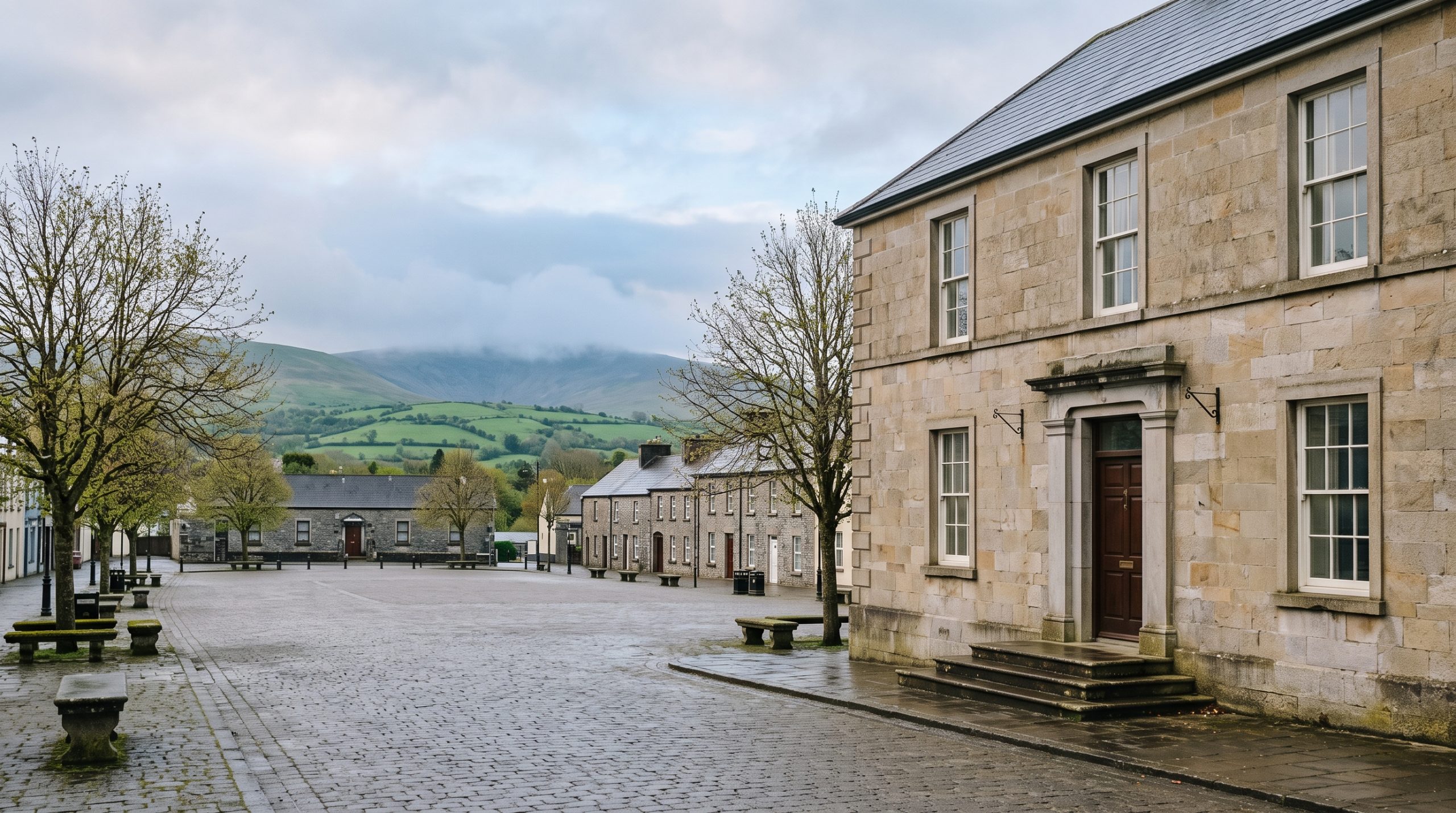
The date that governs an Irish elopement is not the morning you stand on a headland in Kerry with the Atlantic behind you. It is the day you sit down with a registrar and give notice, because Ireland asks for at least three months between that appointment and the marriage itself.
That one rule reorders the whole plan. Most couples pick a date, book flights, and think about paperwork somewhere in month four. Ireland works the other way around. You find out when the civil registration office can see you both, count forward three months, and only then start choosing which morning you want the light coming in low over the water.
Once the order is clear, the rest is orderly too. It comes down to one appointment and one form, with a €200 fee paid on the day you give notice. We plan Irish days around this clock regularly, and it is far more manageable than the forum threads suggest.
Three months, counted from the appointment
You can legally marry in Ireland as a visiting couple. Both of you attend a marriage notification appointment with an HSE Civil Registration Service at least three months before your intended date, sign a declaration that you know of no legal reason the marriage cannot happen, pay the €200 notification fee, and receive a marriage registration form.
The three-month notice is simple once the calendar is built
On paper this is a short process. One appointment, one declaration, one fee, one form. There is no long chain of offices to work through and no sequence of stamps to collect in a particular order before you can start. Compared with several other European countries, Ireland keeps the legal side blessedly compact.
The demanding part is not the paperwork. It is that both of you must attend the notification appointment, and that appointment has to sit at least three months before the date you intend to marry. For a couple flying from Denver or Charleston, that is a travel question before it is a legal one, and it is the first thing worth solving.
We can build the day around the paperwork, but we do not decide the law. Confirm your exact route with the relevant registry or consulate. What we can do is tell you how the timeline behaves in practice, because we build days around it.
A good number of couples read this far, look at the trip it implies, and decide to complete the legal marriage at home and hold their ceremony in Ireland instead. That is not a compromise and we treat it as a genuinely strong option. There is a section on it below, with what actually changes and what does not.
The sequence, from booking the appointment to signing the form
Here is the order things happen in. The steps that carry a deadline are the ones to hold on to.
- Choose a rough ceremony window before anything else. Not a fixed date yet. A two-week window you could live with, ideally two of them, because the appointment slot and the light will both have opinions.
- Book the marriage notification appointment with an HSE Civil Registration Service. Online booking is offered in some parts of the country. Where it is not, the office takes the booking directly. This is the step to take first, before flights, because the appointment date is what the three months is counted from.
- Ask that office for its appointment checklist. Each civil registration service publishes what you both need to bring, and the office handling your notification is the one whose list governs. Work from that list rather than from a summary written by anyone else, including us.
- Gather both sets of documents while the appointment sits on the calendar. Documents can be assembled after the slot is held. The slot cannot be assembled after the documents are ready, which is the wrong way around from most people’s instincts.
- Attend the appointment together, at least three months before your intended date. You sit down with a registrar, you both sign the declaration, and the €200 notification fee is usually paid there.
- Receive the marriage registration form. If everything is in order, the registrar issues it. This is the document known informally as a marriage licence. It is valid for six months from the date you intend to marry, and it is needed for a civil, a religious or a secular ceremony alike.
- Bring the form to the ceremony. The person marrying you signs it on the day. That signed form is what the marriage is registered from afterwards, which makes it the single most important object in your luggage.
Two things stand out in that list. The first is how early the booking has to happen relative to everything romantic. The second is how little of the process happens on the day itself. By the time you are standing on a beach at Slea Head, the legal work is one signature long.
Work back from the HSE appointment
Working backwards is the only way this timeline makes sense. Start with the hour you want to be exchanging vows, then walk it back through the constraints.
| Counting back from the ceremony | What happens | Why it will not slide |
|---|---|---|
| As early as you can manage | Booking the notification appointment | Waiting times vary between offices, and some times of year are busier than others |
| At least three months before the date | The appointment itself, with both of you present, the declaration signed and the €200 paid | The three months is a statutory minimum notice period, not a guideline |
| After the appointment | The marriage registration form is issued | It runs for six months from your intended date, so a moved date has a limit to how far it can move |
| Ceremony day | The form is handed over and signed by the person marrying you | The marriage is registered from that signed form |
| Afterwards | Registration of the marriage | This is the point at which the certificate you will later need actually exists |
The real minimum is three months and a day between the appointment and the ceremony. The comfortable minimum is different, and it has nothing to do with the law. It is however long it takes to get an appointment slot at the office you need, plus the time to gather two sets of documents without anything being couriered anywhere in a hurry.
The date we would work to is the appointment date, not the wedding date. That is the deadline that matters, and it is the one we hold our own calendar against when a couple asks us to keep an Irish week open.
Put real months on it and the shape becomes obvious. A ceremony in the second week of July means giving notice by the second week of April at the very latest, which in turn means holding an appointment slot well before that, in the part of the year when offices are working through everyone else’s summer plans. Aim for a February appointment and a July ceremony and you have three months of slack instead of three days. Registry fees and response times are not permanent; verify the current version with the office responsible for your case.
The parts couples get wrong on the first pass
None of these are difficult once you know about them. All of them cost time if you find out late.
The clock starts at the appointment, not at the inquiry. Writing to an office in January does not start the three months. Sitting down with the registrar does. Couples routinely lose six weeks to this one because they gather documents first and book second.
The appointment slot is the scarce thing, not the paperwork. The HSE is direct about this: waiting times vary from location to location, and some parts of the year are busier. If you are aiming at a summer date in the west, treat the slot as the thing to secure early and everything else as flexible around it.
Both of you have to be there. This is the requirement that shapes an American couple’s trip more than anything else, because it means being in Ireland at least three months before the ceremony. If your circumstances make that awkward, ask the office serving your ceremony area what applies to you, and tell us early so the travel plan can be built around the answer rather than bolted onto it.
The €200 is non-refundable and it is usually paid at the appointment. Budget it as spent the moment you sit down, and arrive expecting to pay in euro on the day.
The six-month validity runs from your intended date. This catches people out because it sounds like it should run from the day the form is issued. If your date shifts within that six-month window, the form can be amended by the office. If it shifts beyond the window, you need a new form. There is no charge for the replacement, but the new date needs three months’ notice of its own, so a big move resets the clock rather than adjusting it.
Go back to the office that did your paperwork. The HSE’s own advice is to contact the civil registration office that handled your notification if you need guidance later. Not a different office, not a general inquiries desk. The one that holds your file.
Marrying at home, and holding the ceremony on the Dingle Peninsula
Plenty of couples sign the legal paperwork in a county courthouse in their own state, then fly to Ireland for the ceremony that actually means something to them. We film and photograph a lot of these, and they are not lesser days.
What changes practically: no notification appointment, no €200, no three-month notice period, and no requirement to be in the country months ahead of your own ceremony. Your date becomes as flexible as flights and our calendar allow. If you want to marry in October and you are asking in August, this is the route that makes it possible.
What changes creatively: almost nothing, and one thing for the better. Because nothing has to be registered from the day, the vows can happen exactly where the ground and the light are best rather than where the paperwork can follow you. A ledge above Killary Harbour at the hour the cloud lifts. The Gap of Dunloe with nobody else on the road. We choose the spot for how it will look and feel, which is a freedom a legal ceremony does not always allow.
What does not change at all: the shape of the day, the words you say, whether someone stands with you to say them, the walk in, the long dinner afterwards. Couples who marry at home first often tell us the Irish ceremony felt more like the real one, because by then the administrative part was months behind them and nobody was thinking about a folder of documents while standing on a cliff. If you are still deciding between the two routes, our guide to planning an elopement works through the practical differences without pushing you either way, and the destination guides cover what each region actually gives you in each month.
Tell us which route you are leaning toward and we will lay out what the Irish week looks like either way. Send Us a Message with your rough window and we will tell you honestly whether it holds together.
What we coordinate while the registrar handles the legal file
Our part is the planning around the constraints. We hold your dates against office availability, build the timeline so the appointment and the ceremony sit in a sensible relationship, and set the ceremony hour against the light rather than against convenience. In late June the west holds usable light past ten in the evening, which opens up a ceremony hour most couples never consider. In December the same coast does not get proper light until after half eight in the morning, and a timeline that ignores that produces a day of grey frames.
We also research permits and the access questions that come with them, and we plan weather alternatives, because Irish coastal light changes faster than any timeline can predict. What we do not do is file your paperwork, act as your legal advisers, or attend the notification appointment on your behalf. That part stays with you and the registrar, and it is genuinely the smaller half of the work.
On a legal day, the signing happens once and it happens quickly. That is where having a photographer and a filmmaker from the same team on the ground earns its place: the wide frame and the close one both exist without anyone asking you to sign anything twice. You can see how that plays out across full galleries and films from days we have shot, which is the most useful thing to look at before you write to us. Highlights reach you within five days of the ceremony, and the full gallery or film within three weeks.
Team travel is included worldwide, so getting our photographer and filmmaker to Kerry or Connemara is not a line item you have to solve. Coverage options and what each includes are set out on our pricing page.
Planning starts once the contract is signed and the 30% retainer is paid. From that point the location design, the custom timeline built around light and real travel time, the permit research and the weather alternatives are all ours to carry, and the notification appointment is the one date in the plan we cannot attend for you.
Common questions
Do we both have to be in Ireland three months before the wedding?
Both of you must attend the marriage notification appointment, and that appointment has to be at least three months before your intended date. For couples traveling from the United States that usually means an earlier trip or a longer stay. If your circumstances make attending in person difficult, ask the civil registration office serving your ceremony area what applies to you before you book anything.
How much does giving notice of marriage in Ireland cost?
The notification fee is €200. It is non-refundable and it is usually paid at the appointment itself, so plan to settle it in euro on the day.
How long is the Irish marriage registration form valid for?
Six months from the date you intend to marry. That is measured from your intended ceremony date rather than from the day the form is issued, which is the detail most couples misread.
What happens if we move our elopement date after giving notice?
If the new date falls inside the six-month window, the office can amend your form. If it falls outside, you will need a new marriage registration form. There is no charge for the new one, but the new date needs three months’ notice in its own right.
Can we get married in Ireland with less than three months’ notice?
There is a court exemption route through the Courts Service for couples who cannot give the full notice, and it involves a court application supported by an affidavit sworn by both of you. It is a formal process rather than a shortcut, and most couples plan around the three months instead or hold the legal marriage at home.
Do we need the marriage registration form for a church or secular ceremony too?
Yes. The form is required for civil, religious and secular marriages alike, and whoever marries you signs it on the day.
How far ahead should we book the notification appointment?
As early as you reasonably can. Waiting times vary between offices and some times of year are busier than others, so the appointment slot is the part of the plan with the least give in it. We treat that appointment date, not the wedding date, as the real deadline.
Choosing an Irish date you can keep
Start with two possible ceremony windows rather than one, find out when the office that serves your chosen area can see you, and let the three months fall where it falls. Dates that are chosen in that order tend to survive contact with reality. Dates chosen the other way around tend to move.
We are booking 2027, 2028 and 2029, and everything between your first message and the finished film happens in writing, on your time zone rather than ours. Send us your rough window, the region you are drawn to and whether you are marrying legally in Ireland or at home, and we will reply with an honest read on the timeline and an initial brochure within 24 hours. Check Your Date and we will take it from there.