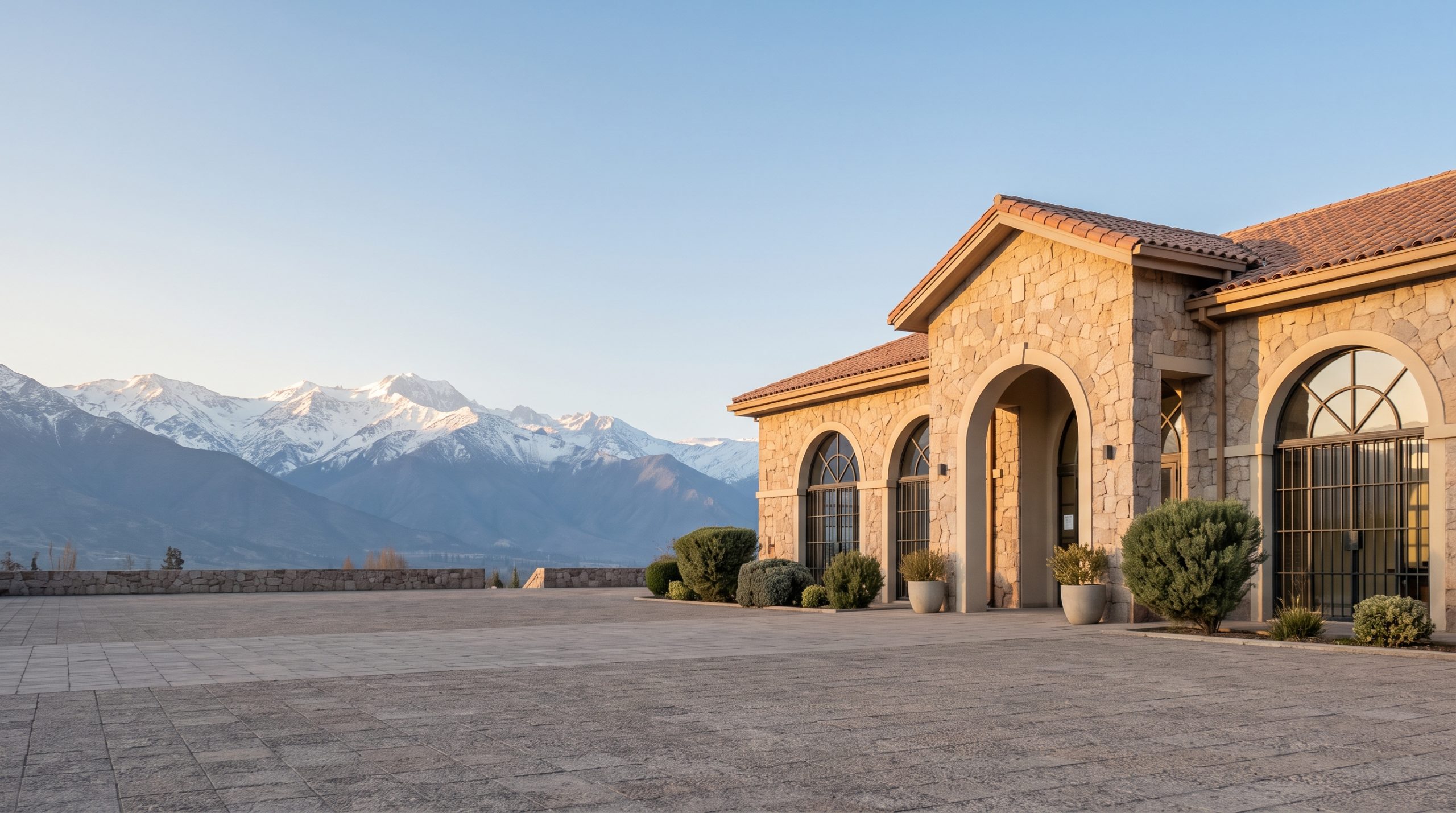
Chile is one of the more welcoming countries in South America for two foreigners who want to be legally married there, and the reason is refreshingly dull. There is no residency requirement, no minimum number of days in the country and no waiting period between filing and marrying. Both of you need to be 18, neither of you can already be married, and a valid passport or home-country identity document is what the Registro Civil asks a foreign party to produce.
What Chile has instead of a waiting period is a rule about geography. The civil officer who takes your paperwork is the officer who then has to conduct your marriage, and the ceremony can only happen inside that officer’s own jurisdiction. File in Santiago and you cannot be married on the steppe below the Torres del Paine towers. Work with the office that governs that ground, deep in the Magallanes region, and you can.
The money is not the obstacle either. A ceremony inside a registry office costs nothing beyond the marriage booklet, currently CLP 1,830. Held somewhere else, within the officer’s working hours, the tariff is CLP 21,680; outside those hours it rises to CLP 32,520. The peso has traded roughly between 900 and 1,000 to the US dollar in recent years, which puts the most expensive version of the legal paperwork at something like 35 dollars.
No residency, no waiting period, one office that owns your file
Chile sets no residency requirement and no waiting period for foreign couples. Both of you must be 18, unmarried and identified by passport or home-country ID. You make the manifestación before a civil officer with two witnesses, and that same officer marries you within the following ninety days, at the office or at a place you choose inside their jurisdiction.
Where the admin gets awkward
Nothing in this process is hard. It is simply choreographed in a way that catches visiting couples out, because the three moving parts sit in different places. The eligibility rules are light: 18 or over, legally capable, not already married, no live civil union with a third person, competent witnesses, consent given freely. There is no notice period to serve and no document you have to produce weeks ahead.
The fiddly parts are the officer, the witnesses and the language. One officer has to handle both your manifestación and your ceremony, so the paperwork has to happen in the region where you intend to marry. The Registro Civil’s published guidance asks your two witnesses to hold a current Chilean identity card and to understand Spanish. And Chilean law requires an interpreter to be present through the whole legal act if either of you does not speak Spanish.
None of that is a wall. It does mean the legal marriage wants its own slot in the trip rather than being folded into the morning of the ceremony, and it means a great many couples we work with in Chile choose the other route entirely: marry at home, then hold the ceremony that matters to them somewhere the officer could never have traveled to anyway. Both shapes are good. Tell us which one you are leaning toward and we will build the day around it.
We are photographers and filmmakers, not lawyers. Rules change and circumstances differ, so confirm the detail with the relevant registry office or your own consulate before you book flights.
The file, step by step
For two foreign nationals with no previous marriage between them, the chain is short. It is worth assembling it in this order, because each item depends on the one above it.
- Passports, valid. The Registro Civil’s guidance for foreign parties names the identity document of your country of origin or your passport. This is the only document most visiting couples need to bring.
- Confirmation that neither of you is currently married. Chile bars anyone already married, and anyone in a live civil union with a third person, from marrying. If either of you has been married before, ask the office where you will make the manifestación, in writing, which document it wants to see and in what form.
- Any foreign document, apostilled in the country that issued it. Chile is inside the Hague Apostille system, and documents issued abroad are apostilled at home. Chile will not apostille a foreign document for you, so this step cannot be left until you land.
- A Spanish translation of anything not already in Spanish. The registry works in Spanish, and the office receiving a document is the one that tells you which translation it will accept, so put that question to it in the same message that asks for your date.
- Two witnesses, 18 or over. Per the Registro Civil, each needs a current Chilean identity card, and anyone who cannot follow Spanish or make themselves clearly understood cannot serve. They give their statement at the manifestación and appear again at the ceremony.
- An interpreter, if Spanish is not yours. The law puts the interpreter inside the legal act itself, at the manifestación, at the witnesses’ statement and at the ceremony, and their name, surname and address are written into the record.
- A date and time held with the office whose jurisdiction covers your site. Online booking runs through ClaveÚnica, which is tied to a Chilean identity number, so couples arriving from abroad use the other route the Registro Civil publishes: go to one of its offices and ask for the date there.
The ninety-day clock and the hour you actually want
Chilean law is unusually generous about timing. At the moment you make the manifestación, your two witnesses give their statement that there is nothing preventing the marriage. From that statement, the ceremony can follow immediately, and it must happen within ninety days. Let the ninety days pass and the manifestación and the witnesses’ statement are simply done again.
So the legal floor is low. What actually governs your calendar is the officer’s availability for the place and the hour you want, which is why we work backwards from the ceremony hour rather than forwards from the paperwork.
| Step | Legal minimum | What we plan to |
|---|---|---|
| Region chosen, and with it the office whose jurisdiction covers the site | Before anything else is booked | Six to nine months out |
| Any document from a previous marriage, apostilled and translated | In hand at the manifestación | Three months out |
| Date and time held with that office | Before you fly | As early as the office will take it |
| Manifestación, with both witnesses present | May be the same day as the ceremony | An earlier day in the same trip |
| Ceremony | Within ninety days of the witnesses’ statement | The hour the light is right, same trip |
| Chilean marriage certificate, apostilled for use at home | After the ceremony | Ask the office how it issues the apostille while you are still in the country |
The tariff depends entirely on where and when the officer stands, which is the one piece of Chilean marriage bureaucracy that collides directly with photography.
| Where the ceremony happens | Registry tariff |
|---|---|
| Inside a Registro Civil office, within working hours | No charge, plus CLP 1,830 for the marriage booklet |
| Away from the office, within the officer’s working hours | CLP 21,680 |
| Away from the office, outside working hours | CLP 32,520 |
Fees and deadlines quoted here were correct at the time of writing and are worth re-checking with the office that issues them.
Read those two rows next to a Patagonian summer. In late December the sun in Magallanes does not set until close to 10pm, and the good light on the granite runs long after any office has closed. An evening ceremony there is an out-of-hours ceremony, so we plan for the higher tariff and confirm the officer’s willingness to be on the steppe at that hour before we build a timeline around it. In the Atacama the arithmetic is different again: sunset sits much earlier and more consistently year-round, which makes a legal ceremony at good light considerably easier to arrange.
Five details that decide how the day runs
- The officer is not interchangeable. Chilean law is explicit that the marriage is celebrated before the officer who handled the manifestación and the witnesses’ statement, and that the venue must sit inside that officer’s jurisdictional territory. This is the single fact that decides which region your paperwork belongs to.
- Your witnesses will probably be local people. Published guidance varies on this point, and the office you will be standing in front of is the one that governs it: the Registro Civil asks for two witnesses over 18 holding a current Chilean identity card, who understand Spanish. Friends who flew in from Denver are wonderful guests and, on that guidance, not the pair who sign.
- An interpreter is part of the legal act, not a convenience. If one or both of you does not speak Spanish, the manifestación, the witnesses’ statement and the ceremony are all conducted through someone able to interpret your language, and that person’s details are recorded. Settle who that is in writing well before you fly.
- The ninety days run from the witnesses’ statement. Not from the day you booked, not from the day you landed. If a plan slides past that window, the manifestación and the statement are repeated, which is inconvenient rather than serious, and entirely avoidable with a sensible order of operations.
- Apostilles happen where the document was born. Foreign paperwork is apostilled in its country of origin, and the US Embassy in Santiago does not provide apostille services. Anything you need authenticated goes through the process at home, before departure.
Signing at home without giving up the destination ceremony
This is the route most of our Chilean couples take, and it is not a compromise. You complete the legal marriage in your own county or state, where you already understand the system, and then you come to Chile for the ceremony itself: your words, your celebrant or a friend, the two of you and whoever you brought.
What changes is everything the registry constrains. The ninety-day clock disappears. The jurisdiction rule disappears with it, so the ceremony can happen on the dark-sand beach at Cucao on Chiloé at first light, or on a ridge in the Cajón del Maipo two hours from Santiago as the last sun leaves the peaks, without an officer’s travel schedule inside the plan. Your witnesses can be anyone, in any language. Nobody has to be back before an office closes.
What does not change is the part you will actually remember. You still write vows and say them out loud. You still need permission for where you stand, because Chile’s national parks are administered by CONAF and access for a ceremony and a film crew is arranged, not assumed, and we do that research either way. The photographs and the film are identical in scope, ambition and delivery. If you want to see how a day like this reads when it is finished, the galleries and films in our published stories are the honest answer, and the fundamentals of planning an elopement are the same whether a registrar is present or not.
Where we fit into the legal process
Our side of this is the design and the logistics. We choose locations and build a timeline around light and real travel time, which in Chile means honest numbers rather than optimistic ones: about three hours by road from Punta Arenas up to Puerto Natales, then roughly two hours more to the eastern entrances of Torres del Paine; around ninety minutes from Calama airport into San Pedro de Atacama. We research the permits, we hold weather alternatives, and where a registry officer is involved we shape the ceremony hour around both the light and the officer’s availability, then keep the rest of the day clear of anything that has to be rushed.
Your side is the legal file. We are not lawyers and we do not file paperwork or represent you at any counter. What we will do is tell you which questions to put to which office, and in what order, so that you are not discovering the jurisdiction rule two weeks before you fly.
The ceremony itself is brief. The officer reads the witnesses’ statement back, repeats the reminder that consent must be freely given, and reads articles 131, 133 and 134 of the Civil Code aloud, the ones that set out what spouses owe each other. It goes quickly, and it goes quickly in Spanish. That is exactly the hour where having a photographer and a filmmaker from the same team pays for itself: one is on faces and hands, the other on the wider frame and the audio of the vows, and nobody is asking anybody to do it again for the camera. Team travel is included worldwide, flights and accommodation for the assigned team with no long-haul distinction, and the coverage options are set out on our pricing page. Guest numbers change access, permits and transport rather than our coverage.
Highlights reach you five days after the day itself, and the full gallery or film inside three weeks. Dates are currently open across 2027–2029, and our destination elopement guides are a decent place to narrow the region before you write to us. When you do, tell us the month and the ground you are drawn to and we will tell you honestly what the light and the office can both give you: Check Your Date.
Common questions
Do we need to live in Chile or stay a minimum number of days before we can marry?
No. Chile sets no residency requirement and no minimum stay for foreign couples, and there is no notice period to serve. The Registro Civil’s eligibility rules are about age, capacity, not already being married and having competent witnesses, not about how long you have been in the country.
Can our friends from home be our two witnesses?
On the Registro Civil’s published guidance, no. It asks for two witnesses over 18 with a current Chilean identity card, and rules out anyone who cannot understand Spanish. Visiting friends stay guests. This is one of the first things to settle with the office where you will make the manifestación.
Do we have to speak Spanish to get married in Chile?
You do not, but you cannot skip the language either. Chilean law requires the manifestación, the witnesses’ statement and the ceremony to be conducted through a person able to interpret your language if one or both of you does not know Spanish, and that person’s name, surname and address are entered in the record.
Can a registry officer marry us inside Torres del Paine National Park?
A civil officer can conduct a marriage away from the office, as long as the place sits within that officer’s jurisdictional territory, and the paperwork has to be done with the same officer. That points your file at the Magallanes region rather than Santiago. Park access for a ceremony is a separate permission, since Chile’s national parks are administered by CONAF.
How much does the Chilean paperwork actually cost?
A ceremony inside a Registro Civil office is free apart from the marriage booklet at CLP 1,830. Away from the office it is CLP 21,680 within the officer’s working hours and CLP 32,520 outside them. Whichever version you end up with, the entire legal bill stays under 35,000 pesos.
Can we do the paperwork in Santiago and get married in Patagonia?
No, and this is the mistake worth avoiding above all others. The officer who handles your manifestación and the witnesses’ statement is the officer who conducts the marriage, and the venue must be inside that officer’s jurisdiction. Choose the region first, then the office, then the date.
Will our Chilean marriage certificate be recognized at home?
Chile is part of the Hague Apostille system, so the certificate the Registro Civil issues can be apostilled for use abroad, and that apostilled certificate is what your own authorities will want to see. Note that the US Embassy in Santiago does not issue apostilles, so plan the Chilean side of it before you leave.
Can same-sex couples marry in Chile as visitors?
Yes. Chilean law makes no distinction here. The Registro Civil’s own guidance addresses same-sex couples directly, including which marital property regime they may elect, and the process, the documents and the tariffs are identical.
Tell us the region and the date you are circling
Chile rewards couples who decide early where they want to stand, because in this country the ground you choose decides which office holds your file. Send us the month, the region and whichever route appeals, legal marriage here or a ceremony without a registrar, and we will come back with a shape for the day, the light you can expect and the questions worth asking. The whole planning process stays written and easy to revisit: the inquiry form, then a reply and an initial brochure inside 24 hours, then a tailored proposal, and planning begins once the contract is signed and the 30% retainer is paid. Tell Us Your Story.