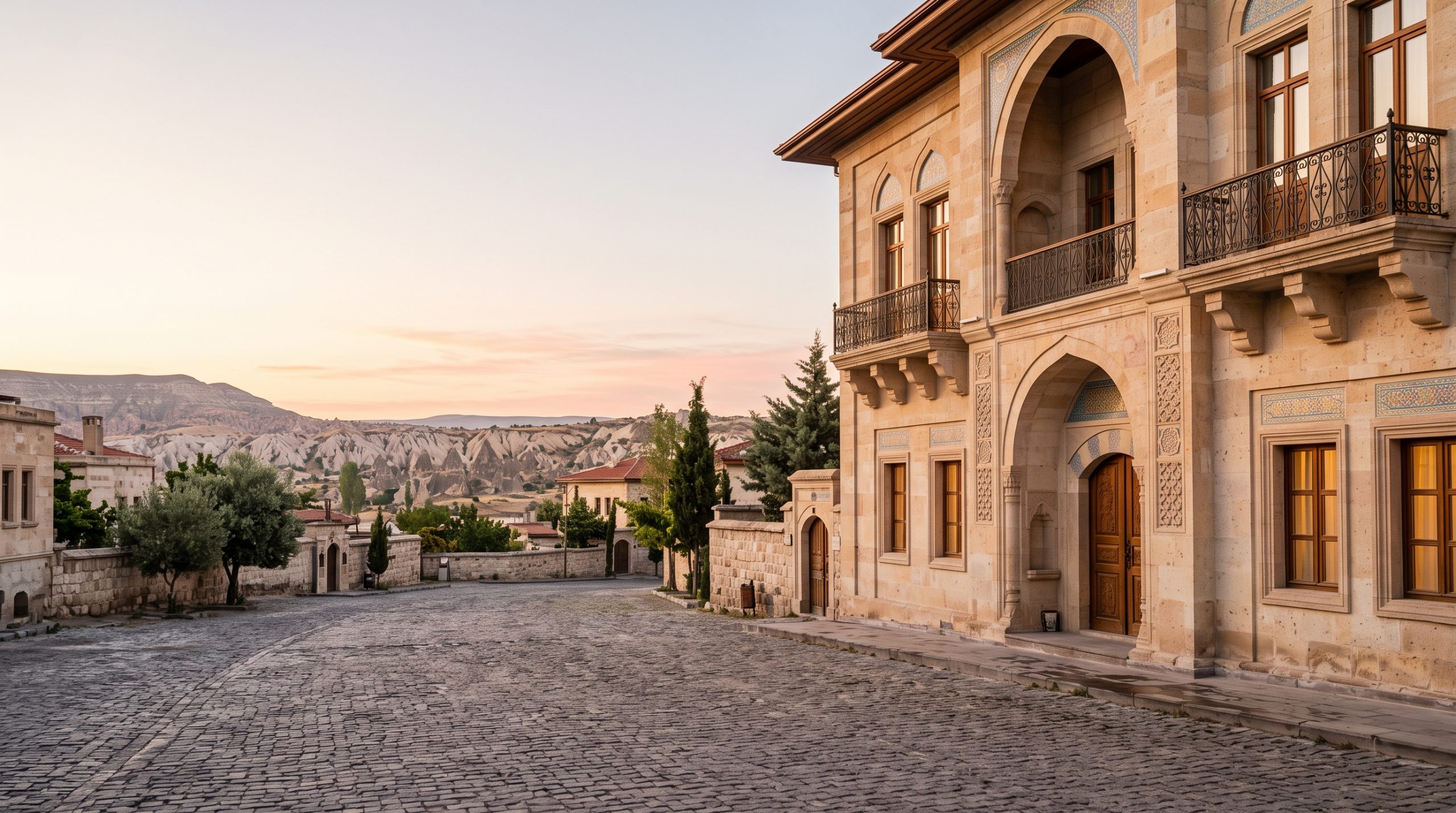
Search for a Certificate of No Impediment for Turkey and you get a wall of checklists that contradict each other. The document a Turkish marriage office actually wants is called an evlenme ehliyet belgesi, and if you hold a US passport, the version available to you is an Affidavit of Eligibility to Marry. The US Embassy in Ankara publishes the exact statements the Turkish government requires on it. You print that wording on a single sheet, carry it with you, and leave it unsigned until you are standing in front of the notary.
Once the certificate exists, a clock starts. Under Turkey’s marriage regulation, the file built around it stays alive for six months from the date the evlenme ehliyet belgesi was issued, and if the ceremony has not happened inside that window the office cancels the file. The second thing worth knowing early is smaller and catches more people. Your name has to read identically on every page. Arnavutköy municipality in Istanbul states it flatly: one letter or one character of difference and the counter stops.
We plan and shoot elopements in Cappadocia, along the Lycian coast and on the Aegean, and this is the part couples worry about most, usually with less cause than they think. Below is the chain in the order you have to build it, the clock that governs the whole thing, and the counter-level details that quietly hold files up.
What Turkey calls the certificate, and who issues yours
Turkey does not issue a Certificate of No Impediment to visitors. Its marriage offices ask each foreign partner for an evlenme ehliyet belgesi, and for Americans that document is an Affidavit of Eligibility to Marry, notarized at home and apostilled by the state where the notary signed, or notarized at the US Embassy in Ankara.
What is simple, and what takes patience
Nothing in this chain is closed to two Americans on a tourist stamp. The awkwardness is administrative and it lives in two places: which office puts a notary seal on your affidavit, and which office then certifies that seal so a Turkish marriage registrar will accept it. Get those two right and the rest is photographs, a short blood panel and a form.
We are photographers and filmmakers, not lawyers. Rules change and circumstances differ, so confirm the detail with the relevant registry office or your own consulate before you book flights.
There is one honest fit question buried in the process. The consular route asks you either to finish the paperwork at home before you fly, or to spend part of your trip in Ankara or Istanbul. If your plan is to land at Dalaman, drive to the coast and fly out ten days later, the legal marriage is still perfectly possible, it just has to be designed into the itinerary rather than bolted on at the end. Tell us which shape you want and we will build the days around it, or show you the ceremony-only route further down this page, which many couples end up preferring. If you are still choosing a region, our destination elopement guides are a better starting point than a document list.
From the first certificate to the ceremony
Each partner builds a separate file, and the pieces have to arrive in sequence. An apostille cannot precede a notary seal, and a translation cannot precede the document it translates.
- The affidavit wording. The US Embassy publishes the statements Turkey requires, in English with Turkish alongside. Print it on a single piece of paper and bring it with you. Do not sign it in advance.
- The notary seal. Either before a notary public in the United States, or at a notarial appointment at the Embassy in Ankara or the Consulate General in Istanbul, where the document is handed back to you the same day.
- The authentication. If it was notarized at home, you need an apostille from the state where the notary took place, and no other state will do. If it was notarized in Turkey, the Turkish government requires the consular officer’s signature to be authenticated: at the Consular Department of the Turkish Ministry of Foreign Affairs for the Ankara district, or at the legal office of the sub-governor of your province for the Istanbul district.
- Passport and photographs. The Embassy’s Istanbul-district instructions ask the American party for a passport and six photographs. Under the marriage regulation those photographs must be color, front-facing, in civilian clothes and taken within the last six months, and color photocopies are refused. Arnavutköy’s marriage office also lists a notarized Turkish translation of the passport in its file.
- Sworn translation, notarized in Turkey. Arnavutköy accepts the original document together with a notarized Turkish translation made in Turkey. Documents issued by honorary consulates are not accepted at all, which is worth knowing before you drive to the nearest one.
- The health report. Mandatory for both of you, carried out at the clinic your marriage office designates rather than at a clinic you choose. It records your blood type and a short standard blood panel. A report without your photograph and the doctor’s stamp on it will not be accepted.
- A final divorce decree, where one applies. Apostilled and translated on the same route as the affidavit, and showing the date the earlier marriage ended, because the marital status line on your ehliyet belgesi has to agree with it.
- Proof of where you are staying. Where both partners are American rather than one of you being Turkish, the Embassy’s instructions ask for a letter from your hotel.
- The office forms. At the Evlendirme Dairesi, with both of you present, you complete the Evlenme Beyannamesi, the Evlenme Ehliyet Belgesi and the Evlenme Istatistik Formu. If you do not read Turkish, the declaration needs a notarized translation into your own language before you sign it.
- Two witnesses. Over 18, carrying photo identification, not close relatives of either of you, and not doubling as your interpreter.
The fork in step two and step three is the only genuinely strategic decision in the list, and it is easier to see side by side.
| Step | Notarized in the United States | Notarized in Turkey |
|---|---|---|
| Where you sign | In front of a notary public in your state | At the Embassy in Ankara or the Consulate General in Istanbul, unsigned until you arrive |
| What makes it usable | An apostille from the state where the notary took place | Authentication of the consular officer’s signature, at the Turkish Ministry of Foreign Affairs Consular Department or at the sub-governor’s legal office |
| The fee for that step | Your state’s apostille fee | $50 per affidavit at the notarial appointment |
| Effect on the trip | Finished before you fly | Builds a stop in Ankara or Istanbul into the itinerary |
The calendar behind the legal route
Six months before your date is the earliest the affidavit is worth issuing, because that is where the clock starts and it is the clock that ends the file, not your patience. Anything issued earlier than that has to be issued again.
The comfortable version looks like this. Around three months out, both affidavits are drafted from the Embassy wording and the notary route is chosen. Roughly two months out, the affidavit is signed and authenticated, so the pages that depend on American offices are done while you are still in America. On arrival in your province, the health report is taken at the designated clinic, the sworn translations are notarized locally, and the file goes across the counter with both of you there. The office confirms the date, and only then is the ceremony hour real.
The compressed version is possible and we have planned around it. You notarize at the Embassy or Consulate after landing, authenticate it, do the medical, get the translations notarized and lodge the file, all inside one working week. It works, and it asks a lot of five consecutive weekdays, because every counter in that sentence is a weekday counter and a public holiday removes one of them. We plan to the comfortable version and hold the compressed one in reserve, the same way we hold a weather alternative.
Guest numbers do not change any of this. Two witnesses is the legal requirement and a room full of people is a logistics question about transport and access, not a paperwork question. If you are still shaping the trip itself, the sequencing advice in how to elope pairs with this timeline.
The small things that hold files up
This is the section nobody publishes, because it is made of counter-level detail rather than romance. It is also where almost every delay actually comes from.
- Character-exact names. Arnavutköy requires the personal details on the ehliyet belgesi, the birth certificate, the passport and every translation to match one another exactly, down to a single character. A middle name on one page and not another is the classic version of this.
- The apostille from the wrong state. The apostille has to come from the state where the notary took place. A document notarized in Vermont and apostilled in California is not a document.
- The signature you added at home. An affidavit signed before you reach the notarial appointment is a sheet of paper. The Embassy is explicit about this, and it is a five-minute problem to fix in Ankara and a two-day problem to fix from a hotel on the coast.
- The district you are marrying in, not the city you fly into. Which US office notarizes your affidavit depends on the province where you will marry. Antalya, Mugla, Izmir, Aydin, Denizli, Nevsehir and Konya all sit in the Ankara consular district. Istanbul, Canakkale, Balikesir, Bursa, Edirne, Kocaeli and Tekirdag sit in the Istanbul one. A Cappadocia elopement therefore routes through Ankara even though most couples fly into Istanbul.
- The health report from the wrong clinic. The marriage office nominates where the examination happens. A report from a private hospital you liked the look of, or one without your photograph or the doctor’s stamp, comes back across the counter.
- The interpreter who is also a witness. If your Turkish is limited you need an interpreter present, and that person cannot also be one of your two witnesses. Two roles, two people.
- Honorary consulates. Convenient, often nearby, and not accepted as the issuer of these documents.
Fees and deadlines quoted here were correct at the time of writing and are worth re-checking with the office that issues them.
When the legal part happens before you travel
A large share of the couples we work with in Turkey sign the legal paperwork at their county clerk’s office weeks before they fly, then hold the real ceremony somewhere along the coast between Kas and Fethiye, or on a rock terrace above Goreme. This is not a consolation prize and we would not present it as one. It is a clean, deliberate choice with one moving part instead of nine.
What changes: no affidavit, no apostille, no consular district, no designated clinic, no notarized translations, no Evlenme Beyannamesi. What does not change: the location, the hour, the vows you wrote, the two of you standing somewhere extraordinary while a photographer and a filmmaker work around you. Turkish law is straightforward on the point that only the civil ceremony carries legal effect, which is precisely why this route is honest. Nobody is pretending the paperwork happened on the cliff. It happened in Ohio in March, and the day in Turkey is about the marriage rather than the filing.
Practically, it also buys back the best light. A ceremony that has to fit office hours fits the office. A ceremony that answers to nothing but the sun goes where the sun is, which on the Lycian coast in September means somewhere around an hour before it drops behind the ridge. You can see how that reads on film and in a gallery in our published elopement stories.
The line between planning and official paperwork
We design the destination and the locations, build the timeline around light and real travel time, research the permits and hold your date against office and registrar availability. We plan the drive times between a marriage office in town and a ceremony spot forty minutes up the coast, and we hold a sheltered alternative for the hour if the wind turns. We do not file paperwork, we do not translate documents and we are not your legal advisers.
One practical note on the legal ceremony itself. A Turkish marriage officer can perform the ceremony away from the marriage bureau and outside office hours if you raise it when you lodge the file, with the officer’s and their assistant’s travel settled on the day. That single provision is what lets a legal ceremony happen in good light instead of at eleven in the morning under a strip light, and it is worth asking about early. On our Expedition coverage a dedicated photographer and a dedicated filmmaker are both on the ground for it, so one of us can stay with the officer, the register and the signatures while the other stays entirely with the two of you.
Photography, film and planning come from one team of eight with team travel included worldwide, and what each experience covers is set out on our pricing page. Highlights reach you five days after the day itself, and the full gallery or film within three weeks.
If you have a date in mind, or two candidate weeks and a question about which one the coast behaves in, Check Your Date and tell us the province you are considering. We will tell you what the legal step looks like from there.
Common questions
Do Americans need a Certificate of No Impediment to marry in Turkey?
You need the Turkish equivalent, an evlenme ehliyet belgesi. For US citizens that means an Affidavit of Eligibility to Marry, notarized either in the United States or at the US Embassy in Ankara or the Consulate General in Istanbul, using the wording the Embassy publishes for the purpose.
Can we get the affidavit notarized at home instead of in Turkey?
Yes, and it is usually the calmer option. An affidavit notarized in the United States must also be apostilled in the state where the notary took place. Notarizing at the Embassy or Consulate instead costs $50 per affidavit and adds an authentication step in Turkey afterwards.
How long is our marriage file valid in Turkey?
Six months, counted from the date the evlenme ehliyet belgesi was issued. If the marriage has not been concluded within that window, the marriage regulation requires the office to cancel the file, and the documents have to be obtained again.
Do we need a blood test to get married in Turkey?
Both of you need a health report, taken at the clinic your marriage office designates rather than one you choose. It covers your blood type and a short standard panel, and the report must carry your photograph and the doctor’s stamp or the office will not accept it.
Can the ceremony happen outdoors, away from the marriage office?
Yes. A Turkish marriage officer can conduct the ceremony outside the marriage bureau and outside office hours if you raise it when you lodge your file, and the officer’s and assistant’s travel costs are settled on the day of the ceremony.
Who can be our witnesses if we are eloping alone?
Two witnesses are required. They must be over 18, carrying photo identification, not close relatives of either of you, and not the same person acting as your interpreter. The office will confirm who it accepts when you lodge the file, so raise it at that point rather than on the morning.
Can two women or two men marry in Turkey?
Turkish civil marriage is between a man and a woman, so the legal step happens elsewhere. Couples in that position marry at home or in another jurisdiction and hold the ceremony itself in Turkey, which works beautifully and is how plenty of our coastal and Cappadocia days are built. Tell us and we will plan it that way from the start.
Is our Turkish marriage recognized in the United States?
A civil marriage performed by a Turkish marriage officer is a valid marriage. The United States keeps no central register of marriages performed abroad, so the certificate the office issues is your proof, and American agencies that ask for it generally want an apostilled copy with a translation.
Choosing the hour, once the file is done
Paperwork settled, the interesting decisions come back. Which headland, which morning, whether the vows sit at first light over the valleys or an hour before sunset above the water. That is the part we are actually for, and it is the part that decides what the film looks like.
We handle the planning in writing. Send the inquiry form and you will have a reply and our initial brochure within 24 hours, then a tailored proposal for your dates. Planning begins when the contract is signed and the 30% retainer is paid, and we are currently booking 2027, 2028 and 2029. Tell Us Your Story and include the province, the month and whether you want the legal marriage in Turkey or at home.