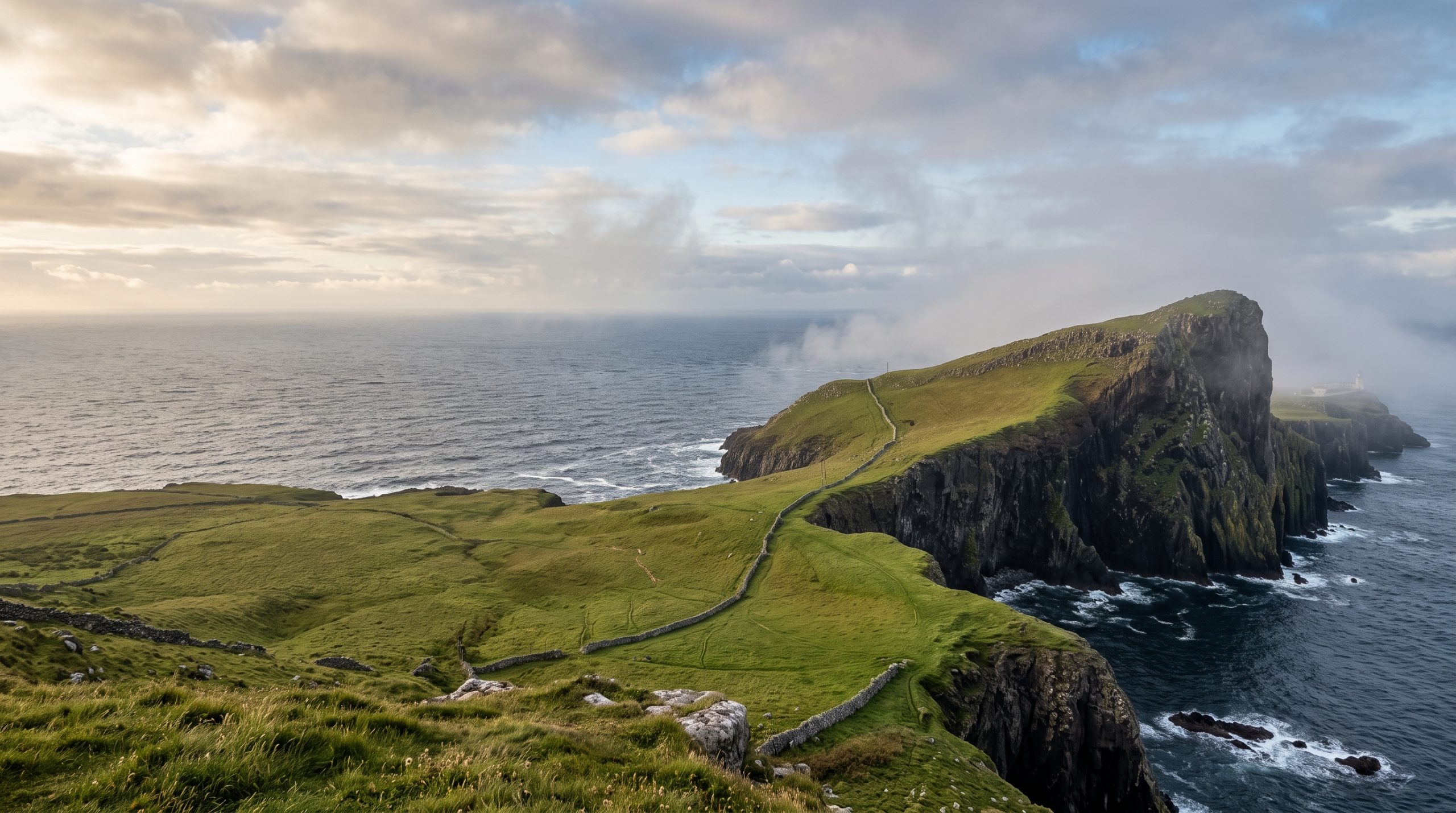
There is one line in Scots law that explains why so many couples flying in from the States end up married on a river terrace in Glen Etive rather than in a hotel function room. Religious and belief marriages in Scotland can take place anywhere. Not anywhere on a list of licensed venues. Anywhere an approved celebrant agrees to stand and whoever owns the ground is happy for you to be there.
England works from the opposite direction. The law licenses buildings, and now the grounds of those buildings too, which means a council somewhere holds a plan with a line drawn on it showing precisely where outdoors you may legally say your vows. The venue has to display a notice at every public entrance for an hour before you begin. That is a genuine freedom. It is also a boundary on a map.
Scotland, Northern Ireland, Ireland, and England and Wales are four separate legal systems within a two-hour flight of each other, and they answer this question four different ways. Here is what each allows, and what changes when neither of you lives there.
Scotland, and it is not close
Scotland. A religious or belief marriage there can legally take place anywhere, because Scots law authorizes the celebrant rather than the building, and there is no residency requirement. Northern Ireland works the same way for officiant-led ceremonies. Ireland allows outdoor ceremonies at venues open to the public. England and Wales confine them to licensed grounds.
Four legal systems, one flight over
The table is the comparison in one screen. Everything after it is detail, and the exceptions that decide real trips.
| Criterion | Scotland | Northern Ireland | Ireland | England and Wales |
|---|---|---|---|---|
| Where the ceremony can legally happen | Anywhere, indoors or out, for a religious or belief ceremony | Anywhere in Northern Ireland, with the officiant’s agreement | Any venue open to the public, which can include a courtyard, garden, field or piece of ground | A register office, licensed premises, or the approved grounds of licensed premises |
| Who the law authorizes | The celebrant | The officiant | The solemniser, who must appear on the Register of Solemnisers | The building |
| Minimum notice | 29 days on form M10, and registrars ask for it 10 to 12 weeks out | Notice to the registration office for the district you marry in | Three months, with a non-refundable notification fee of €200 | 29 days, given where you live rather than where you marry |
| Residency | None | None | None to marry, but the notification appointment happens in Ireland | Notice is given at the office covering an address one of you is living at |
| The unavoidable in-person step | Notice must reach the district that contains the exact spot you plan to stand | One of you collects the marriage schedule from the registrar | Both of you sign the declaration in front of a registrar at a civil registration office | A couple from outside the UK gives notice together at one register office |
| Strongest at | Legal vows on open ground at whatever hour you can reach it | The same freedom, a quieter coast, shorter approach walks | Atlantic headlands, on a long paperwork runway | Walled gardens and parkland, with the wild half of the day built around them |
Coverage costs the same in all four, because team travel is included worldwide and a Donegal headland is priced no differently from a Cairngorm one. The Adventure is one full day with a dedicated photographer or a dedicated filmmaker, from $4,900. The Expedition is one full day with both working together, from $7,900. The Odyssey runs two to seven days across one or several destinations and is quoted as a custom proposal. The full breakdown of what each experience includes sits on one page.
Why Scotland licenses the celebrant, not the ground
Scots law puts the authority in a person. A religious or belief celebrant who has been approved to solemnize marriages carries that authority with them, which is why a legal ceremony can happen on a beach, on a summit, in a private garden or in a bothy doorway. Any district registrar can give you the list of approved celebrants for the area you want to marry in. Humanist celebrants sit on that list alongside ministers, priests and celebrants from other belief bodies, and the resulting marriage is identical in law.
The civil route is the narrower one. A registrar will conduct a ceremony in a registration office or in another place the council has approved, so if you specifically want a registrar rather than a celebrant, you are back to a list. Almost every couple who writes to us about a Highland morning wants the celebrant route. It is not a workaround or a symbolic gesture, it is the ordinary way Scotland gets married.
The paperwork is a form called the M10, one per person, sent to the registrar for the district where the marriage will take place. The statutory minimum is 29 days before the date and no more than three months ahead of it, but councils ask for notices ten to twelve weeks out, and that is the timeline we plan to. The district detail catches people: Glasgow’s registration service asks couples to confirm with their celebrant that the ceremony spot actually falls inside the city’s registration boundary before the forms are posted. A glen can straddle two council areas. We check which one owns your patch of ground before anything is sent.
No residence requirement applies in Scotland, which is the single biggest reason it dominates for couples flying from the States. Land on a Tuesday, marry on a ridge on Thursday, fly home Sunday, with the legal work posted months earlier.
Now the honest part about the places themselves. The Quiraing and the Old Man of Storr are magnificent and they are also a queue by mid-morning, with the parking areas filling from breakfast onward. Glencoe’s most photographed pull-in is a roadside view with cars in it. None of that makes Skye or Glencoe a bad idea, it just means the ceremony belongs at 5am or in the last hour of light, twenty minutes’ walk from where the coaches stop. The difference shows up immediately in the galleries and films we publish from these mornings.
Northern Ireland has the same freedom and a fraction of the traffic
This is the answer almost nobody arrives with. In Northern Ireland a religious or belief marriage may, with the agreement of the officiant, take place anywhere in Northern Ireland. That is the councils’ own wording, and it puts Fair Head, the Mourne high valleys and the Fermanagh lakeshores on exactly the same legal footing as a church. Humanist celebrants conduct belief marriages here, and several humanist organizations operate across the region.
Civil marriage is the restricted one again: a registrar or deputy registrar for the district, in an office or a venue the council has licensed. Notice goes to the registration office for the district where you are marrying, and one of you collects the marriage schedule from that office before the day, so build a half hour in Belfast or Downpatrick into the itinerary rather than treating it as an errand. Anyone can marry here regardless of where they live.
What makes the region worth a serious look is the scale of the approach walks. The Mournes rise from sea level to granite in a couple of hours of walking, which means a genuinely remote-feeling ceremony without an alpine day. The Causeway Coast gives you basalt, sea stacks and a road that connects them in under an hour of driving. Our destination guides go deeper on which of those headlands hold light in the evening and which are morning ground.
Ireland: open to the public, and a three-month clock
The Republic runs a solemniser system too. Every legal marriage must be performed by someone on the Register of Solemnisers, and civil, religious and secular ceremonies are all equally valid and binding. Secular solemnisers matter here, because they are the route to a legal ceremony that is not religious and not conducted by a state registrar.
The location rule is one sentence, and it is the sentence that governs everything: all marriages must take place at venues that are open to the public. That is broader than couples expect. The list of what a registrar can approve extends to a courtyard, garden, yard, field or piece of ground open to the public, which is why coastal gardens and estate grounds along the Wild Atlantic Way work, and why a fully private clifftop with no public access is a harder argument. If you want a state registrar rather than a solemniser, the venue has to be approved by the civil registration service for the district it sits in, an inspection may be required, and civil ceremonies run Monday to Friday.
Then the clock. Notification of intent to marry must be given at least three months before the date, the non-refundable fee is €200, and both of you sign a declaration in front of a registrar at a civil registration office. The marriage registration form you receive is valid for six months from your intended date. Nothing here is difficult, but the three months are fixed, so Ireland is a decision made early. When couples come to us nine or ten months out wanting Kerry or Connemara, we build the paperwork sequence first and the light plan second. Our step-by-step guide to planning an elopement sets out the order we work in.
Dunquin, Ballinskelligs and the Slea Head road hold weather in a way that suits film more than it suits comfort. Achill and the Connemara coast at 6am are emptier than the Ring of Kerry ever gets.
England and Wales: the line drawn on the council plan
Here the regulation attaches to the building, and in some cases its grounds. A marriage has to take place in a register office, in premises a council has approved, or in a place of worship. The 2021 change that everyone remembers extended civil ceremonies at approved premises out into the grounds of those premises, and it has since been made permanent, so an outdoor legal ceremony in England and Wales is real. It is also precisely bounded. When a venue applies for approval it submits a plan showing the indoor rooms and the boundaries of the grounds where outdoor ceremonies can be held, it must display a notice at every public entrance for the hour before and during proceedings, and no alcohol may be sold or consumed in the specified location. A lawn inside that boundary counts. The fell above it does not.
Notice is the other structural difference. You must give at least 29 days’ notice, and you give it where you live rather than where you are marrying. A couple with an address outside the UK gives notice together at the register office covering an address one of them is staying at, which turns the legal step into a piece of the itinerary rather than something handled by mail. Once notice is satisfied you can marry at any register office or approved premises in England or Wales, so the two offices need not be the same.
So we plan English and Welsh days in two halves, and it is a good shape rather than a consolation. The legal ceremony happens in a walled garden, a courtyard or a parkland lawn inside the approved boundary, early, with the paperwork signed and witnessed. Then the day moves. Buttermere and Wast Water at the end of the afternoon, the Nant Ffrancon pass, the Yorkshire limestone above Malham, a Cornish cove at low water. The vows are legally done, so the rest of the hours belong entirely to the two of you and to whatever the weather is doing.
The three things that make the choice clear
Strip out the noise and most couples are deciding on three things.
First, whether the legal ceremony has to happen on this trip. If it does, Scotland and Northern Ireland let it happen exactly where the frames are being made, which is a different film from one where the words were said in an office on Tuesday. If your legal marriage is happening at home anyway and this trip is about the morning itself, all four countries open up, and so does every month of the year.
Second, how much lead time you have. Three months of notification in Ireland is nothing at eleven months out and decisive at nine weeks. Scotland’s 29-day minimum, with notices lodged ten to twelve weeks ahead, absorbs a change of plan that Ireland cannot.
Third, what you want to be standing on. This is the question we ask first, because the law follows the ground rather than the other way around. Tell us the morning you have in your head and we will tell you which of the four jurisdictions delivers it, or which month makes it easier.
The two-part day most couples are told to plan
The standard advice online is to book a register office slot for the legal part and hold a symbolic ceremony somewhere beautiful afterward. In England and Wales, that is sound. In Scotland and Northern Ireland it is usually a mistake, because it splits one moment into two lesser ones for no legal reason whatsoever. The freedom already exists. Using it costs nothing extra and changes the entire emotional shape of the day, since your vows are the legal vows, said once, at 6am, on the ground you chose.
Which couple fits where
- Four days in the country, awake at 4am without complaint, legal ceremony must happen on the trip: Scotland, and probably the northwest.
- Six or eight people flying in, nobody wants a scramble, and you want the vows outdoors and legal: the Mourne Mountains or the Causeway Coast.
- Booking ten to twelve months out, Atlantic weather is the whole point, and you can attend a registration appointment in Ireland: Kerry, Connemara or Achill.
- Already married or marrying at home, and this is about the landscape: any of the four, and we would push you toward the shoulder months.
- You want the legal ceremony in a walled garden and the afternoon on a mountain: the Lake District, Eryri or the Dales.
If one of those is close to your situation but not quite it, that gap is exactly what we want to hear about. Tell Us Your Story and we will come back with the version that fits the constraint you actually have.
Common questions
Can we legally get married on a beach in Scotland?
Yes. A religious or belief marriage in Scotland can take place anywhere, a beach included, as long as an approved celebrant conducts it and you have permission to be on the ground. There is no venue licensing step to clear and no list to choose from.
Do we have to live in the UK or Ireland before we can marry there?
Scotland has no residence requirement, and Northern Ireland lets any two people marry regardless of where they live. In England and Wales notice must be given at the register office covering an address one of you is living at. Ireland has no residence requirement, but the notification appointment takes place there.
Can we legally marry on a mountain in England or Wales?
Not on open fell. Outdoor ceremonies are allowed in the grounds of approved premises, within the boundary shown on the plan the council holds, so the legal ceremony has to sit inside that line. The mountain hours come before or after it, which is how we build those days.
How early do we need to start the legal paperwork for an elopement in Ireland?
At least three months before the date, since notification of intent to marry carries a statutory three-month minimum and a non-refundable fee of €200. In practice we start that conversation the moment a date is held, because the marriage registration form is then valid for six months from your intended date.
Will a registrar come outdoors with us?
Only to places the council has approved, in every one of the four systems. Registrars work from register offices and licensed venues. If you want vows on a summit or a shoreline in Scotland or Northern Ireland, the officiant-led route is the one that gets you there, and it produces exactly the same marriage certificate.
Who gives permission for the ground itself?
Whoever owns or manages it, which might be a national park authority, a conservation body, a council or a farmer. That research and the correspondence are part of what we do for every booking, along with the drone permissions where aerials are legal and appropriate. You pay any permit fee that is charged, and we handle finding out what it is.
Choose the jurisdiction, then choose the morning
We are currently taking bookings across the 2027–2029 seasons across all four systems, and one pattern holds. Couples who choose the law first end up with a better day than couples who choose a photograph and work backward. Scotland asks least of you and allows most. Northern Ireland is the same freedom with fewer people in the frame, while Ireland wants three months and repays them in coastline. In England and Wales the legal moment sits inside a boundary, and every hour after it is yours.
From the first reply onward, we keep the process in writing, which suits couples five or eight time zones away. Send the inquiry form and you will have a reply and the brochure within 24 hours, then a tailored proposal for your dates, and planning begins when the contract is signed and the 30% retainer is paid. Highlights reach you five days after the day itself and the full gallery or film in three weeks. Check Your Date and tell us which of the four you are circling.