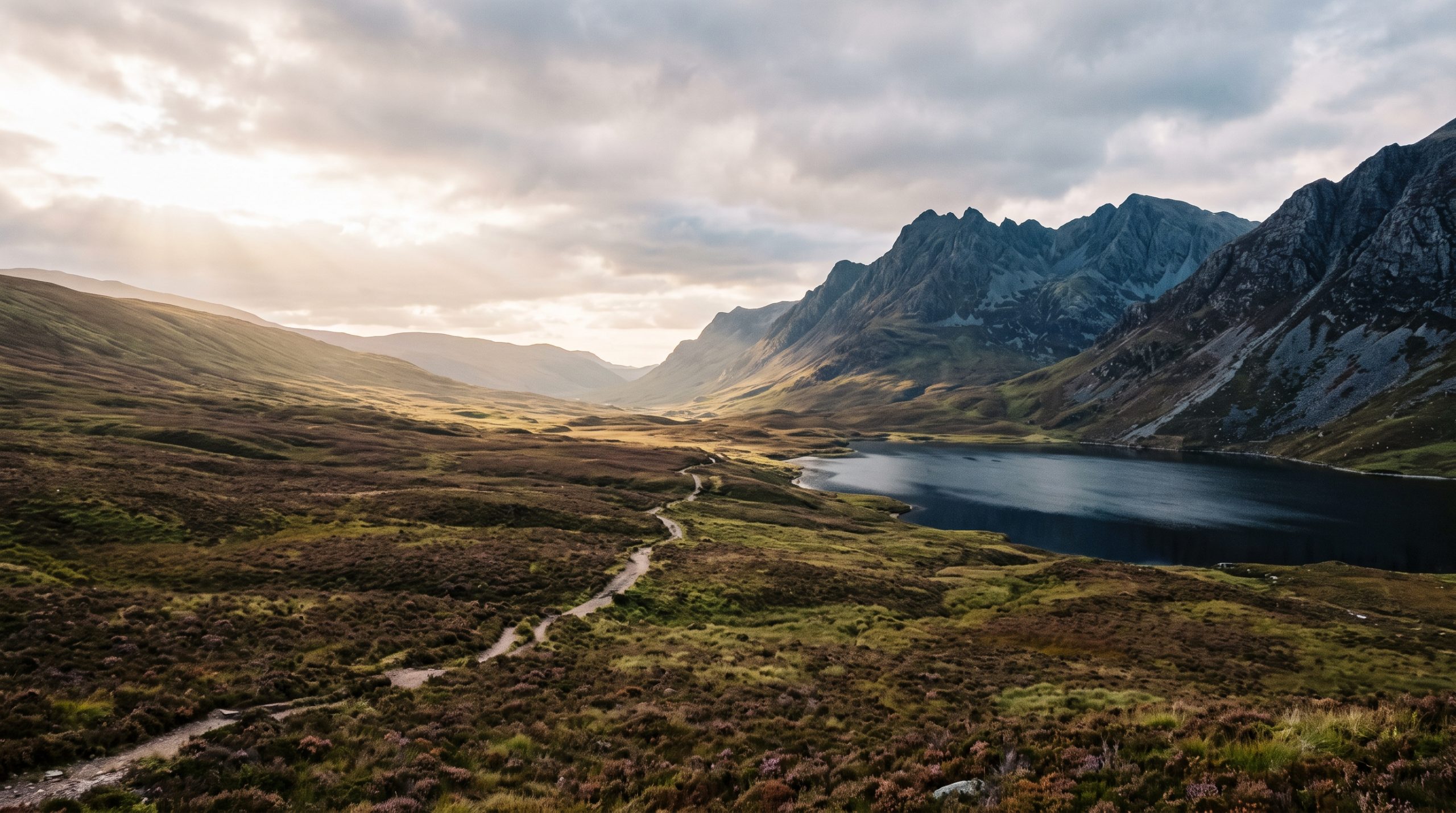
In Scotland, the legal authority to marry a couple belongs to a person rather than a building. A humanist or religious celebrant carries it with them, which means the paperwork can be signed on a shelf of rock above Loch Coruisk, on the shingle at Elgol, or on wet grass in Glen Etive, and the marriage is as legally solid as one signed in a register office in Inverness. You need two witnesses, one A4 marriage schedule kept dry, and notice given 29 days beforehand.
Almost everywhere else we work, the legal moment is anchored to something fixed. Iceland attaches it to a district commissioner. Ireland attaches it to a place that is open to the public and has a postal address. Norway attaches it to an officiant the municipality authorises. Those are workable, and we build beautiful days around all of them, but they usually produce a split: a short legal ceremony indoors, then the vows you actually care about somewhere with a view.
So the real comparison is not Scotland versus Iceland. It is one ceremony in the landscape versus two ceremonies, one of which happens at a desk. Here is how the routes stack up, which one we recommend, and the couples for whom the other four are the better answer.
Where the authority sits: the celebrant, not the venue
Scotland attaches marriage authority to the celebrant rather than the building, so a religious or belief celebrant can legally marry you anywhere in the country: ridge, beach, glen or garden. You give 29 days of notice, sign a marriage schedule with two witnesses present, and return it within three days. There is no approved-venue list to work from.
How five legal routes compare on paper
| Route | Who can legally marry you | Where the ceremony can happen | Advance notice | Genuinely best at |
|---|---|---|---|---|
| Scotland, belief or religious celebrant | An approved celebrant: humanist, religious, or a person over 21 given temporary authorisation by the Registrar General | Anywhere in Scotland, with no venue approval involved | M10 form each, at least 29 days before the date and inside the three months prior | The legal vows happening in the place you travelled for |
| Scotland, civil registrar | A registrar | A registration office, or a place the registrar agrees to attend | The same M10 notice and the same 29 days | Couples who want the office moment and a full landscape day around it |
| Ireland | A solemniser registered with the HSE | Somewhere open to the public that has a postal address | Three months, given in person at a civil registration office | Short drives between very different coastlines |
| Iceland | A district commissioner or their legally trained representative; officiants authorised only under foreign law cannot marry you in Iceland | The commissioner’s premises, or outdoors where the officiant travels | Documents lodged with the district commissioner ahead of the date | Scale within two hours of the airport |
| Norway | An officiant authorised by the municipality, often the mayor in smaller towns | Municipal premises, or a location an authorised officiant will travel to | A certificate of no impediment from the Norwegian Tax Administration, applied for in advance | Fjord walls, ferry timetables and long spring evenings |
Our coverage is the same in all five countries, because the legal route changes the timeline and not the work. One full day with a dedicated photographer or a dedicated filmmaker starts at $4,900. The Expedition, where a photographer and a filmmaker work the same day together, starts at $7,900. Multi-day Odyssey work across one or several countries is quoted as a proposal. Team travel is included worldwide, so flights to Inverness or Keflavík are not a separate line, and the full breakdown sits on our pricing page.
The 29 days, the £30 form and the walk to the register office
The Scottish sequence is short enough to hold in your head. Each of you completes an M10 marriage notice and submits it to the registrar of the district where the ceremony will take place, not the district you happen to be staying in. The notice has to arrive inside the three months before your date and no later than 29 days before it. The fee is modest and currently sits at £30 per form, which is under fifty dollars at recent exchange rates. During those 29 days the registrar makes your names and the proposed date publicly available, which is a formality rather than an obstacle.
The step that shapes your travel is the marriage schedule. For a celebrant-led ceremony, one or both of you collects it in person from the register office nearest the place you are marrying, shortly before the date. Register offices keep weekday hours, so at least one working day of your trip is spoken for, and it is rarely the day you land. We build that collection into the timeline as a fixed point and then arrange the rest of the days around it, which is usually a short drive, a coffee and a supermarket run in the same morning.
At the ceremony itself, the two of you, the celebrant and two witnesses sign the schedule. It then goes back to the same register office within three days, and someone else can return it on your behalf, which matters when you want the day after your vows to be a boat trip rather than an errand. Your certificate follows by post.
Couples travelling from outside the UK can marry in Scotland, and there is a visitor visa route specifically for people entering the country in order to marry. That sits at the front of the sequence rather than the end, ahead of anything to do with the 29 days. Permit research and this kind of logistics mapping is part of every experience we run, alongside the wider planning fundamentals we walk couples through before a single location is chosen. The government and landowner fees themselves are paid by you.
What Iceland, Norway and Ireland do better
Iceland gives you more landscape per hour of driving than anywhere else on this list. Black sand, a glacier tongue, a lava field and a lagoon are all reachable inside a day from Keflavík, and because the marriage is conducted by a district commissioner, there is one official and one signing rather than a celebrant to match to your vows and your weather. Icelandic law does not let an officiant authorised abroad marry you there, which sounds like a restriction and often works as a simplification: nobody needs to be flown in.
Norway rewards the split shape more than any other country we work in. Getting an authorised officiant onto a fjord ledge that takes a ferry and a steep hour to reach is a genuine puzzle, so completing the legal ceremony at a municipal building and then holding the ceremony you wrote yourselves at the location removes the whole problem. Once the legal part is done, the second ceremony can move by two hours or ten kilometres with no paperwork consequence at all. On a coast where the cloud base decides the day, that freedom is worth a lot.
Ireland’s requirement that the ceremony happen somewhere open to the public with a postal address rules out a summit, and it does not rule out much else. Walled gardens, courtyards, cliff-top grounds and beaches with a car park all qualify, and Irish driving distances are so forgiving that you can work three of them between first light and lunch. The three months of notice also means the legal file is closed long before you fly, so the trip is nothing but the trip.
The two shapes look different in finished work, and the difference is easier to see than to describe. Our published galleries and films include both: single-ceremony Scottish days where the signing happens on the ground you walked to, and split days abroad where the legal minutes are quiet and quick and the emotional weight sits later, in a place with no roof.
The two differences that decide it
The first is whether the words that make you married are the words on camera. In Scotland they are the same words, said once, in the place you chose. In the split model they are said twice, and the legal set happens under fluorescent light. Plenty of couples prefer that separation, and when they do we put the Expedition’s audio recording on the second ceremony, where the vows they wrote actually live.
The second is the calendar. Scotland’s 29 days is the shortest legal runway of the five routes, and Ireland’s three months is the longest. If your dates are still moving, that gap is the whole decision.
Which route fits the days you actually have
Four or five days in country, and the marriage has to be legal by the time you fly home: Scotland with a belief celebrant, every time. One weekday goes to the register office, the ceremony goes wherever the forecast is kindest, and nothing about the law needs a building.
Ten days and an appetite for two countries: this is Odyssey territory. We have run days that put the legal ceremony in the Highlands early in the trip and then spend the rest of it on Norwegian water or Icelandic sand, where every subsequent ceremony is yours to shape because the paperwork is already behind you.
A brother, a sister or an oldest friend conducting the ceremony: only Scotland, among these five, has a clean route for it. A person over 21 can apply to the Registrar General for temporary authorisation to act as a religious or belief celebrant for your marriage. It is the single most underused fact in Scottish elopement planning.
Couples who will not be awake at 4am: Scotland in late June puts the sun above the horizon before half past four in the morning and keeps it there until after ten at night, so there is genuinely good light at both ends and you can pick the end that suits you. Tell us which one and we will build the day backwards from it, or tell you honestly which month gives you the same light at a more civilised hour.
Couples for whom sound matters as much as frames: say so early. Wind on an exposed ridge is the one condition that changes where we stand, and we would rather choose a sheltered ceremony spot fifteen minutes from the dramatic one than lose the vows to a gust. Tell Us Your Story and we will tell you which of the five routes we would actually recommend for your dates.
Why generic UK elopement advice blurs Scotland’s legal advantage
The first error is treating the UK as one legal system. Legal humanist marriage began in Scotland on 18 June 2005, when the Registrar General authorised twelve Humanist Society Scotland celebrants and the first ceremony took place at Edinburgh Zoo. Twenty years and more than 50,000 humanist ceremonies later, the Society still points out that humanist marriage is not legal in most countries, including elsewhere in the UK. Advice written for England does not describe Scotland, and a great deal of the planning content Americans find does exactly that.
The second error is assuming you need a licensed venue and therefore a venue budget. For a belief or religious ceremony in Scotland there is no premises approval in the process at all. What you need is permission to be where you are standing, which is a different question with a different answer: Scotland’s statutory right of responsible access, in place since 2003, makes most open land and hill paths legally walkable, while commercial filming and organised gatherings on managed estates and trust land run on permission from the landowner. We do that research before we propose a location, which is why our destination guides tend to name specific ground rather than whole regions.
The third error is Skye by default. Skye is extraordinary and it is also the most visited part of the Highlands, and those two facts arrive together. The Quiraing and the Old Man of Storr at ten in the morning in July are busy, the parking now charges and fills, and the light at that hour is flat across exactly the terraces people come to photograph. A ceremony there mid-morning is not the picture in your head. The Sleat peninsula at the same hour is empty. Glen Etive and Rannoch Moor, roughly two hours north of Glasgow with no bridge and no ferry, deliver comparable scale with a fraction of the traffic and a much shorter transfer from the plane.
The fourth is writing off winter. Late December in the northwest Highlands gives you around six and a half hours between sunrise and sunset, and the sun never climbs high, so the entire usable day runs at the angle photographers wait all summer for. Short days are a scheduling constraint, not a quality one, and a December ceremony at eleven in the morning looks like an August ceremony at nine at night.
Common questions
Can we legally get married on a mountain in Scotland if we are American?
Yes. Scotland places no venue restriction on a religious or belief marriage, and both of you can be non-UK nationals. You submit the same M10 notice as a Scottish couple, and there is a visitor visa route for entering the UK specifically in order to marry, which we map into your timeline before anything else.
How far ahead do we submit the marriage notice for Scotland?
Inside the three months before your date, and no later than 29 days before it. In practice we aim well earlier than the minimum, because the notice goes to the registrar of the district where you are marrying and that district is often not the one your accommodation sits in.
Do we have to collect the marriage schedule ourselves?
For a celebrant-led ceremony, one or both of you collects it in person from the register office nearest your ceremony location shortly before the date. It has to be signed at the ceremony by the two of you, your celebrant and two witnesses, and returned within three days, though someone else can return it for you.
Can a friend or family member legally marry us in Scotland?
A person over 21 can apply to the Registrar General for temporary authorisation to act as a religious or belief celebrant for a specific marriage. That is a real route, it takes time to arrange, and it is one of the few places in Europe where it exists at all.
Would Iceland or Norway be simpler for the legal part?
Simpler in one way and less flexible in another. Both hand the legal ceremony to a state or municipal officiant, so there is one official and no celebrant to coordinate, and both then leave you free to hold the ceremony you wrote anywhere you like. Scotland is the only one of the five where those two things are the same ceremony.
Do we need a permit for the ceremony spot itself?
Sometimes. Access to open land is broadly a right in Scotland, while managed estates, trust properties and national park sites often require permission for organised ceremonies and commercial filming. We research and secure the permissions as part of your planning, and any government, venue or landowner fees are paid by you directly.
How quickly do we see the photographs and the film?
Highlights reach you within 5 days, and the full gallery or film within 3 weeks. That holds whether the legal ceremony happened on a Scottish ridge or in a Norwegian municipal building the morning before.
Ferries, light and the shape we would build for you
Dates are currently open across 2027, 2028 and 2029, and the routes above behave very differently depending on which month you land in and how many days you have on the ground. Send us your dates, the number of days, and one sentence about the kind of morning you want, and we will come back with a proposal: which country, which legal route, which hour, and the sheltered alternative fifteen minutes away. Everything between us happens in writing, in your own time, and you will have our reply and an initial brochure within 24 hours. Planning starts once the contract is signed and a 30% retainer is paid. Check Your Date and tell us the constraint you are working around.