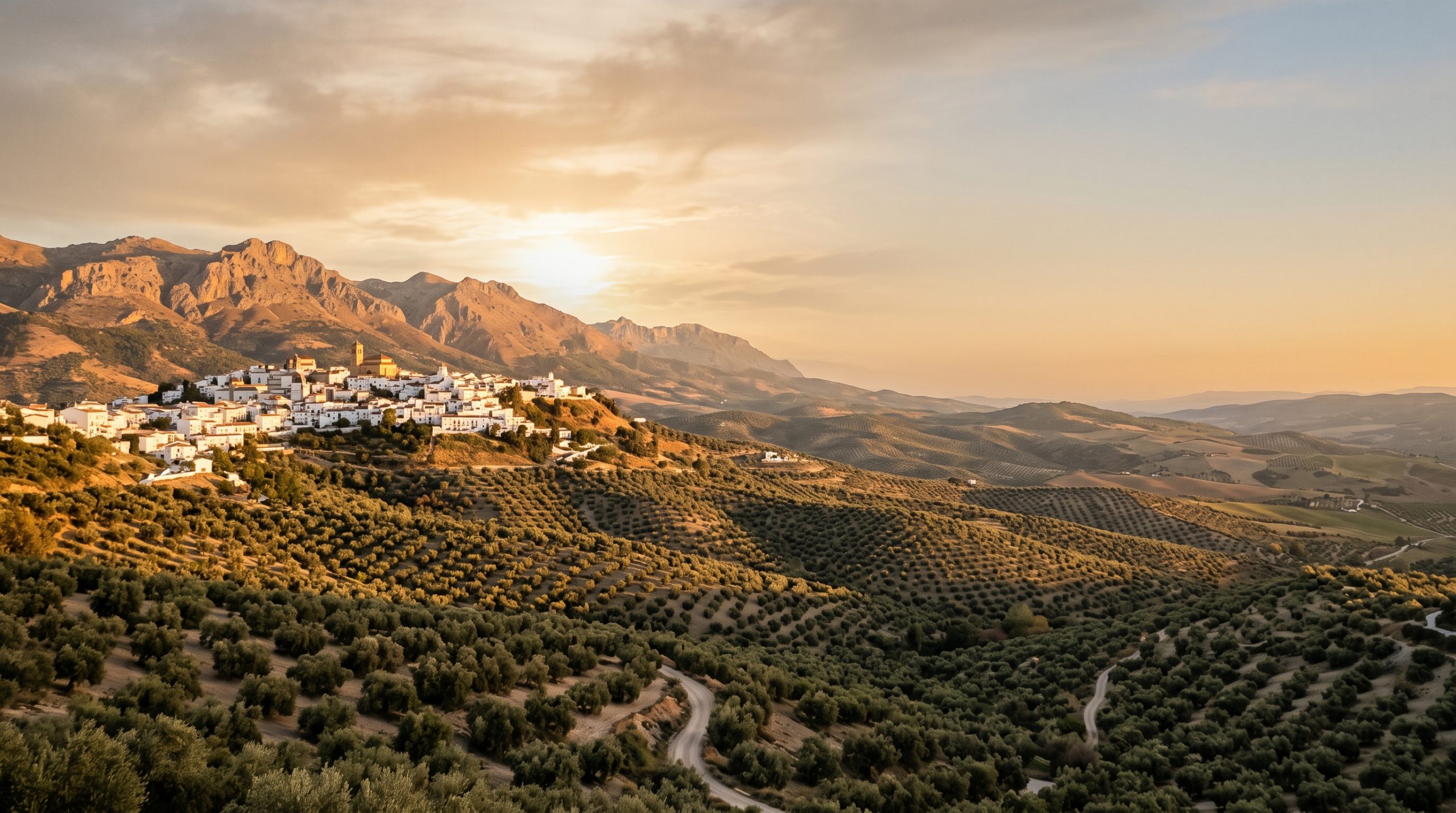
Spain keeps Central European Time, but Seville sits west of Greenwich. The clock and the sun disagree by most of an hour, and every plan made for Andalusia has to account for it. In the week after the solstice, the sun goes down over Seville at 9:49 p.m. On the solstice itself it comes up at 7:03 a.m. The day is enormous, and the middle of it is unusable in summer: Seville’s average high in July is 36 degrees.
The good hours therefore sit at the two ends, and everything between them is logistics. At El Torcal de Antequera, private cars are turned back from the upper visitor center on busy weekends and holidays and a shuttle runs in their place, which is why we work that limestone on a weekday at first light. In high summer the beaches west of San José go onto access control: the car park for Mónsul and Genoveses is often full by nine in the morning, and once the barrier is down the road belongs to walkers, bikes and the hourly bus. Inside the Alhambra, the Nasrid Palaces are a timed entry of thirty minutes, and you get one pass at it.
We are eight people, four photographers and four filmmakers, and we plan, photograph and film Andalusian elopements as one service rather than two bookings. We are currently taking dates in 2027, 2028 and 2029. This page sets out what a day here costs, which euros go to somebody other than us, and why we send two cameras into a thirty-minute slot.
What photography and film cost for an Andalusian elopement
We plan, photograph and film Andalusian elopements as one service: destination and location design, a timeline built around this region’s late light, permit research, and both stills and film shot by our own team. One full day of coverage starts at $4,900, with team travel to Spain included in that figure.
Dawn at El Torcal, blue hour over Ronda past ten
This is a June day, because June is when Andalusia’s clock does its strangest work. Civil twilight reaches El Torcal at 6:28 a.m. and the sun clears the horizon at 6:59. We meet at 5:50 in the dark with coffee from a flask, because nothing is open, and we are on the upper track by 6:15.
The first two hours are the reason we came. Limestone that looked grey in the headlights turns pink, then bone white, and the towers throw shadows twenty meters long across the paths. There is nobody else up there until well after nine. Vows work beautifully in that hour, and so does silence: the karst is quiet enough that a filmmaker can record breath.
By half past nine we are eating breakfast in Antequera and the day belongs to you again. This is the part couples do not expect and end up loving. From ten until about half past five, Andalusia in summer is for shade, a long lunch, a swim, letters written on a bed with the shutters closed. We are not standing in the corner of the room. We plan the gap in, because the alternative is portraits at two in the afternoon in air that reads 36 degrees on the valley floor.
Light softens around six. A ceremony placed at 7:30 p.m. above Grazalema sits two hours clear of a 9:43 p.m. sunset in Ronda, which means warm side light, dropping wind and no squinting. Afterwards there is a full hour and a half for the two of you on the edge of El Tajo. Honest note on Ronda: the viewpoints over the gorge are shoulder to shoulder from late morning and the light there at midday is flat and unkind. Wait until the coaches have gone back down to the coast and the same bridge is yours, side-lit and enormous.
Sunset at 9:43 is not the end. Civil dusk in Ronda on the solstice is 10:14 p.m., and that half hour after the sun drops is the best film light of the day: the white town holds warmth, the sky goes cobalt, the swifts are still working. Dinner at half past ten is not late by Andalusian standards. Most kitchens do not start serving until around nine anyway.
December inverts all of it. Granada’s sun rises at 8:24 a.m. and sets at 6:01 p.m., so the day runs as one unbroken block with no gap in the middle, and the sun never climbs high enough to be a problem at any point in it.
| When | Granada sunrise and sunset | The shape we build |
|---|---|---|
| Mid-April | 7:40 a.m. to 8:49 p.m. | Two blocks with a long lunch. The high Sierra Nevada road is still under snow, so we stay on the Alpujarras terraces and the low sierras. |
| Solstice week | 6:55 a.m. to 9:38 p.m. | The split day described above. Pre-dawn start, evening ceremony, blue hour past ten. |
| Mid-September | 7:57 a.m. to 8:23 p.m. | Our pick. The sea at Cabo de Gata is still warm, dawn arrives at a humane hour, dinner follows blue hour directly. |
| Late December | 8:24 a.m. to 6:01 p.m. | One continuous block. Low sun all day, no siesta gap, everything finished by dark. |
Those are real times, not rounded ones, and they are the first thing we build a proposal on. Send us the week you are thinking about and we will tell you what the light does in it: Check Your Date.
Thirty minutes in the Nasrid Palaces, two cameras
A general Alhambra ticket currently runs a little over 19 euros a person, and it carries a fixed thirty-minute entry window for the Nasrid Palaces. You cannot extend it, you cannot come back through, and in peak months the slots are gone weeks ahead. Everything about that half hour is decided before you walk in.
Send one person in with a camera and they spend the whole slot choosing. Hold the still of light falling through the stucco onto her hands, or follow the walk through the Court of the Myrtles as a moving frame. Both exist in that room and one person gets one of them. Send a photographer and a filmmaker who work together every month and the choice disappears: one holds the reflection in the long pool while the other stays tight on faces, they trade positions without a word, and neither is asking the other to repeat anything for the camera. Professional filming inside the monument runs on its own written authorization from the Patronato, so for most couples we treat the palaces as a ticketed, handheld hour and place the ceremony itself in the Albaicín or the Generalife’s outer gardens, with the Alhambra sitting across the valley behind you.
The same logic decides the coast. On the volcanic rock at Mónsul, where the wind comes off the water and the sound of it swallows a quiet voice, the filmmaker is also the audio: on The Expedition we run professional audio on vows where conditions allow, which is what separates a film with your actual words in it from a film with music over the top. Aerials over that coastline need our AESA operator registration and, inside the natural park, a written filming authorization from the Junta de Andalucía. That office issued close to a hundred filming authorizations across Almería’s protected spaces in 2023, more than four in ten of them in Cabo de Gata, so this is routine paperwork rather than a favour. We confirm both before the film is planned around a single aerial shot.
There is a plainer benefit too. Because the people who wrote the timeline are the people holding the cameras, nothing gets renegotiated at 6 a.m. in a car park. And with eight of us, there is always a colleague in reserve and a second body of work to compare against. Our published galleries and films are the honest test of all this: look at how the stills and the film from the same day sit next to each other, because that pairing is the thing you are actually buying.
The paperwork question, answered plainly
This is the worry that stops couples writing to anyone about Spain, so here it is without decoration. A civil marriage at a Spanish registry office requires at least one of you to have been a legal resident of Spain for two continuous years, which means visiting couples are almost never approved for one. A Catholic ceremony carries no such residency requirement.
What almost everybody does, and what works: complete the legal marriage at home, then hold the ceremony that matters here, with a celebrant, your own words and whoever you want standing on the rock beside you. Nothing about the day changes. The vows in the film are the vows you wrote. We build the same timeline, request the same permissions, and the certificate is simply signed on a different continent. Our planning fundamentals walk through the order of it, and we will tell you which pieces to do before you fly.
What the fee covers, and what Andalusia charges on top
One fee, one team, and no line item that appears later because a landscape turned out to be far away.
In every experience
- Destination and location design, and planning from the first message to the morning itself.
- A custom timeline built around real sunrise, sunset and driving time, not a template.
- Permit research and logistics guidance, including the natural park authorizations described above.
- Weather alternatives and backup planning, which in Andalusia usually means a sheltered inland option held for a windy coast.
- Drone footage where it is legal, safe and appropriate.
- Team travel worldwide: flights, accommodation and ordinary travel for the assigned team, with no European or long-haul distinction.
- Professional audio for vows and meaningful moments on The Expedition, where conditions allow.
- Highlights in 5 days. The full gallery or film in 3 weeks.
Where coverage starts
The Adventure is one full day with a dedicated photographer or a dedicated filmmaker. The Expedition, from $7,900, puts a dedicated photographer and a dedicated filmmaker on the ground together for a full day, which is the version this page has been describing. The Odyssey runs two to seven days, one or several destinations, with photography and film throughout and a custom proposal written for it. Guest count does not move the fee; it moves access, permits, transport and the timeline. All of it sits on our coverage and pricing page.
The Andalusian extras, in euros
- Alhambra admission per person, currently a little over 19 euros, with the Nasrid Palaces slot booked well ahead in spring and autumn.
- Parking at the Cabo de Gata beaches west of San José, around 6 euros a vehicle from mid-June to mid-September, free the rest of the year.
- Government, venue and landowner permit fees where they apply. The research and the applications are ours; the fee itself is yours.
- Celebrant, accommodation, car hire, dinner, and anything you want to do with the rest of the week.
- Unusual transport only if you want it: a boat out of San José, a 4×4 up a mountain track, a helicopter, a guide for high ground in the Sierra Nevada.
How an Andalusian film enquiry becomes a planned day
- Send the inquiry form with your dates, or the month you are circling, and the kind of landscape you keep coming back to.
- We reply within 24 hours with an initial brochure.
- We ask real questions about the day you actually want, then suggest regions, hours and a shape for it.
- You get a tailored proposal with the coverage, the team and the full payment schedule in writing.
- Contract signed and a 30% retainer paid. The date is yours.
- Planning begins: locations, timeline against that week’s light, permit research, and the alternatives we hold in reserve.
Who Andalusia rewards, and the month that suits them
This region is generous to couples who will get up at 5:50 in June, who own shoes that cope with limestone and volcanic rock, and who can watch a plan change on the morning without it spoiling anything. Some mornings the San José barrier goes down early and we walk the last kilometer in, or move the coastal hour to Los Escullos instead. Couples who enjoy that are the ones who get the best of the place.
If a pre-dawn alarm sounds like the opposite of a good start, say so and we will move you rather than talk you into it. Mid-September gives you a 7:57 a.m. sunrise and dinner straight after blue hour. December compresses the whole thing into one civilized block between half past eight and six. If uneven ground is the issue, Seville’s courtyards, the white villages of the Sierra de Grazalema and the irrigation terraces of the Alpujarras all photograph beautifully at walking pace. Our destination guides are a decent place to see which corner of the region matches the day in your head. Then tell us what you actually want, and we will either shape the day around it or tell you honestly which month fits it better.
Common questions
Can we legally marry in Andalusia if we are not Spanish residents?
Not at a registry office, in practice. A Spanish civil marriage requires one partner to have held legal residency for two continuous years. Visiting couples complete the legal marriage at home and hold their ceremony here, with a celebrant and their own vows. A Catholic ceremony has no residency requirement.
Do we need to hire a separate videographer?
No. Photography and film come from the same team of eight, planned together and shot together. On The Expedition a dedicated photographer and a dedicated filmmaker work the day side by side, which is what makes a thirty-minute Alhambra slot or a fifteen-minute window of last light on the Cabo de Gata cliffs productive rather than a compromise.
Can we fit Granada and the Cabo de Gata coast into one day?
It is around two and a half hours of driving between them, so one day means picking a first-light location and an evening one within reach of each other. Granada with the Alpujarras works. Granada with Mónsul does not, unless you give it two days on The Odyssey.
Is August too hot for an elopement in Andalusia?
Inland, the middle of an August day is not worth photographing: Seville averages around 36 degrees in July and barely less in August. The coast and the mountains stay workable. We shoot the ends of the day and hand the middle back to you, or we point you at late September, which is our favorite month here.
Are drones allowed over the Alhambra and the natural parks?
Not over the monument or the dense city center. Elsewhere, aerials run on our AESA operator registration plus, inside a protected space like Cabo de Gata, a written filming authorization from the Junta de Andalucía. We confirm the permission and the time window first, then design the film so it does not depend on one shot.
How soon do we see the photos and the film?
Highlights land 5 days after the day itself. The full gallery or the finished film follows within 3 weeks.
How far ahead do we need to book, and what secures the date?
We are working through 2027, 2028 and 2029. A signed contract and a 30% retainer hold the date, and planning starts immediately after. Timed Alhambra entries and rooms during Seville’s Semana Santa and Feria weeks, which move with the church calendar, are the two things worth locking early.
What happens after your first Andalusia film enquiry
All of this happens in writing. You send the form, our reply and the first brochure arrive in your inbox within 24 hours, and the whole plan is built in messages you can reread at your own pace with nothing to schedule. Tell us the month, the landscape and the two or three things you want to remember, and we will come back with the light times, the access rules and a shape for the day.