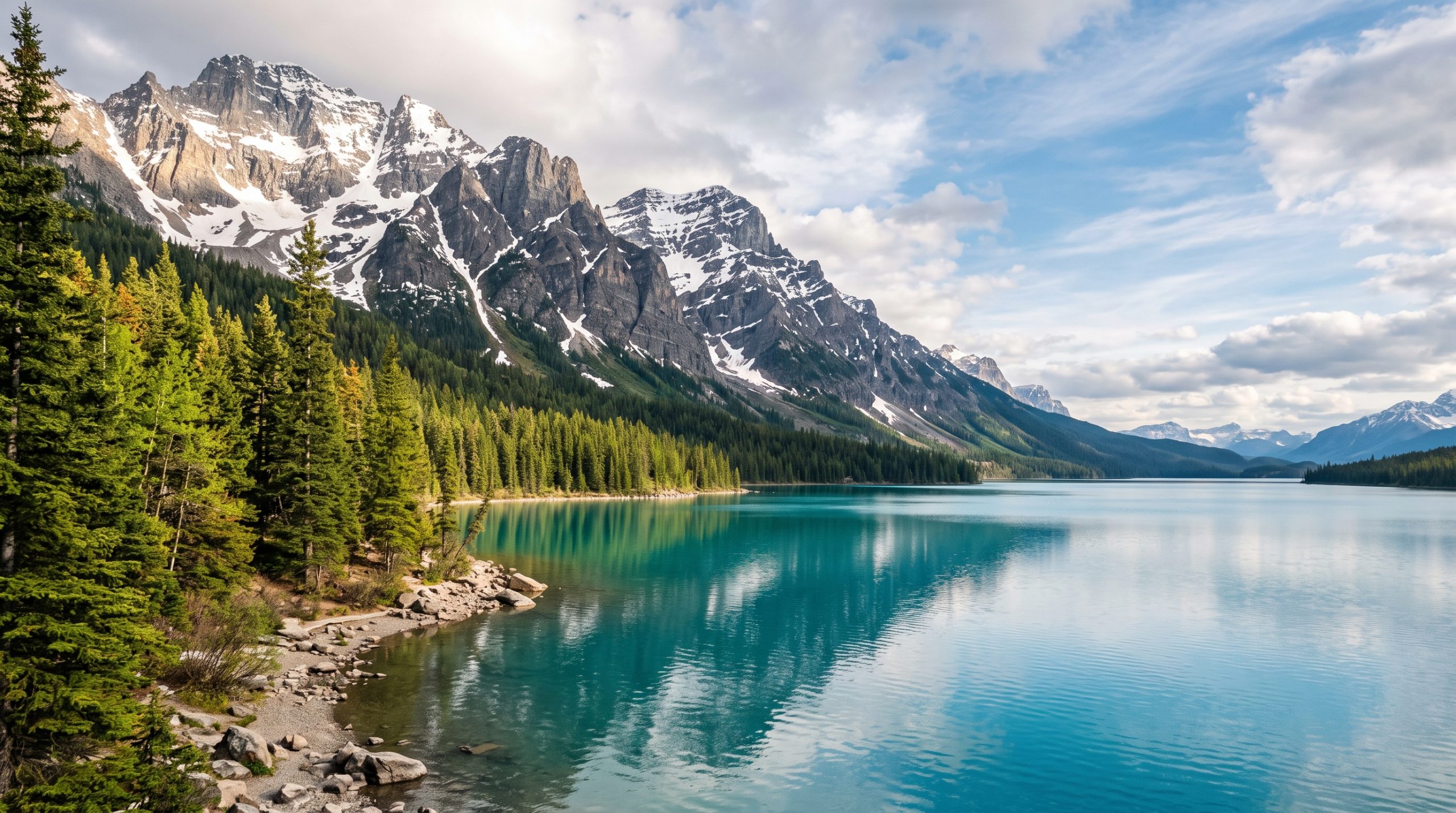
Two dates run the Banff calendar more firmly than any forecast does. Moraine Lake Road opens for the season on or about June 1, and it closes around Canadian Thanksgiving in the middle of October. For 2028 the published season is June 1 to October 12. Outside those months the lake that sells half the Banff elopements on the internet is simply not reachable, by car, by shuttle or on foot.
The second constraint is light, and it swings hard at this latitude. Mid-June hands you sunrise at 5:26 am and sunset just before 10 pm, sixteen and a half hours of working day. Mid-December gives you 7 hours 55 minutes, sunrise at 8:40 am, and a sun that never climbs higher than about 15 degrees above the horizon. Those two days need completely different timelines, and both can be very good.
What follows is how we choose, month by month, using the figures we actually plan against rather than adjectives about mountain air.
The Banff window we would take first: September 15 to October 10
Late September into the first days of October. Parks Canada puts peak larch color in mid to late September, Moraine Lake Road is still open, and mid-month sunrise at 7:18 am with sunset at 7:57 pm gives a timeline nobody has to suffer through. Snow can arrive that early, and it only improves the gold.
Month by month, with the numbers we plan against
Sunrise and sunset are given for the fifteenth of each month at the Banff townsite. Add roughly forty-five minutes of driving to reach Lake Louise, and more than that to be standing anywhere above the valley floor.
| Month | Light on the 15th | Conditions | Crowds | Our verdict |
|---|---|---|---|---|
| January | 8:40 am to 5:04 pm | Deep cold, dry snow, lake ice holding | Town busy, shorelines empty | Strong if you want winter |
| February | 7:55 am to 5:58 pm | Driest month of the year, about 33 mm | Ski weeks, quiet mornings | Best of the winter months |
| March | 7:56 am to 7:46 pm | Deepest snowpack, noon sun already at 37 degrees | Spring break peaks | Snow with usable evenings |
| April | 6:47 am to 8:38 pm | Valley thawing, peaks still white | The year’s real lull | Works with the right ground |
| May | 5:51 am to 9:26 pm | Green town, ice still on the high lakes | Building through the month | No Moraine, plan around it |
| June | 5:26 am to 9:59 pm | Wettest month, about 130 mm over 13 wet days | Rising fast after solstice | Longest days, most rain |
| July | 5:45 am to 9:52 pm | Warmest, about 8.5 hours of sunshine a day | Peak of the year | Own the early and late hours |
| August | 6:29 am to 9:04 pm | Warm, sometimes hazy on the far peaks | Still peak into early September | Good, if you start before six |
| September | 7:18 am to 7:57 pm | Larch gold mid to late month, crisp mornings | Drops midweek, larch weekends busy | Our first choice |
| October | 8:06 am to 6:50 pm | First real snow, Moraine road closing mid-month | Thin after the road shuts | First ten days, then a different park |
| November | 7:59 am to 4:54 pm | Freeze-up, gray ice, low snow at valley level | Quietest month there is | For couples who want nobody |
| December | 8:40 am to 4:35 pm | Short day, about 1.5 hours of sunshine, skating ice from mid-month | Holiday weeks fill the town | Every hour of it warm-toned |
The narrow windows: larch gold, the June opening, the 16-hour day
Three things here happen on a schedule tight enough to plan a whole trip around, and one of them moves every year.
Larch gold. Parks Canada puts peak autumn color in mid to late September. Heat and the timing of the first hard frost shift it by around a week in either direction, so we treat it as a ten-day bracket rather than a date and pick the exact morning once we can see the season behaving. The famous stand is Larch Valley, which climbs from the Moraine Lake shore and draws a serious crowd through those weeks. Parks Canada lists eight other larch hikes for people who would rather not share, and that list is where our September planning usually ends up.
The road opening. Moraine Lake Road comes out of its seasonal closure in early June, once the snowpack on the slopes above it allows. The lake behind it is still filling with meltwater in those first weeks, and full turquoise arrives later than the road does. If the color is the reason you chose Banff, the second half of June onward is the honest answer.
Midsummer. The earliest sunrise falls on June 16 or 17, and the latest sunset on June 24 or 25. That last stretch of June is the only time you can hold a 5:30 am ceremony above a lake and still be shooting in warm light at half past nine that evening, with a nap in between. Our destination guides go further into which of those hours belong to which location.
Late April, May and early November: what we do differently
If your dates are genuinely open, we would move a mid-May Banff date to the last week of June or to late September, and we will say so plainly when you write to us. May looks like spring in town and like late winter four hundred meters higher. The high lakes are still under ice while the valley is brown and wet, Moraine Lake Road is shut, and the picture most couples have in their heads is three or four weeks away from existing.
If the date is fixed, that is a planning problem and not a bad month. May and April days get built on the Bow River, the Vermilion Lakes with Mount Rundle behind them, the hoodoos above Tunnel Mountain, the canyons, and the fire roads that hold snow into June. Fifteen and a half hours of daylight in mid-May is a gift, because it lets us put a ceremony at eight in the evening and still have a long walk out afterward. One access note we build around: the eastern 17 kilometers of the Bow Valley Parkway, from the Trans-Canada interchange at Fireside to Johnston Canyon Campground, is under a mandatory travel restriction from March 1 to June 25 between 8 pm and 8 am, for every mode of travel, so spring evenings on that stretch get planned from the Castle Junction end instead.
Early November is the other one. Freeze-up turns the lakes gray, the snow has not settled at valley level, and the alpine roads and lifts are between seasons. It is also the emptiest the park gets all year, and for a couple who wants a mountain to themselves it can be the right trade. We would rather hear what you want the day to feel like and tell you which month delivers it. Our guide to planning an elopement covers the sequence we work through with every couple before a date is locked.
What the sun does here: 62 degrees in June, 15 in December
At the June solstice the midday sun reaches about 62 degrees above the horizon. At the December solstice it tops out near 15 degrees and never leaves that raking angle all day. This single fact reshapes a Banff elopement timeline more than temperature does.
In summer the good light is at the ends. Sunrise to the moment the sun clears 10 degrees takes about 80 minutes in June, which is a generous window, and the equivalent evening stretch runs from about half past eight to sunset near ten. Between those, the light is high, hard and unkind to faces, so we use the middle of a July day for travel, food and the walk to the next place. In late September that window is shorter, about 70 minutes, but it lands at a civilized 7:20 am rather than before dawn.
Winter inverts it. A mid-December day is under eight hours long and the sun stays low through all of them, so a ceremony at 11 am looks like something shot at dusk in July. Both lakeshores at Louise and Moraine sit under high walls, which means the peaks light up first and the shoreline waits. We time the vow moment to the shore, not to the sunrise tables. You can see how both extremes actually resolve in our published galleries and films.
The winter window is also the clearest argument we have for two people working at once. When the whole of the usable light is two hours long, a photographer and a filmmaker covering the same vows simultaneously means nothing gets repeated for the camera and nothing gets missed. There is always a second camera on the ground because there are eight of us, four photographers and four filmmakers, and we schedule as a team rather than as freelancers meeting on the morning. If you already know your month, check your date with us and we will tell you what that week of the year actually gives you.
Seasonal gates: the shuttle, the parkway, the ice
Access here is managed, and the rules are the timeline.
- Moraine Lake. Personal vehicles are not permitted on Moraine Lake Road at any point in the season. Access is by Parks Canada shuttle from the Lake Louise Park and Ride, by Roam transit, by licensed commercial bus, or with an accessibility hang tag. Parks Canada shuttles run through the daytime, roughly 8 am to 6 pm, with no walk-ons. Reservations open in spring and a further block of seats is released online two days before departure. A sunrise ceremony there works because private operators run pre-dawn departures, and booking those is part of the planning we do for you.
- The Bow Valley Parkway. Mandatory travel restriction on the eastern 17 kilometers, 8 pm to 8 am, March 1 to June 25, protecting wildlife moving through the valley at dusk and dawn.
- Lake Louise. Reachable every day of the year, which is why it carries so much of the winter work. The maintained skating surface is usually in from about mid-December to mid-April, depending on the winter.
- Aerials. Drone flying is a restricted activity across Banff National Park, including inside the town, so a Banff film is designed entirely from the ground. Where a destination permits aerials, we plan them in.
- Permits and passes. Ceremonies run on a Parks Canada wedding permit for an approved site. The park is a public place and no permit grants exclusive use of an area, and every person present needs a valid park pass. The research and the application legwork are ours; the permit fees themselves sit with you.
How we build the Rockies weather fallback before you fly
Banff takes about 778 mm of precipitation a year and roughly 1,744 hours of sunshine. June is the wet month, near 130 mm across about 13 wet days, which is two days in five with something falling out of the sky. February is the dry one at about 33 mm. July averages 8.5 hours of sunshine a day and December averages 1.5. Those numbers say the useful thing: you cannot buy a clear morning here, in any month, so the plan has to be good instead.
Ours is written before anyone gets on a plane. Every timeline carries a second location set chosen by wind direction and cloud base, not by convenience, because a valley that is socked in at 1,400 meters is often clear at the treeline and the reverse happens just as often. The ceremony hour can move by hours within the day rather than to another date. Larch, river, canyon and forest locations hold up in flat light in a way that a summit does not, so they sit in the plan as equals and not as consolation. When a morning arrives gray, nobody is deciding anything new at 5 am.
Common questions
Is late September too late in the year for a Banff elopement?
No, it is the window we would pick. Larch color peaks mid to late September, Moraine Lake Road is still open until mid-October, and sunrise around 7:20 am makes the morning workable. Snow does sometimes arrive in the last week of the month, and gold larch under fresh snow is the best version of this park.
Can we have a sunrise ceremony at Moraine Lake?
Yes, between the June road opening and the mid-October closure. Private operators run pre-dawn shuttles because Parks Canada’s own service starts around 8 am, and personal vehicles are not allowed on the road in season. Those seats and the ceremony permit are booked well ahead, and that sequencing is part of what we handle.
When do the lakes actually turn turquoise?
The color comes from glacial melt, so it follows the melt rather than the calendar. Ice lingers on the high lakes well after the town has greened up, and the deep turquoise most couples picture is reliable from the second half of June through September. In May you get white ice and dark water instead, which photographs beautifully but does not look like the brochure.
Can we use a drone for our elopement film in Banff?
Not in Banff National Park. Drone flying is restricted throughout the park and inside the town, so we build the film from the ground, on foot, using long lenses and movement instead of altitude. Aerials are planned in for destinations where they are permitted.
Which month gives us the mountains without the crowds?
The first ten days of October, then November. The park recorded 4.5 million visitors in 2027 and most of them come in July and August, so a Tuesday in early October at 8 am is a different country. Add the last two weeks of April if you are happy with a brown valley and white summits.
How early do we have to get up for a July elopement?
Sunrise on July 15 is 5:45 am, and Lake Louise is about forty-five minutes from Banff, so a sunrise start means leaving around 4:30 am. Sunset near 9:52 pm gives the alternative: a late afternoon start, dinner in the middle, and warm light until almost ten.
Can Americans marry legally in Alberta?
Yes. There is no residency requirement and no waiting period. Both of you apply in person at an Alberta registry agent, the license carries a CA$40 government fee, it is issued the same day and is valid for 90 days, and you need two adult witnesses at the ceremony. We fold the registry stop and the Parks Canada permit into the timeline so neither one collides with your light.
Choosing the Banff date by access, colour and light
Dates are currently open across the 2027–2029 seasons in Banff. Tell us the month you are circling and what you want the morning to feel like, and we will tell you what that week of the year really offers, which locations hold up in it, and where a shift of ten days changes everything. Coverage shapes and what each one includes are set out on our pricing page. From the first reply onward, the process stays in writing, on your schedule, starting with a reply and a brochure inside 24 hours. Tell Us Your Story.