Ask five planning blogs where it is easiest to get legally married in Europe and four of them answer Denmark. They are not wrong, exactly. A wedding there rests on a Certificate of Marital Status, the application goes to the Danish Agency of Family Law itself, the fee is currently DKK 2,100, and neither of you has to live in Denmark to apply.
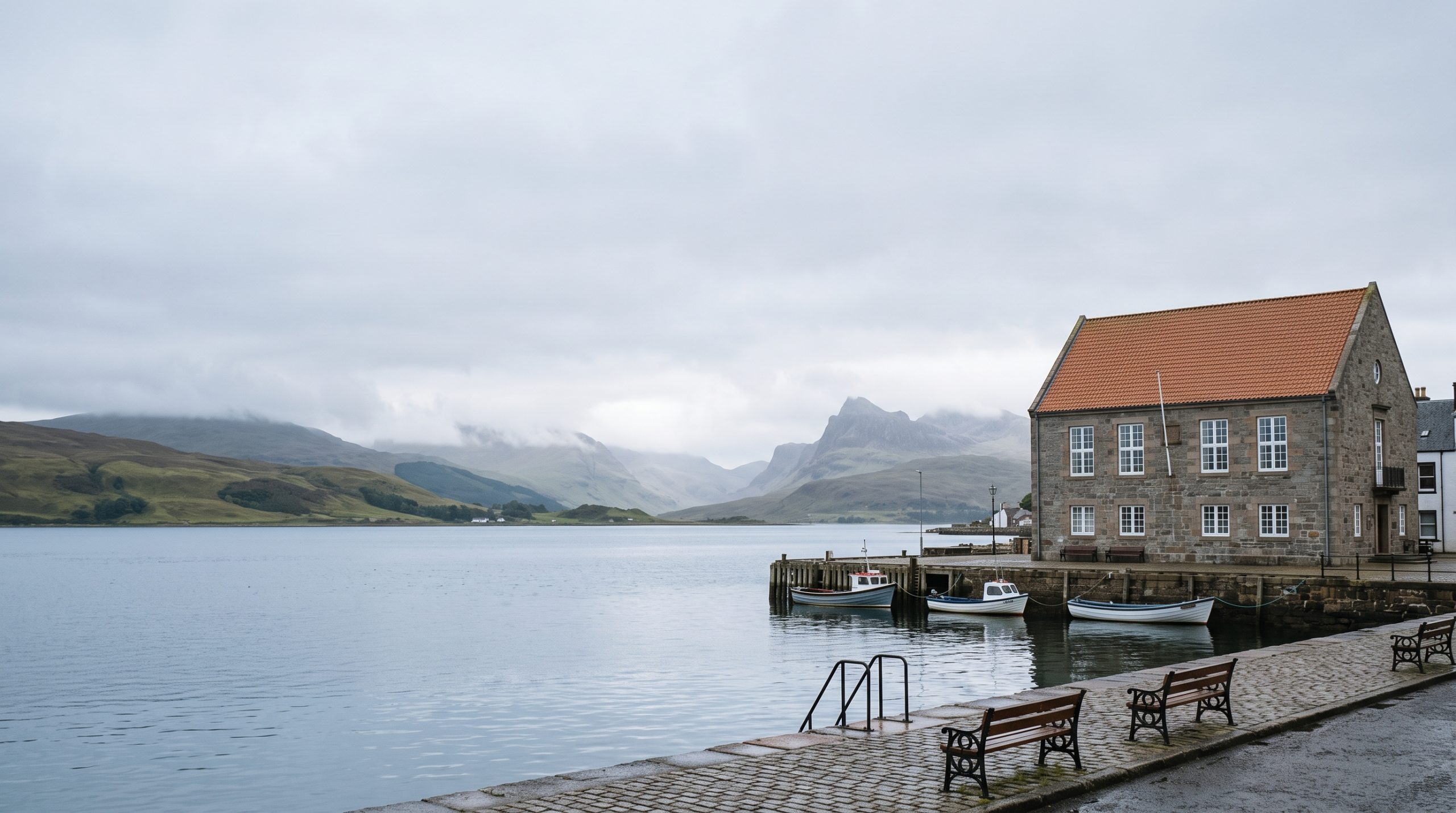
What that answer leaves out is the morning. Paperwork is not the day. Denmark clears you to marry and then a municipality marries you, at a time it has available. Scotland does something structurally different: once notice has run with the right registrar, a religious or belief ceremony may legally take place anywhere in the country. A ridge. A tidal beach. A farm track above a loch.
We are a photography, film and planning team, not a law firm, and we plan around registry offices across Europe for couples booking 2027, 2028 and 2029. Here is what the five most common legal routes actually ask of an American couple, and which one we would push a 2028 date toward.
Denmark for the paperwork, Scotland for the day
Denmark is the easiest European country to get cleared to marry in: one certificate, one application, one fee of DKK 2,100. Scotland is the easiest to actually be married in, because notice runs 29 clear days at £45 each and a belief ceremony is legal anywhere in the country, outdoors included. For most elopements, Scotland wins.
Five clearances, five authorities, one table
Each country issues a different document from a different office, and the differences decide what your wedding morning is allowed to look like far more than any ranking of easy countries does.
| Where | What has to be issued | Who issues it | The step Americans do not see coming | Where the legal ceremony can happen |
|---|---|---|---|---|
| Denmark | Certificate of Marital Status | The Agency of Family Law, or your municipality, depending on your nationalities and basis of residence | Documenting lawful entry and stay in Denmark for the ceremony date | A civil ceremony arranged with a Danish municipality |
| Scotland | Marriage notice lodged and accepted | The registrar for the district where the marriage will happen | Notice goes to that district, not the one you are sleeping in | A religious or belief ceremony anywhere in Scotland; a civil ceremony at the office or any place agreed with the registrar |
| Iceland | Certificate of no impediment | The District Commissioner, the sýslumaður | The US does not issue marital status certificates, so you bring certified confirmation of that fact | With an officiant entitled to solemnize, recorded on the Marriage Notification form |
| Norway | Prøvingsattest, valid four months | The Norwegian Tax Administration | The immigration service flags a waiting time for issue, so it cannot be left late | Handed to whoever officiates, before the ceremony |
| Italy | Nulla osta, supported by an atto notorio | Your own consulate in Italy, then the comune | The atto notorio is signed in front of four witnesses | Through the comune that holds the nulla osta |
Two of those lines cost money rather than time. The Danish application fee works out a little over $300 at the rates of the last couple of years. Scottish marriage notice costs £45 per person and is paid to the registration district when you lodge notice, not on the day. Every other line on that table is time and document-gathering rather than money.
Our own coverage runs alongside all of it. The Adventure starts at $4,900 for one full day with a dedicated photographer or a dedicated filmmaker, and The Expedition at $7,900 for a photographer and filmmaker working the same day together. Registry, permit and landowner fees stay with you; the research, the filing calendar and the timeline are ours. The coverage and pricing page sets out what sits inside each one.
Why Denmark keeps winning the paperwork argument
The Danish advantage is not speed, exactly. It is that you deal with one Danish office instead of your own country’s consulate. Your application for a Certificate of Marital Status goes either to the Agency of Family Law or to your municipality, depending on your two nationalities and the basis on which either of you resides in Denmark, and that certificate is the whole legal gate.
The conditions underneath it are short. You must both be 18 or over. You must both be unmarried, and if either of you has been married before, that marriage must be legally dissolved first. You must both be able to lawfully enter and reside in Denmark on the date you marry, which for most American couples means a visa-free entry, evidenced by things like a residence permit, a visa, or documentation of the date you entered.
That last requirement is the one that moved recently. From 10 April 2028, the Agency of Family Law changed how citizens of countries outside Europe and the EEA must document legal residence in the Schengen area when applying. It is not a barrier, it is a reason to read the agency’s own current page rather than a two-year-old guide, and to assemble the file completely before the first submission rather than adding to it afterward.
Then the ceremony. With the certificate in hand you arrange a civil ceremony with a Danish municipality, and that is where the Danish route quietly hands the clock to somebody else. The registrar’s availability sets your hour. If the light you flew for is at 4:40 in the afternoon in late September, the municipality does not know that and cannot be expected to care.
What Scotland lets you do that the others do not
Scottish law starts from an unusually open position: any two people may marry in Scotland regardless of where they live. There is no residency requirement to satisfy, no consulate to visit, and no home-country certificate to chase.
You each complete a marriage notice and lodge it, with the supporting documents and the fee, with the registrar for the district where the marriage will actually take place. Not the district of your hotel, and not a central office. The window is fixed: no earlier than three months before the date and no later than 29 clear days before it. In practice we work to eight or ten weeks out, because a registrar with your file in hand for six weeks is a calmer registrar than one who receives it on day 30.
Then comes the part that changes the shape of an elopement. A civil marriage is solemnized by a registrar or assistant registrar authorized by the Registrar General, either at a registration office or at any place agreed between the registration authority and the couple. A religious or belief marriage may take place anywhere in Scotland, solemnized by a celebrant entitled to do so under the Marriage (Scotland) Act 1977, and Scotland’s recognition of belief celebrants means a humanist ceremony carries the same legal weight as a church one.
Anywhere is doing real work in that sentence. It means your legal vows can happen at the hour we picked for the light rather than the hour a building was free. It means the sound of the vows is wind and water and two voices, which is the reason The Expedition includes professional audio for vows where conditions allow, and the reason a film shot in Scotland often sounds better than one shot in a municipal room with a hard ceiling. It means the drone, where the airspace and the permission allow, can leave a ridge that is legally a wedding venue for the length of a ten-minute ceremony.
Both shapes photograph well, and they photograph differently. A town hall wedding gives you architecture, a tight frame and a very good ten minutes. An outdoor legal ceremony gives you weather, scale and a document being signed on a rock. Our elopement stories and films show both, and the difference is obvious inside three frames.
The honest caveat is about the place, not the law. The same rule that lets you marry on a ridge lets you marry in horizontal rain, and Scotland supplies that generously. So we build the exposed hour around wind direction and hold a sheltered alternative within fifteen minutes’ drive, usually lower, usually with trees or a wall in it, and we tell you both options in the timeline rather than improvising on the morning.
Iceland, Norway and Italy on their own terms
None of these three is a consolation prize. Each is easier than Scotland or Denmark on at least one axis, and for some trips that axis is the one that matters.
Iceland: the clearance comes from the sýslumaður
Iceland’s District Commissioner issues the certificate of no impediment and certifies it on the Marriage Notification form, which is one office doing both jobs. Iceland also has the cleanest answer to the problem that snags Americans everywhere else: because the United States does not issue certificates of marital status, Iceland accepts certified confirmation from the relevant authority stating exactly that. Nobody is asking you to produce a document your own country will not print.
Norway: the certificate is good for four months
Norway runs on the prøvingsattest, issued by the Norwegian Tax Administration and valid for four months, which you hand to whoever officiates. Norway’s own immigration service says plainly that there is a waiting time for issue. That is not a warning, it is a filing date. Four months of validity is generous enough that we file early and stop thinking about it, which suits a couple building a trip around Lofoten in June, when the sun north of the Arctic Circle does not set for weeks and the working day for a film has no natural end.
Italy: your consulate is part of the process
Italy is the outlier because your own country enters the chain. An American marrying in Italy needs a nulla osta, and to get one, an atto notorio declaring no impediment, signed in front of four witnesses. That nulla osta must reach the comune where the ceremony will be celebrated before the day. It is more steps than Denmark and more people than Scotland, and it buys something neither can offer: a legal wedding inside an Italian town, registered by that town, in a country you will keep going back to. Our destination elopement guides go deeper on how the regions differ once the legal question is settled.
Which route fits the trip you are actually taking
The legal route should be chosen after the trip, not before it. Four shapes come up again and again.
Five or six days, one country, vows outdoors. Scotland, without much argument. One notice window, one registration district, one landscape, and the legal ceremony happens in the place you crossed an ocean to stand in. This is the couple we build the most days for, and the reason is 29 clear days and the word anywhere.
Ten days, two or three countries, legal step early. Denmark first, then travel. Get cleared and married in one place with one office, then spend the rest of the trip somewhere the light is the only consideration. Two to seven days across one or several destinations is what The Odyssey is built for, and it is written as a custom proposal because no two of those routes repeat.
The vows matter as much as the frames. If you want to hear what you said to each other in ten years, not just see it, the ceremony has to happen where audio can be recorded properly and the day has to be built around that. A photographer and filmmaker working together for the full day is the version of coverage that holds both, and Scotland’s outdoor legal ceremony is the setting that makes it possible.
Already legally married, or marrying at home first. Then every row of that table becomes irrelevant and your only questions are terrain, month and light. A good number of our couples do exactly this: they sign at a courthouse near home, then arrive with nothing to carry but rings. If that is your plan, say so in the first message and the entire timeline changes shape.
What none of these shapes should be is a guess. Tell us the dates you can travel, whether the legal ceremony has to happen on this trip, and how early you are genuinely willing to be awake, and we will tell you which of these five routes fits, or which month fits it better. Tell Us Your Story and the planning starts from your constraints rather than a template.
Where the “just fly to Copenhagen” advice falls down
The Denmark recommendation is an answer to a question about documents. It is a very good one. It stops being the right answer the moment your reason for flying to Europe is a place rather than a certificate, because the Danish route ends at a municipal appointment and the Scottish one ends wherever you decided to stand. The failure is a quiet one. A file optimized to perfection, and then a legal wedding that lasts ten minutes in a room nobody picked. Choose the ground first and fit the paperwork to it. Our guide to planning an elopement works in that order too.
Common questions
Do we have to live in Denmark or Scotland to get legally married there?
No. Any two people may marry in Scotland regardless of where they live. Denmark has no residency requirement either, but you must both be able to lawfully enter and reside in Denmark on the date you marry, and that lawful stay has to be documented in the application.
How early do we need to file for a 2027 wedding date?
Scotland has a hard window: notice no earlier than three months before the date and no later than 29 clear days before. Denmark, Iceland, Norway and Italy have no equivalent public deadline, so the constraint is processing time and, in Italy, consular steps. We build the filing dates into your timeline once the date is fixed.
Can we legally marry outdoors in Scotland, on a mountain or a beach?
Yes. A religious or belief marriage may take place anywhere in Scotland, and humanist celebrants are entitled to solemnize one, so an outdoor ceremony is a legal marriage rather than a symbolic version of it. A civil ceremony with a registrar can also happen at any place agreed between the registration authority and the couple.
The US does not issue a certificate of marital status. Does that block Iceland?
It does not. Iceland asks foreign citizens whose country does not issue such a certificate to bring certified confirmation from the relevant authority stating that, and the District Commissioner then issues the certificate of no impediment and certifies it on the Marriage Notification form.
We are getting legally married at home. Is a ceremony abroad still worth planning?
Yes, and it is simpler. With the legal step done at home, the day is built purely around light, terrain and travel time, and you can hold vows at 5am on a ridge without a registrar’s calendar in the plan. Many of our couples take this route deliberately.
How long after the day do we get the photographs and the film?
Highlights reach you within 5 days. The full gallery or the finished film follows within 3 weeks. That timing is the same in every destination and does not change with how far the team traveled to get there.
Filing dates, and the order we work in
Send the inquiry form and you will have a reply and our initial brochure within 24 hours, in writing. From there we send a tailored proposal for the route and dates you described, and once the contract is signed and the 30% retainer is paid, planning begins: destination and location design, permit research, the filing calendar for whichever registry you have chosen, and a timeline built around real light and real driving times. Everything happens in writing, at whatever hour suits you, across whatever time zone you are in. Team travel is included worldwide, so Lofoten in June and Skye in October cost the same to bring us to.
If a 2027 date is already circled on your calendar, send it over with the constraint that worries you most and we will tell you honestly whether the law, the light or the month is the thing to move. Check Your Date.