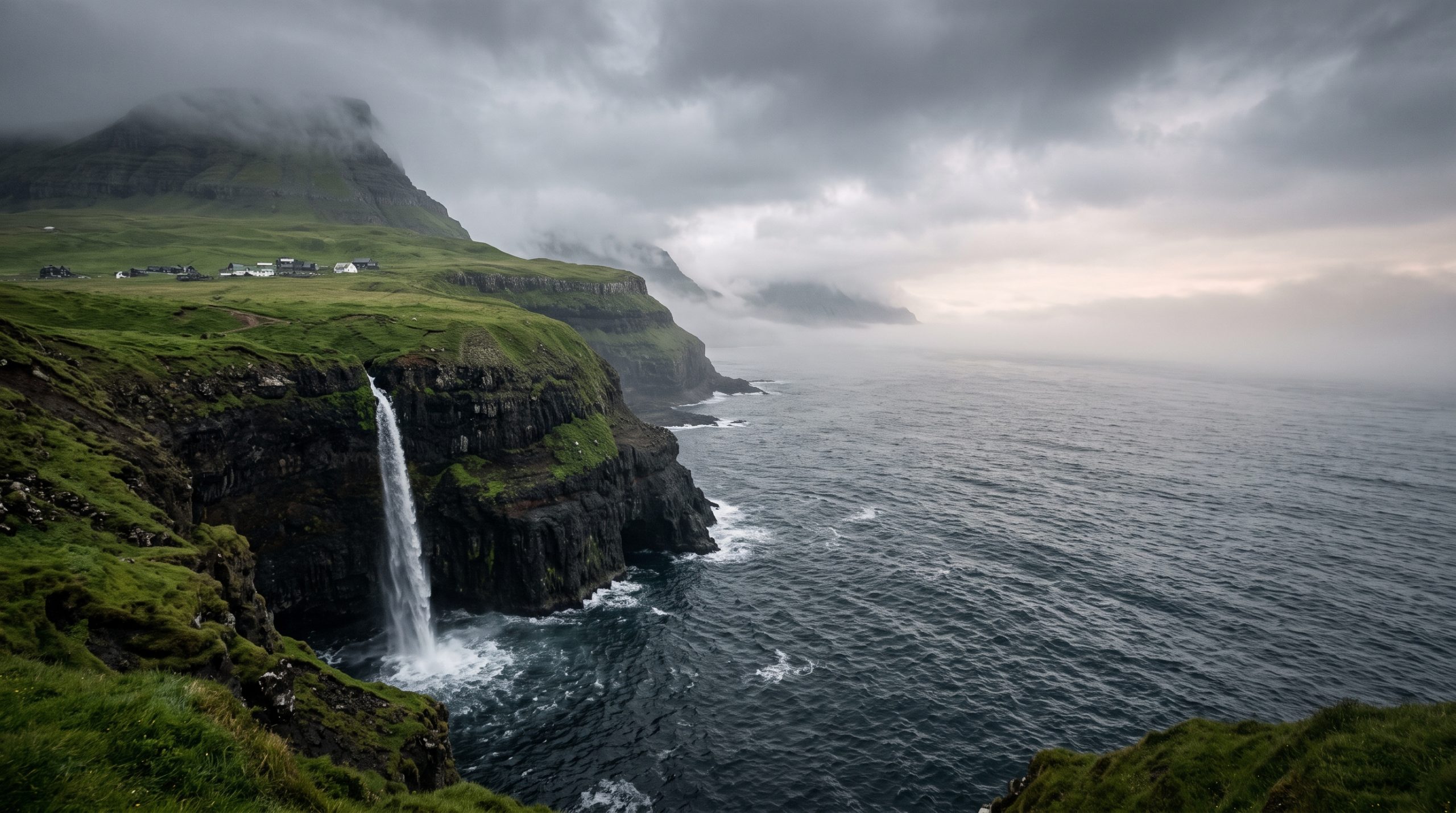
In the week of the June solstice the sun clears the horizon over Tórshavn around 3:40am and does not set until after 11pm, and at its lowest it slips only about four degrees below the sea. There is no real night. That does not hand you one golden hour, it hands you two long ones at opposite ends of a day almost twenty hours wide.
It also means the middle is the weakest part. The islands run summer clocks an hour ahead of where they actually sit, so solar noon falls nearer 1:30pm than midday, and from roughly ten in the morning to three in the afternoon the light under cloud goes flat and white. Couples who imagine their vows at lunchtime are aiming at the one stretch we would rather spend driving.
The paperwork keeps its own clock. Tórshavnar kommuna conducts civil ceremonies for visitors in the City Hall at Vaglið 1, and notice has to reach the municipality no later than four weeks before the date you want, stretching to six weeks for weeks 34, 35 and 36 in late August and early September. The land has a clock too. Most of the ground you have seen in Faroese pictures is privately owned and gated, and the fee is collected per person on the way in.
Photo, film and planning across eighteen islands
We are a team of eight, four photographers and four filmmakers, and we cover Faroese elopements as one service: location design, the timeline, permit research, then the photography and the film on the day itself. One day on Vágar, or a week across the islands. Team travel to the Faroes is included in every experience.
Nineteen hours of June light, and where we spend them
A Faroese summer day has two ends and a long slack middle, so we plan it in that shape rather than fighting it. In June the sun comes up in the north-northeast and goes down in the north-northwest, which is worth more to a timeline than any list of viewpoints. North-facing beaches take light at both ends of the day. West-facing cliffs only work in the evening.
Here is how a solstice-week day usually runs. Out of Tórshavn around 2:50am, because the roads belong to the sheep at that hour and a wet single-track lane to Saksun takes as long as the map says only if nothing is coming the other way. First frames from about 3:20am in the twilight before sunrise, on high ground or a black-sand beach. Vows somewhere in the 5am to 7am window, when there is no one within two miles of you. Then food, and a deliberate gap.
From ten until mid-afternoon we move: the drive between islands, a ferry, a harbour, the inside of a turf-roofed house, the legal signing if that is happening the same day. Second block from around four in the afternoon, and then the part almost nobody plans for properly. The evening of a Faroese June day is enormous. Sunset lands after 11pm, the afterglow holds until about one in the morning, and the last hour on a west coast is the strongest light you will get.
| When you come | Sunrise, Tórshavn | Sunset | What the day becomes |
|---|---|---|---|
| Mid-May | About 4:30am | About 10:15pm | Green hills, lambs everywhere, a civilised start time |
| Solstice week | About 3:40am | About 11:20pm | Two full blocks of light and no darkness between them |
| Mid-August | About 5:35am | About 9:30pm | Tighter, warmer light and real evenings again |
| Mid-September | About 6:55am | About 7:50pm | A normal breakfast, sunrise and sunset both reachable |
Those times belong to Tórshavn and the open sea. A village sitting under a 600-metre wall loses the sun long before the almanac says it should, which is why our timelines name a bearing and a ridge, not just an hour. Slættaratindur, the 880-metre high point, is in cloud more often than it is clear, so we treat a summit frame as a bonus and never as the plan. Mid-September is the honest answer for couples who do not want a 2:50am alarm: sunrise near 6:55am, sunset before eight, and both ends of the day inside one waking stretch.
If the legal ceremony is happening on the same day, the shape changes. The municipality conducts it inside the City Hall in Tórshavn during office hours on a weekday, so the day splits into two halves with a drive and a signing in the middle. Two witnesses sign the register, and if you are travelling as a pair, the municipality can arrange for two members of staff to attest instead. What you walk out with is an international marriage certificate in Faroese and English. Plenty of couples handle the legal part at home and use the whole Faroese day for vows they wrote themselves, which is the version we build most often, and the version our destination guides assume unless you tell us otherwise.
Wind, fog and why two cameras beat one
Faroese weather does not arrive, it passes through. A ridge that was solid cloud at 4:40am opens for ninety seconds at 4:52am and closes again. In that gap somebody has to be on the wide frame, holding the whole landscape while the cloud tears, and somebody has to be tight on two faces. One person cannot be in both places, and a photographer who met a freelance videographer for the first time in the car park that morning will spend the gap negotiating instead of shooting.
We work it the other way around. The same team plans the location, so both cameras already know where the second position is, which way the fog is running and how long the walk back is. On the Expedition, our filmmaker is running professional audio for the vows, and on an exposed Faroese clifftop that changes where we ask you to stand. Vows in the lee of a turf wall or a boulder sound like vows. Vows on the edge sound like weather. We would rather move you fifteen metres and keep your voices than keep the postcard and lose them.
Aerials get planned rather than improvised. European drone rules and the Faroese order on drones both apply here, flights stay clear of villages and the main roads that connect them by 150 metres, enclosed land needs the owner’s permission, and bird cliffs during the breeding season are left alone. That means the drone has specific windows and specific coasts written into the timeline, and the film is built to work whether or not the wind allows it up. You can see how that combination lands in our published galleries and films, including the way the low northern sun renders on a wet hillside.
The fog question, answered with a plan
Every couple who writes to us about the Faroes asks a version of the same thing: what if we fly all that way and the islands are inside a cloud. It is a fair question, and the answer is geography rather than optimism. The archipelago is narrow and the weather is local. You can be fogged in at Gásadalur and standing in clean light at Tjørnuvík ninety minutes later, and the drive between Vágar and the Northern Isles is short enough to be a decision you make at 5am rather than a day you write off.
So the plan is written in pairs. Every block has a first choice and a fallback on a different coast, and the fallback is not a lesser frame, it is a different one. The gate above Leitisvatn is a five-minute drive from the airport and the walk out to the cliff at Trælanípa takes about forty-five minutes, which makes it a genuine option on a morning that started badly somewhere else. Saksun’s lagoon floor only opens at low tide, so that hour is a tide-table decision made weeks in advance and not on the day.
Low cloud is also a subject. Ridge lines separating out of it, a waterfall going straight into a grey sea, turf roofs against nothing at all. The frames that make people write to us are rarely the blue-sky ones. And if a single morning feels like too much to hang a whole trip on, that is exactly what our multi-day coverage is for: two to seven days, one or several islands, so the best light of the week is available to you instead of the light of one alarm clock.
Tell us the week you are looking at and we will tell you what the light is doing then. Check Your Date.
Included before you fly, and what the islands charge at the gate
Every experience carries the same planning, wherever in the world it happens:
- Destination and location design for your dates, built around light and real travel time rather than a map
- Permit research and logistics guidance, including the landowner-managed sites and who to ask
- Weather alternatives and backup planning for each block of the day
- Drone footage where it is legal, safe and appropriate
- Professional audio for vows and meaningful moments on the Expedition, where conditions allow
- Team travel worldwide: flights, accommodation and ordinary travel for the assigned team, with no long-haul surcharge for the Faroes
- Highlights delivered in 5 days, and the full gallery or film in 3 weeks
- A price that does not move with guest count, because guests affect access, permits, transport and timeline, not the fee
The Adventure covers one full day with one dedicated photographer or one dedicated filmmaker, from $4,900. The Expedition covers one full day with a dedicated photographer and filmmaker working together, from $7,900. The Odyssey runs from two to seven days across one or several destinations, with photography and film, as a custom proposal. Full detail sits on our coverage and pricing page.
What the Faroes add on top is paid by you, and most of it is in Danish kroner, which runs somewhere around six to seven to the dollar. The mandatory hiking fee at Kallur lighthouse on Kalsoy is 200 DKK per adult. Mykines is the expensive one: between 1 May and 31 August it is 400 DKK per person booked online in advance or 500 DKK on arrival, roughly seventy-five dollars, and that fee includes the guide you are required to walk with. The gate above Leitisvatn charges per person as well. Add ferry tickets, tunnel tolls billed through your rental car, accommodation, your celebrant if you are bringing one, and anything unusual you want moved: a helicopter seat, a private boat out to the sea stacks, a mountain guide.
Six steps from first email to a held date
- You send the inquiry form with your dates, or the two or three weeks you are choosing between.
- We reply within 24 hours with our initial brochure.
- We put together a tailored proposal: coverage, the team assigned, and the shape the days would take in your month.
- Contract signed and a 30% retainer paid. The remaining payments are set out in the proposal.
- Planning begins in earnest: locations, the timeline built around light and travel, permit research, landowner contacts, and the paperwork sequence for the municipality if you are marrying here legally.
- Closer to the date we walk the locations, then send you a morning-by-morning plan and a weather read.
One thing we cannot do for you: the municipality requires marriage inquiries to come from the couple themselves rather than a third party, and the marital status certificate from home has to be less than four months old on your wedding day. We hand you the sequence and the timings. If this is your first destination costing exercise, our notes on how eloping actually works cover the fundamentals.
Couples the Faroes reward, and the ones we rebuild the day for
This place pays back a specific kind of couple. Willing to set an alarm for 2:50am and mean it. Fine walking forty-five minutes on wet, sheep-cropped ground that tilts. Relaxed about a plan that changes at breakfast, because the plan changing is the plan working. Happy to be married in the wind with nobody watching, and to eat properly afterwards in Tórshavn.
If that is not you, the day gets rebuilt rather than abandoned. Mid-September gives you sunrise near 6:55am and sunset before eight, both reachable on eight hours of sleep. Several of the strongest locations are ten minutes from a parked car, so a day can be built almost entirely on short walks and still look like the Faroes. Vows can happen indoors, in a turf-roofed church or the City Hall, with the coast covered afterwards. Tell us which of those you actually want, and if the month you are holding fits it badly, we will say so and name the one that fits it better.
Common questions
Can we legally get married in the Faroe Islands as Americans?
Yes. Tórshavnar kommuna conducts civil ceremonies for visitors in the City Hall at Vaglið 1, and you leave with an international marriage certificate in Faroese and English. You need your notice of marriage, passports, and a marital status certificate from home that is no more than four months old on the day.
How far in advance do we have to send the marriage paperwork?
Notice has to reach the municipality no later than four weeks before your date, and no later than six weeks if you are marrying in weeks 34, 35 or 36, which cover late August and early September. The notice of marriage form should not be sent more than four months ahead.
Do we need to hire a separate videographer as well?
No. Photography and film come from the same team here. The Adventure gives you one dedicated photographer or one dedicated filmmaker for the day. The Expedition gives you both, working the same locations with the same plan, which on a Faroese ridge is the difference between catching a ninety-second gap in the cloud and describing it afterwards.
Do we need two witnesses if we are eloping just the two of us?
Two people do have to sign the register, but you do not have to fly them in. Tell the municipality in advance that you are travelling as a pair and two members of staff can attest the marriage instead.
What happens if our elopement day is fogged in?
We move. Each block of the timeline has an alternative on a different coast, and the islands are narrow enough that ninety minutes of driving usually finds different weather. You get a plan and a weather read in the morning, and low cloud is worked as a subject rather than treated as a loss.
Can you fly a drone over the villages and waterfalls?
Where the rules allow it. Flights keep 150 metres clear of villages and the main roads between them, enclosed land needs the owner’s permission, and bird cliffs are left in peace during the breeding season. We write the aerial windows into the timeline in advance and build the film so it stands up whether or not the wind lets the drone fly.
How much are the hiking fees on top of coverage?
Kallur lighthouse on Kalsoy is 200 DKK per adult. Mykines between 1 May and 31 August is 400 DKK booked online or 500 DKK on arrival, including the guide you must walk with, plus the ferry ticket. The gate above Leitisvatn charges per person too. These go directly to landowners and are paid by you.
When do we get our photos and film?
Highlights land in 5 days. The full gallery or the finished film follows within 3 weeks.
Choosing the week
Pick the light you want first and the locations second. A solstice week gives you a nineteen-hour day and no darkness to work around. Mid-September gives you a sunrise you can reach without a headlamp. Either way, everything between your first email and your morning plan happens in writing, in your inbox, at whatever hour suits your time zone, and Dates are currently open across our 2027, 2028 and 2029 Faroe Islands seasons. Send us your dates and what you picture, and we will send back the version of that week that actually works. Tell Us Your Story