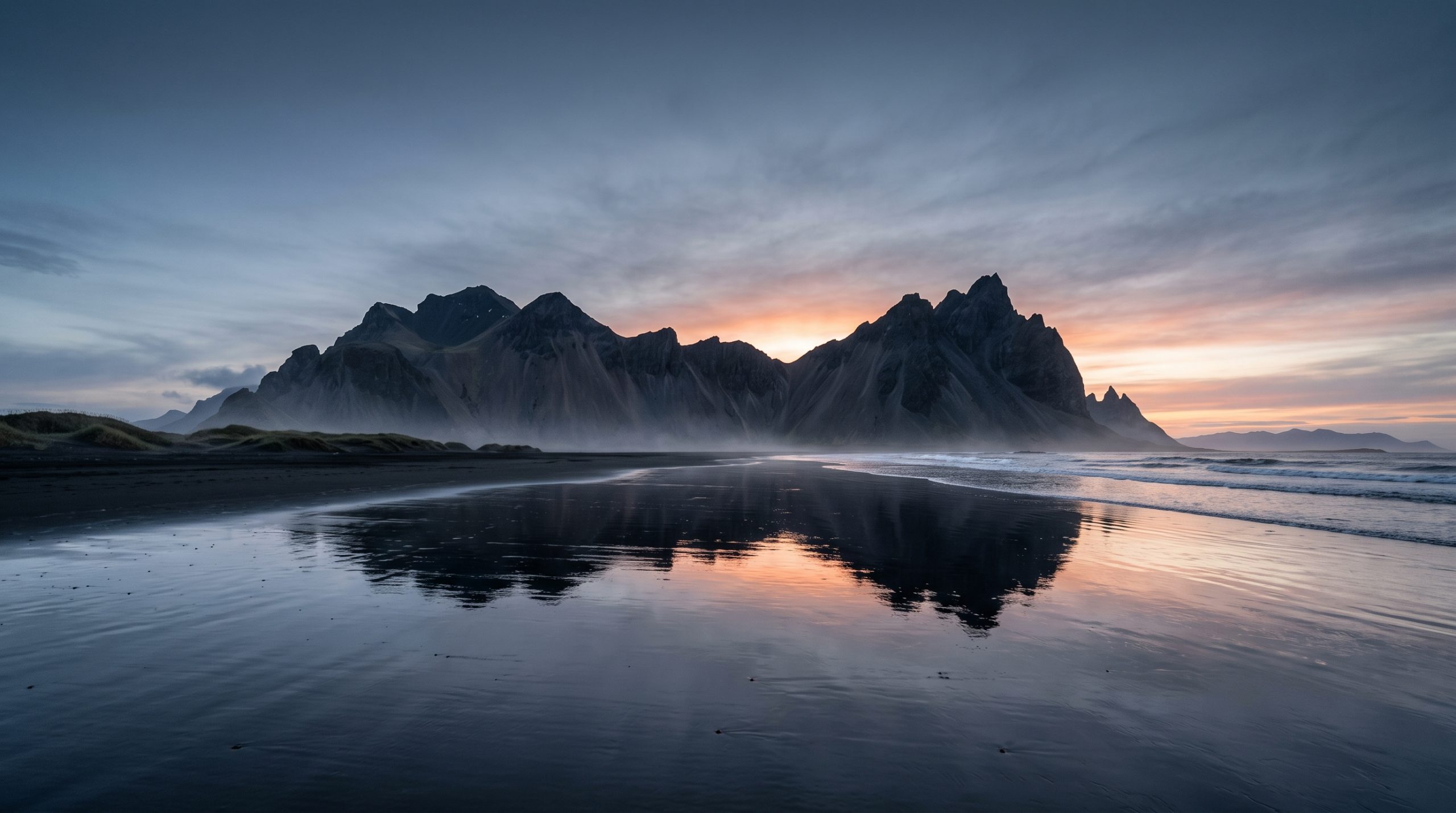
In early September the sun is up over the south of Iceland by 6:10 in the morning and still up at 20:45. Four weeks later it does not clear the horizon until after 7:30, and the light has gone before 19:05. Roughly three hours of daylight vanish inside a single month, which is why a timeline written for the first week of September is useless for the last one.
The weather moves faster than the light does. A squall can cross the coast between two waterfalls that sit twenty minutes apart, which is exactly why we plan Iceland in clusters rather than in lines: three locations inside a forty-minute drive of one another, facing different directions, so a shift in the wind changes the order of your day and not the day itself.
The paperwork has a shorter fuse than most couples expect, too. The certificate of no impediments that clears you to marry in Iceland is valid for 30 days, and the certificate of marital status behind it cannot be more than 12 weeks old when it goes in. Flights get booked a year out. That document cannot be.
Photo, film and planning as one Iceland booking
We are eight people, four photographers and four filmmakers, and Iceland comes as a single booking: location design, permit research, a timeline built on your own date’s sunrise, then the photography and film themselves. Coverage starts at one full day with a dedicated photographer or a dedicated filmmaker, or both working together, team travel included.
Hour by hour: a late-September day on the South Coast
Late September is the window we are asked for most often, and it is a generous one. Sunrise lands a little after 7:30, sunset just before 19:05, and the sun tracks low enough all day that the useful light outlasts the thirty to sixty minutes you would get at that hour much further south. Here is the shape we build.
The night before, we put you within half an hour of the first location. Not in Reykjavik. Seljalandsfoss is roughly 120 kilometres from the city and closer to two hours than one before dawn, and beginning your wedding day at 5:15 in a moving car costs more than the hotel saves.
06:45, blue hour. We start in the half dark at a waterfall or a river mouth, because the twenty minutes before sunrise are the only ones you will get with no other headlights turning into the car park. The photographer works close. The filmmaker sets a wider angle from a second position, so nothing has to be repeated for the camera afterwards.
07:35, sunrise. The first sun catches the cliff line above the coast road while the ground is still cold and the spray from the falls is still hanging. This is the hour that makes the early start worth it, and it is also the hour the light changes fastest, which is the whole argument for two people rather than one.
08:30, first move. Every stop has its own parking arrangement now and each one sits on the timeline in advance. If the week includes the Golden Circle, Thingvellir reads your plate by camera, and one payment there covers P1, P2 and P5 for the rest of the day. Most major South Coast stops charge by app or kiosk, currently around 1,000 ISK a car. Nobody should be standing in a wedding dress in the wind, working out a QR code.
10:30, ceremony. We put vows on the sheltered side of something: a gully wall, a moss bank, the shoulder of a lava field. Wind is the one thing that ruins outdoor audio, and on the Expedition we are recording your actual voices rather than rebuilding them later. The two people who vouch for you on the marriage notification are not required to stand there while you say any of it, which surprises almost everyone.
12:15, the warm hour. Soup, dry socks, a look at what the sky is doing to the west. We use this hour to confirm or swap the afternoon, and it is usually where the day’s best unguarded frames come from.
13:30, the drive. Iceland’s distances are real and we stop pretending otherwise. A transfer is filmed, not endured, and the road itself carries the middle of your film.
15:45, black sand on a falling tide. We time the beach hour to the tide table, when the reflections come up on the wet sand and the walk back to the car is short and dry.
18:15 to 19:05, low sun and sunset. Back to the location that faces the right way for the evening, chosen that morning rather than three months earlier.
20:00, optional. From late September the sky goes fully dark again, so we hold a late window for the aurora and use it only if the sky is worth getting out of bed for a second time.
Send us the week you are looking at and we will reply with the real sunrise and sunset times for those dates and the shape of day they allow, before anything is booked. Send Us a Message.
What a second camera changes when the wind is up
Iceland does not hold still, and that is the practical case for photography and film coming from the same team rather than from two suppliers who meet in a car park at 6am. A gap opens in the cloud over the coast and lights a beach for four minutes. One person cannot hold a still frame and roll on it at the same time, and the version where they try is the version where the photograph is fine and the film is the afterthought nobody planned for.
So the photographer stays close and works the frame, the filmmaker takes the second position and the wider light, and both are working the same four minutes. You say your vows once. Nobody asks you to walk back up the path for a second take, which matters more here than in gentler places, because the path is often wet lava and the wind is coming off the sea.
Wind is also why the Expedition carries professional audio. We choose the ceremony spot partly for how it sits against the prevailing direction, so the vows arrive as sound and not as a subtitle. Where conditions genuinely will not allow it, we say so on the morning rather than in the delivery.
Aerials get planned the same way, area by area, because Iceland’s rules are local rather than national. Vatnajokull National Park requires the ranger’s permission for projects that bring equipment and manpower, and the park’s own rules name film production and gatherings in the same breath. Gullfoss is a protected nature reserve, where flying needs a permit from the Nature Conservation Agency of Iceland. In Skaftafell the answer is no drone at all, other than a narrow allowance in front of Skaftafellsjokull, early in the morning or in the evening. We establish which of those applies to your locations before anyone designs a film around an aerial that is not available.
Because there are eight of us, there is always a second camera on the ground and a colleague in reserve. The photographs and the film from a single day sit side by side in our published stories and films, so you can follow one Iceland day from blue hour to the last of the light and see exactly what came home from it.
The forecast question, and the three-location answer
When the destination is Iceland, the forecast is the thing couples write to us about most. It deserves a structural answer rather than a soothing one.
Every Iceland timeline we send has alternates built into it hour by hour, each within about forty minutes of the primary, and chosen so that the two do not face the same way. Rain on a south-facing coast is a completely different proposition from rain in a north-facing valley, and low cloud that hides a mountain is often the same cloud that turns a river gorge into the best hour of the day. We choose the region the evening before and confirm it at breakfast, watching conditions through the Road and Coastal Administration’s own service at road.is, whose watch station on 1777 answers around the clock.
Season does more work than luck here. Land above 300 metres counts as highland and holds snow well into summer, and the mountain tracks open only after they have been inspected, which in most years means late June. So a May date gets built on low ground, on coast and moss and river canyons, with a long evening to use. A date in late July can reach into the highlands. Same country, two entirely different days, and the choice is made months before the forecast exists.
What travels with us on an Iceland day, and where coverage begins
Everything below is part of every Iceland experience we run, at every coverage level.
- Destination and location design, and a timeline built around your date’s real light and honest driving times, not map estimates.
- Permit research and logistics guidance: which ranger, which agency, which landowner, and in what order they need asking.
- Weather alternatives and backup planning for every hour of the day.
- Drone footage where it is legal, safe and appropriate.
- Professional audio for vows and other meaningful moments on the Expedition, where conditions allow.
- Team travel worldwide, Iceland included: flights, accommodation and ordinary travel for the assigned team.
- Highlights delivered in 5 days, and the full gallery or film in 3 weeks.
- A price that does not move with your guest count.
The Adventure is one full day with a dedicated photographer or a dedicated filmmaker, from $4,900. The Expedition is one full day with a photographer and a filmmaker working together, from $7,900. The Odyssey runs two to seven days, across one destination or several, and comes to you as a custom proposal. It is all set out on the pricing page, and there is no European or long-haul distinction hiding in it: getting our team to Reykjavik, Hofn or the East Fjords is our cost, not a line item on yours.
What Iceland itself adds is separate, and worth knowing in advance. A civil ceremony with the District Commissioner starts at 15,400 ISK, with a further fee if you ask for it outside the office or outside office hours, which each office grants at its own discretion. Parking at the well-known stops runs to around 1,000 ISK a car. Stokksnes sits on private land, and access is charged per person at the Viking Cafe. Accommodation, your celebrant, other vendors and any activity you add are yours, as is unusual transport: helicopters, private boats, a super-jeep charter, a glacier guide. Permit research and guidance is ours. Permit fees themselves are yours.
Six steps between your first message and a booked date
- You send the inquiry form with your dates, or with the month you are circling.
- We reply within 24 hours with our initial brochure and a few real questions about the day you want.
- We put together a tailored proposal: region, coverage level, the light for your date, the way the hours would run.
- You sign the contract.
- You pay a 30% retainer, with the remaining payments set out in the proposal.
- Planning starts properly: locations, permits, the timeline and its alternates.
We currently have Iceland elopement dates available through 2027–2029. If you are further back than that in your thinking and still working out the order things happen in, our guide to how an elopement actually gets planned covers the fundamentals first.
Which month fits which couple
June barely has edges. The sun drops close to midnight, the sky never goes properly dark, and you get somewhere near 21 hours of usable light, which means a ceremony at nine in the evening with warm colour still on the mountains. The trade is company. The famous car parks are busy from mid-morning until late, so June days work best for couples happy to be somewhere unfashionable at the hours everyone else is at Kirkjufell.
September and early October give you the balanced version: a sunrise you can reach without a 3am alarm, a full evening, and from late September a genuinely dark sky for the aurora. December is the opposite kind of gift. Daylight in Reykjavik lasts just over four hours, sunrise comes around 11:20 and sunset around 15:30, and because the sun never climbs, the entire day reads as low light. It also means one region, no long transfers, and a plan that respects those four hours.
The couples who get the most out of Iceland are the ones who do not mind uneven ground and wet boots, who will get up before light for one hour that only exists then, and who are relaxed about the plan changing at breakfast. If a pre-dawn start is not your idea of a good morning, say so and we will build the same day around a later sunrise, or point you at the month where the light comes to you instead. Our destination guides go through the seasons in more detail, and if you tell us what you actually want out of the day, we will tell you honestly which week of the year fits it.
Common questions
Can we legally marry in Iceland if we live in the United States?
Yes, and you do not need to be resident. Your documents go through the District Commissioner, and both of you have to produce a certificate of marital status from the relevant authority at home. There is no federal office in the United States that issues one, so it comes from your state or local authority, and Iceland still expects a document confirming there is no impediment to the marriage. A foreign passport copy has to be certified by a notary. We tell you which office wants what, and in which order.
How long is the Icelandic wedding paperwork valid?
The certificate of marital status cannot be more than 12 weeks old when it is submitted, and once the certificate of no impediments has been issued, the ceremony has to take place within 30 days of its date. Two people sign the marriage notification to confirm there is no obstacle, and they are not required to attend the ceremony itself.
Do we have to hire a videographer separately?
No. Photography, film and planning come from the same team on one booking. On the Expedition a dedicated photographer and a dedicated filmmaker work the same day together, having planned it together, which is a different thing from two freelancers introducing themselves to each other on the morning.
Can our parents and a couple of friends come along?
They can, and the coverage price does not change with guest count. What guests do change is access: which locations take a group of six comfortably, what transport that needs, whether a landowner or park wants a permit for a gathering, and how much time the timeline gives to moving people around.
Can you fly a drone where we want to elope in Iceland?
Sometimes, and it is decided area by area rather than nationally. Vatnajokull National Park requires the ranger’s permission for projects using equipment such as film production, Gullfoss needs a permit from the Nature Conservation Agency of Iceland, and Skaftafell allows no drone at all apart from a narrow early-morning or evening allowance in front of Skaftafellsjokull. We check every location on your list before the film is designed, and fly only where it is legal, safe and appropriate.
What happens if the forecast turns two days before our date?
The plan moves. Each hour of your timeline already has an alternate within about forty minutes that faces a different direction, so we choose the region the evening before and confirm it over breakfast, using road.is for conditions. Iceland gives you weather rather than one weather, and the day is designed to go and find the better half of it.
How soon do we see the photographs and the film?
Highlights reach you within 5 days, while you are still travelling or just home. The full gallery or the finished film follows within 3 weeks.
Choosing your week in Iceland
Send us the dates, or just the month you keep coming back to, and tell us what you want the day to feel like. The planning stays in writing from the first message onward, at whatever hour suits you, and our first reply with the brochure comes inside 24 hours. After that it is a proposal built around your light, your region and the version of Iceland you actually came for. Start Your Story.