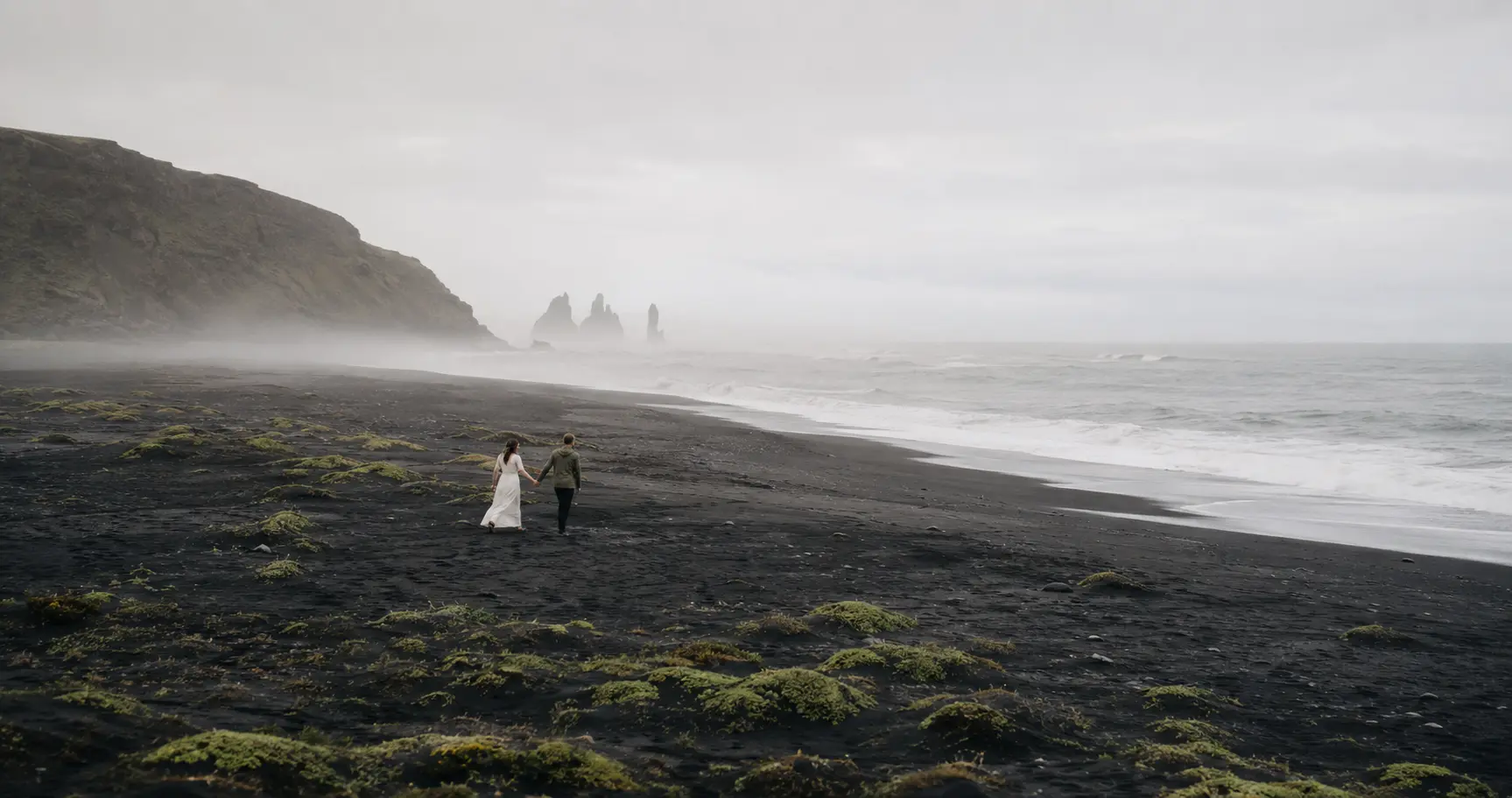
Iceland gives you black-sand coastlines, waterfalls, open roads and weather that can rewrite the plan in an hour. The strongest elopements here are not built around seeing everything. They are built around choosing a feeling, one workable region and enough flexibility to experience it properly.
01 · THE BEGINNING
Start with the feeling, not a list of famous locations.
Before choosing a waterfall or beach, decide how you want the day to feel. Quiet and private? Windy and cinematic? Slow, with a long dinner? Active, with a hike and a remote ceremony? Those answers are more useful than a folder containing twenty unrelated pins.
A clear emotional direction helps us recommend places that work together in real life. It also keeps the final experience personal instead of turning the day into a race between recognizable viewpoints.
02 · SEASON
Choose the season by its trade-offs.
There is no single best time for an Iceland elopement. Longer daylight gives you more flexibility. Darker seasons can feel intimate and dramatic. Shoulder periods may bring quieter places, but they also demand stronger weather alternatives.
Rather than promising a perfect forecast, we compare light, access, likely conditions, crowds and the kind of landscape you want to experience.
- Prioritize long light if you want a relaxed road-based day.
- Prioritize privacy if a quiet ceremony matters more than convenience.
- Keep expectations flexible when the atmosphere is part of the appeal.
03 · ROUTE
Build the day around one region.
Distances that look simple on a map can feel very different after weather, road conditions, stops and the fact that you are getting married rather than completing a checklist.
A strong route usually combines one anchor landscape with a few nearby contrasts: coast and cliffs, waterfall and open valley, or a quiet ceremony followed by a warm meal. Fewer transfers create more room for real moments.
04 · FLEXIBILITY
Make the weather plan part of the creative plan.
The backup should not feel like a disappointing version of the day. It should be another route you would genuinely be happy to experience.
We build decision points into the timeline, keep travel realistic and identify places that respond differently to wind, rain and visibility. With multi-day coverage, we can move the most weather-sensitive part of the story to the better window.
- One primary route and at least one meaningful alternative.
- Extra time around exposed or weather-dependent locations.
- Clothing and footwear chosen for comfort, not only photographs.
05 · LOGISTICS
Treat access, permits and the landscape with respect.
Location rules, protected areas, parking, drones and ceremony access can change. Every plan should be checked against current local requirements before it is treated as final.
We help research access and permit needs, recommend a practical route and work with Leave No Trace principles. Any permit fees, specialist transport or third-party services are clearly separated from our coverage price.
06 · PHOTOGRAPHY + FILM
Leave enough space for the story to happen.
The photographs should not be the reason you rush through the day. We use gentle direction when it helps, then let movement, weather, conversation and silence create the honest parts.
Film adds voices, ambient sound and the scale of the landscape in motion. Photography gives you individual frames and quiet details. When both matter, they are planned as one team so the day does not become two separate productions.
YOUR FIRST MESSAGE
You only need a few pieces to begin.
- A date or flexible date range
- The kind of landscape you are drawn to
- Who may join you
- Photography, film or both — or simply “not sure”
- How active or relaxed you want the experience to feel
- Anything that would make the day feel unlike you